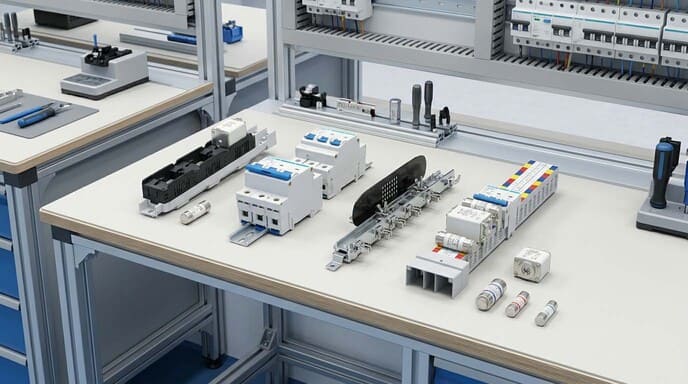
I use fuse rails to combine protection, isolation, and modular power distribution in one compact unit inside low-voltage panels.
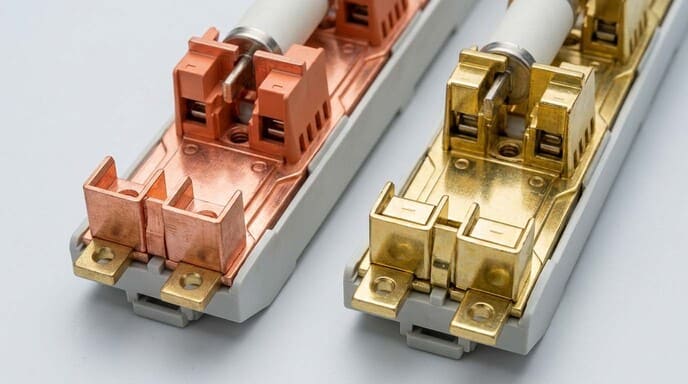
A fuse rail is used to protect and disconnect feeders on a low‑voltage busbar system1, while also making the distribution modular, compact, and easy to expand in the future.
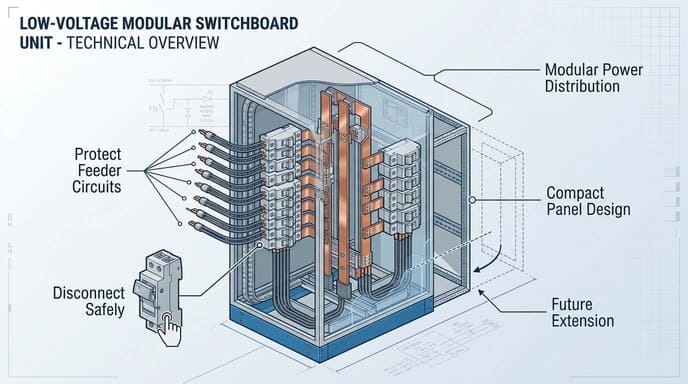
In my projects, I use fuse rails whenever I want to take power directly from a main busbar and feed several outgoing circuits in a clean way. They let me mount NH fuse links on the busbar, get clear disconnection, and still keep the panel layout simple. This gives my customers a system that is safe today and flexible enough for extra loads later, without a full redesign.
What standards does fuse rail comply with?
I notice that most professional buyers now start their questions from standards before anything else. They worry about audits, acceptance tests, and cross-border projects, so they need clear references.
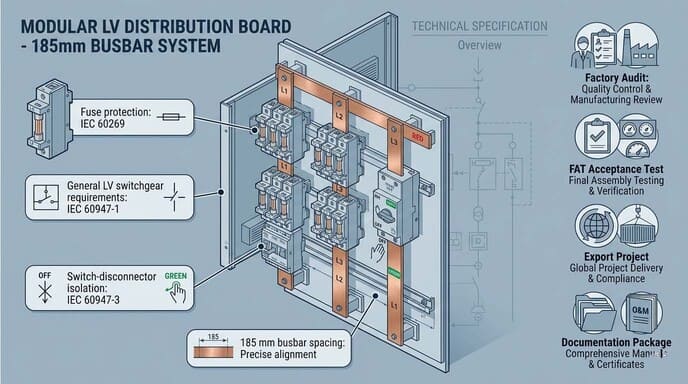
Most NH fuse rails are designed according to IEC 60269 for fuse links and IEC 609472 (mainly 60947‑1 and 60947‑3) for switch and disconnector functions.
Key standards I always look for
When I select or design a fuse rail, I first check the standard combination on the data sheet. Many well-known busbar-mounted fuse holders use NH or cylindrical fuses according to IEC 60269‑2, and the device itself is tested as a switch or fuse-combination unit under IEC 60947‑1 and IEC 60947‑3.For example, a typical busbar-mounted fuse holder is marked with IEC 60269‑2 for the fuse links and IEC 60947‑1 / 60947‑3 for the device, sometimes also UL 4248‑1 for the North American market.Vertical NH fuse rails for 185 mm busbar systems are often specified with standards such as CE marking plus IEC 60269 and IEC 60947, and utilization category AC‑22B or AC‑21B3 to show their switching duty.
| Item | Typical standard / rating |
|---|---|
| Fuse link | IEC 60269‑2 (NH, cylindrical) |
| Device (switch / rail) | IEC 60947‑1, IEC 60947‑3 |
| Utilization category | AC‑22B or AC‑21B, depending on model |
| North American approval | UL 4248‑1, CSA, etc. on some busbar fuse holders |
In my own work, I add one more internal standard: I prefer rails with IP20 finger‑safe covers4 and clear fuse‑blown indicators. Even when not strictly required by IEC, this gives much safer maintenance and easier fault finding. I also match my design practice to local GB standards when needed, and I keep full test records under our ISO 9001 system so customers can pass their end-user audits smoothly.
What rated current and voltage are available for fuse rail?
Most of my customers ask this question in the first email, often before they send a drawing. They want to know if a single rail family can cover most of their feeders.
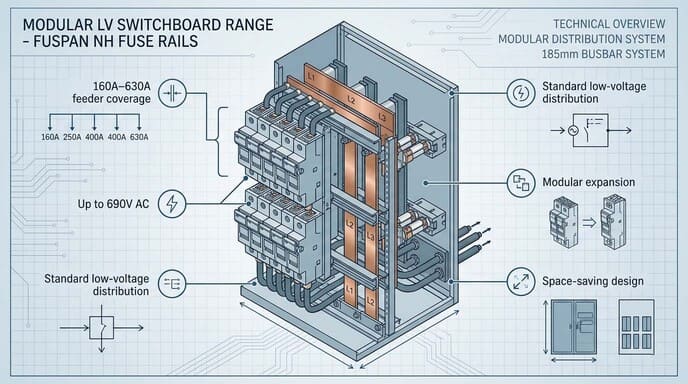
Common NH fuse rails for 185 mm busbar systems cover currents from about 160 A up to 630 A, with rated voltages up to around 690 V AC for standard low‑voltage distribution.
Typical rating ranges and how I choose
If I check typical data sheets, I see vertical NH fuse rails for 185 mm busbar spacing with ratings like 160–630 A and up to 690 V AC.Another NH vertical fuse rail range lists 160 A for size 00, 400 A for size 2, and 630 A for size 3, also for 185 mm busbar systems.These values match well with standard low-voltage switchgear, which usually works up to around 600–690 V AC in industrial environments.
| Parameter | Typical value range for NH fuse rails |
|---|---|
| Rated current In | About 160 A to 630 A depending on NH size |
| Rated voltage Ue | Up to 690 V AC in many low‑voltage designs |
| Busbar spacing | Often 185 mm for 3‑pole vertical rails |
In my own selection, I do not stop at the catalog rating. I size the fuse according to the real load current with about 20–30% margin, which is very close to the common rule of choosing a fuse at roughly 1.5 times the normal input current.I also apply derating in high ambient temperatures and in enclosed cabinets. I confirm the maximum cable cross-section that fits the terminals and the torque required for safe tightening. Then I check the short-circuit rating and discrimination with upstream breakers, aiming for about 1:1.6 selectivity between steps to avoid nuisance trips.
Which NH fuse link sizes are compatible with fuse rail?
I meet many panel builders who already have a preferred NH fuse brand. They do not want to change all their stocks when they change the rail supplier.
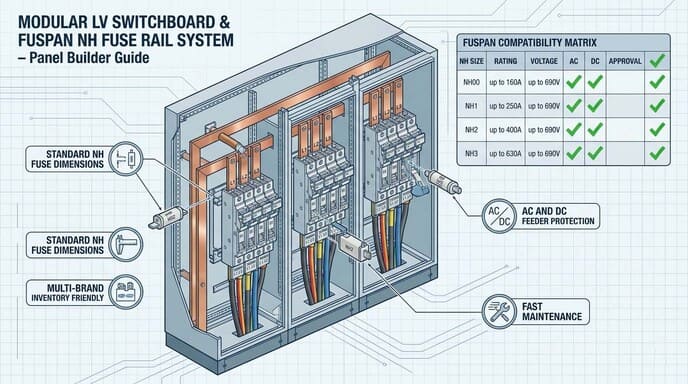
Most NH fuse rails are built for standard NH fuse sizes, commonly from NH00 to NH3, which cover a very wide current range for AC and DC protection.
How I match fuse rails and NH sizes
NH fuse systems define several physical sizes, usually from NH000 up to NH4A, and each size covers a specific current range and application.Many vertical NH fuse rails for 185 mm busbar systems are designed for NH sizes 00, 1, 2, and 3, with the rail mechanical width adapted to each size.Product sheets often show a size 00 rail with about 50 mm width and sizes 2 and 3 with around 100 mm width, so the spacing and heat dissipation stay under control.
| NH size on rails | Typical rail info |
|---|---|
| NH00 | Around 160 A rating, ~50 mm rail width |
| NH1 | Intermediate currents, fits same 185 mm system |
| NH2 | Around 400 A rating on many rails |
| NH3 | Up to about 630 A rating |
In my own projects, I always cross-check the rail’s compatibility list with the fuse link data sheet. I want gG or gL general-purpose NH links for cable and line protection, and sometimes aM links for motors, all within the size range that the rail supports.I prefer high-quality brands for the fuse links because the melting curve, power dissipation, and selectivity data are more complete. This helps me design clear 1:1.6 selectivity between stages so that only the nearest protective device trips during a fault, keeping downtime as short as possible.
Can fuse rail be mounted on a busbar system?
Many engineers still ask if they must use a separate panel plate for mounting, or if they can mount directly on the main busbar. This choice has a big impact on wiring time.
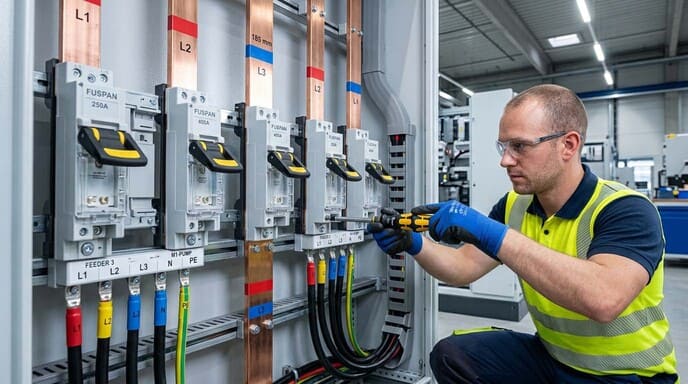
Yes, most modern NH fuse rails are designed for direct mounting on low‑voltage busbar systems, especially common 185 mm busbar arrangements and sometimes 100 mm for smaller sizes.
Why busbar-mounted rails are so useful for me
In many catalogs, NH fuse rails are described as “for mounting on to busbars with 185 mm busbar distance,” with special versions for size 00 that can also fit 100 mm spacing.Some ranges allow connection to the busbar either with bolts or with special Z‑contacts for Z‑profile busbars, which makes retrofits easier.Other busbar-mounted fuse holders support several busbar cross-sections such as 12, 15, 20, 25, or 30 mm widths and 5 or 10 mm thickness, so they can sit in many different systems.
| Feature | Typical options on busbar‑mounted rails |
|---|---|
| Busbar spacing | 185 mm (very common), some 100 mm versions |
| Busbar profile | Flat or Z‑profile, with matching contact sets |
| Cable connection | Bolted lugs, V‑shaped clamps, top or bottom entry |
In my own designs, I always confirm three points before I approve a rail on a busbar: the spacing (often 185 mm in modern LV switchgear), the profile type, and the available short-circuit rating of the whole assembly.I also check that the rail and busbar covers together provide IP20 or better protection so that maintenance staff cannot touch live parts. During installation, I insist on insulated tools, correct torque on all joints, and regular thermal checks on the contacts. This way, the busbar-mounted fuse rail becomes not only a protection device but also a clean, modular interface for future expansions.
Conclusion
Fuse rails let me combine safe overcurrent protection, clear disconnection, and modular busbar distribution, so my customers get a system that is safe today and ready for future load growth.
-
"Fuse Switch Disconnector vs MCCB: Which Protection Device Fits ...", https://fuspan.com/fuse-switch-disconnector-vs-mccb-which-protection-device-fits-your-plant-better/. IEC low-voltage switchgear and fuse standards describe fuse-combination units and fuse-disconnectors as devices that provide overcurrent protection and isolation in low-voltage distribution circuits. Evidence role: definition; source type: institution. Supports: A fuse rail is used to protect and disconnect feeders on a low-voltage busbar system.. Scope note: This supports the functional description generally; the exact implementation depends on the manufacturer’s tested assembly. ↩
-
https://en.wikipedia.org/wiki/IEC_60269. IEC 60269 covers low-voltage fuse links, while IEC 60947 covers low-voltage switchgear and controlgear, including switch-disconnectors and fuse-combination units. Evidence role: expert_consensus; source type: institution. Supports: Most NH fuse rails are designed according to IEC 60269 for fuse links and IEC 60947 for switch and disconnector functions.. Scope note: The standards identify applicable product categories, but compliance must be verified for each specific fuse rail model through its test report or declaration. ↩
-
https://en.wikipedia.org/wiki/Utilization_categories. IEC 60947-3 utilization categories such as AC-21 and AC-22 classify switching duties for resistive and mixed resistive-inductive loads in low-voltage switching devices. Evidence role: definition; source type: institution. Supports: Utilization categories AC-22B or AC-21B indicate the switching duty of vertical NH fuse rails.. Scope note: The citation explains the category meaning; it does not establish that every vertical NH fuse rail carries these utilization categories. ↩
-
https://en.wikipedia.org/wiki/IP_code. IEC 60529 defines IP20 as protection against access to hazardous parts with a finger and against solid foreign objects of 12.5 mm diameter or larger. Evidence role: definition; source type: institution. Supports: IP20 covers are commonly described as finger-safe protection for low-voltage equipment.. Scope note: The rating describes enclosure/access protection only; it does not by itself prove the safety of a complete panel installation. ↩