The wrong fuse switch disconnector can trip all the time, fail during a fault, or stop you from expanding later. I always try to avoid these mistakes from the start.
To choose a fuse switch disconnector, I match the system voltage and current, check short-circuit breaking capacity, set the fuse at about 1.5–2.5 times the load current1, then check isolation, selectivity, and future expansion needs.
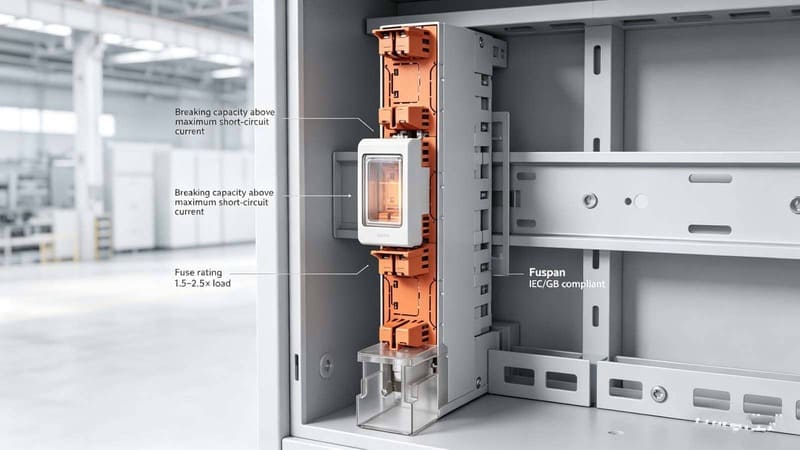
When I start a new project, I do not begin with catalog pages or discounts. I begin with one question: how will this power distribution system grow and fail over the next ten years? This question keeps me from picking a device that only works on day one and then causes trouble later. I see the fuse switch disconnector as the “gatekeeper” of the circuit, so I choose it as if I will be the person who must maintain and expand that panel in the future.
Fuse Switch Disconnectors for Industrial and Energy Storage Applications?
Sometimes I see panels where the fuse switch disconnector is treated like a simple on-off device. Then, when a fault happens, the whole system goes down and no one understands why.
For industrial and energy storage systems, I choose fuse switch disconnectors with high breaking capacity, clear visible isolation, strong selectivity2 with upstream fuses or breakers, and modular mounting that supports future feeders and battery strings.
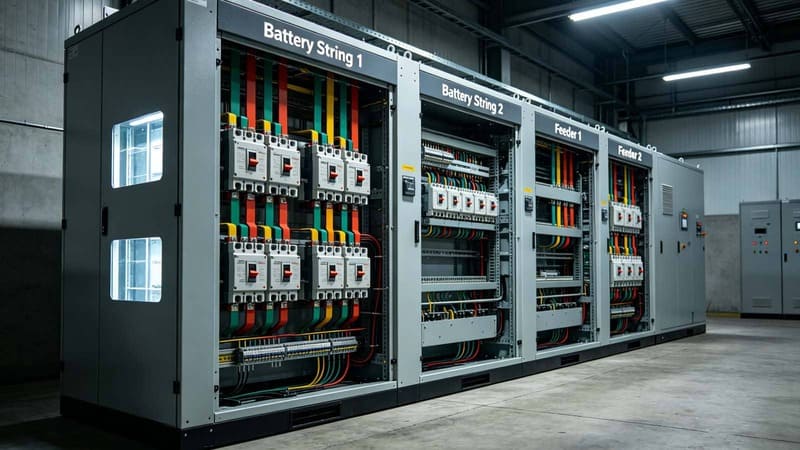
When I work on industrial plants or energy storage projects, I always start with the fault level and the operating pattern. In factories, I often see high short-circuit currents and frequent starts and stops. In energy storage, I see high DC voltage, long fault duration, and strict safety rules3. These two worlds share some needs, but they also have key differences.
I first look at the device type. I check if I need AC, DC, or a combined solution. In an energy storage container, I may use DC fuse switch disconnectors on battery strings and AC types on the inverter output. Then I look at the breaking capacity. I make sure the rated short-circuit breaking capacity is higher than the maximum fault current that I can calculate at that point. I never guess this value. I always ask for the available fault current from the system designer or do a short-circuit calculation.
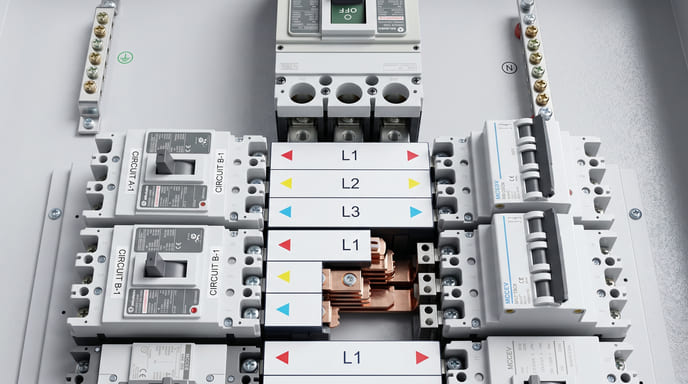
I also think about how the operator will work. I want a visible isolation gap so that maintenance staff can see that the circuit is open. I want clear handle positions and padlocking so that lockout-tagout is easy. These small details reduce mistakes. I also look at the installation form. For modular busbar systems, I like vertical fuse switch disconnectors that clip directly to the busbar4. This gives me good thermal behavior and more space in the panel for future circuits.
Here is how I usually break down the main choice factors for industrial and energy storage use:
| Aspect | Industrial Distribution | Energy Storage (ESS) |
|---|---|---|
| System type | Mostly AC, some DC for drives | High DC voltage + AC on inverter side |
| Main risk | High fault current, motor inrush | Long DC faults, fire risk, arc risk |
| Breaking capacity focus | Very high kA ratings at 400/690 V AC | Strong DC breaking at rated system voltage |
| Isolation need | Visible break for maintenance | Strict isolation for fire and rescue access |
| Layout concern | Space in MCC or main switchboard | Compact design in container or rack |
| Expansion concern | Extra feeders later | Extra battery strings or PCS units later |
When I align these factors early, I avoid surprises in the testing and commissioning stage.
Fuse Switch Disconnector for Motor Control Center?
I have seen many MCCs where a single fault in one motor feeder shut down half a line. Later, everyone discovered that the protection selectivity was never checked in detail.
In motor control centers, I choose fuse switch disconnectors that match motor inrush, coordinate with downstream starters, and allow selective protection so one motor fault does not trip the whole section.
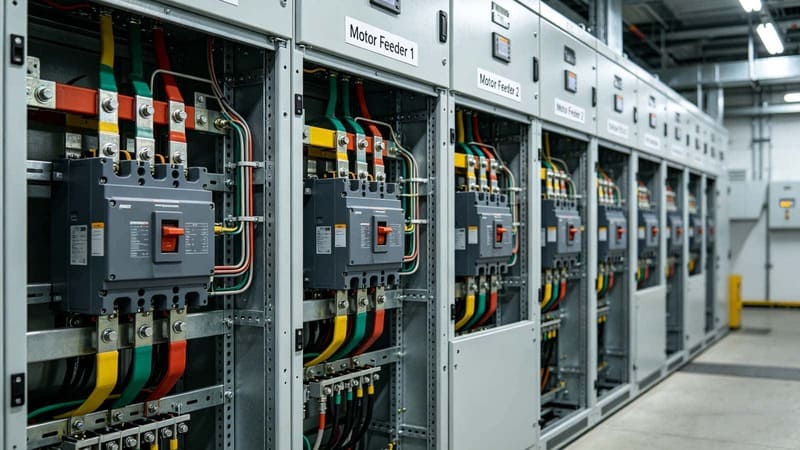
When I work with motor control centers, I try to think like the maintenance team. They want three things. They want easy isolation, they want clear fault indication, and they want only the faulty motor to trip. So I treat the fuse switch disconnector as both a safety tool and a selectivity tool.
I start with the motor load. For each feeder, I look at the full load current, starting current, and duty cycle. I choose the fuse rating at around 1.5–2.5 times the motor full load current, as I have seen this range work well to avoid nuisance tripping on start while still giving strong short-circuit protection. If the motor uses a soft starter or VFD, I often can stay closer to the lower part of that range. For direct-on-line motors, I keep closer to the higher side.
Then I look at coordination. I match the fuse type and curve with the downstream motor protection (overload relay, circuit breaker, or VFD protection) so that the fuse mainly acts on short circuits and line faults. I want the overload relay to act on overloads and stalled rotor conditions. I also check that the upstream main breaker or main fuse does not trip before the feeder fuse during a fault. This is where fuse selectivity curves from the manufacturer help.
Mechanically, I pay attention to the mounting style. In MCCs, vertical fuse switch disconnectors that plug onto busbars save space and give me clear separation between feeders. They also make it easy for me to add more feeders later. I prefer front-operated handles with door interlocking. This way, I cannot open the door when the switch is on, unless I override it on purpose for test work.
To keep my thoughts clear, I use a simple view like this:
| Design Point | What I Check in MCC Projects |
|---|---|
| Motor current | Full load current and starting current |
| Fuse rating | 1.5–2.5 × FLC, depending on start method |
| Coordination | Fuse curve vs. overload relay and upstream breaker |
| Isolation method | Visible break, door interlocking, padlock option |
| Layout | Vertical busbar modules, space for one more row if possible |
| Maintenance | Clear blown-fuse indicator, easy replacement, safe access |
This way, each motor feeder becomes a controlled “cell” with its own predictable behavior during faults.
Fuse Switch Disconnector for Energy Storage System?
In battery energy storage, I see that many designers focus on battery chemistry, inverter control, and BMS. Yet, a single wrong disconnector choice can create a hidden safety risk.
For energy storage systems, I use DC-rated fuse switch disconnectors that match battery voltage, fault current, and string layout, and that provide safe visible isolation and clear selectivity with upstream and downstream devices.
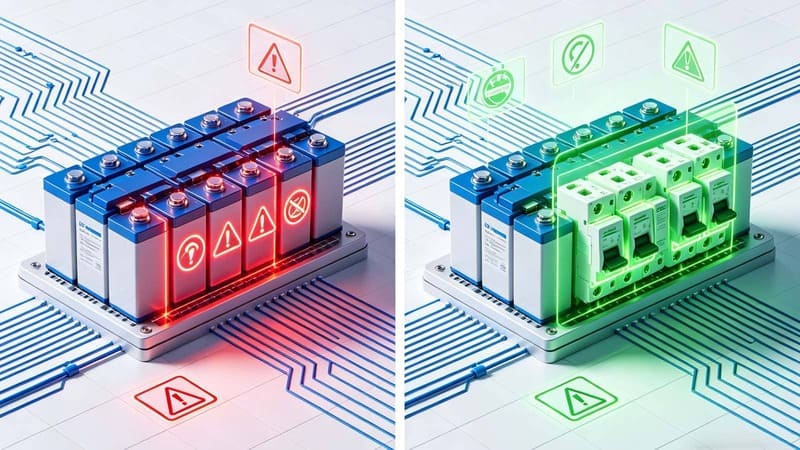
When I support energy storage projects, I always begin with the DC side. The DC bus can hold high energy for a long time. So I see the DC fuse switch disconnector as a fire barrier, not just a simple switch. I first fix the system voltage. For example, many systems use 750 V DC, 1000 V DC, or even higher. I then make sure the fuse switch disconnector has a DC rating at or above that voltage, not just an AC rating.
Next, I work out the maximum prospective short-circuit current. This part can be tricky because the fault current depends on battery internal resistance, cable length, and how many strings run in parallel. I try not to guess. I ask the battery supplier or use their data. Then I pick a fuse with a breaking capacity above that value, with some margin. On the AC side, I do a similar check, but I use the grid or transformer data.
I also consider how the system will be serviced. I want each battery string to have its own fuse switch disconnector. This lets me isolate one string for maintenance without stopping the whole system. I also like modular units that can mount on busbars or DIN rails in a standard pattern. This makes it easier to add more strings later.
Here is how I usually map out the design steps for ESS:
| Step | What I Do |
|---|---|
| 1. Find DC voltage | Confirm max operating and transient voltage |
| 2. Find fault current | Use battery data and cable data for worst-case fault |
| 3. Choose DC rating | Select fuse switch disconnector with proper DC voltage rating |
| 4. Set fuse rating | Use 1.5–2.5 × normal string current, check with BMS limits |
| 5. Check breaking capacity | Ensure it exceeds prospective DC fault current |
| 6. Plan isolation | One disconnector per string or block with visible separation |
| 7. Plan expansion | Leave space and busbar capacity for future strings |
When I follow this simple path, I get systems that are easier to certify and safer to operate.
Is a Fuse Switch Disconnector Necessary for Industrial Electrical Panels?
Sometimes clients ask me if they can save money by using only molded case breakers or simple fuse bases without switches in their panels.
I use a fuse switch disconnector whenever I need both short-circuit protection and safe, visible isolation in one compact device. In most industrial panels, this makes maintenance safer and layouts more flexible.
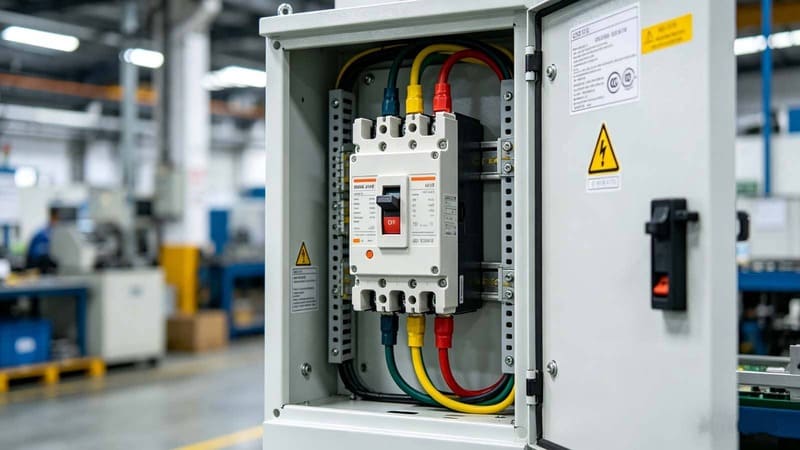
When I decide if a fuse switch disconnector is necessary, I look at more than just standard requirements. I ask how the panel will be used day by day. If people will isolate feeders often, if the panel is crowded, or if fault levels are high, the value of a combined fuse and switch becomes clear.
The disconnector part gives me a visible break. I can open the door, see the open contacts, and feel sure that the circuit is dead before I touch anything. I never operate the disconnector under load, because this can create dangerous arcs. I always make sure the load is off first. The fuse part gives me very fast short-circuit protection, often faster than many breakers, and it is easy to replace.
When I compare options, I usually think like this:
| Option | Pros | Cons |
|---|---|---|
| Breaker only | Easy on-off, adjustable trip in some models | Less visible isolation, may cost more at high kA |
| Fuse base + separate switch | Flexible choice of fuses and switch | Takes more space, more wiring, less compact |
| Fuse switch disconnector | Protection + isolation in one, compact, modular | Must be sized and operated correctly |
In many industrial panels, especially with busbar systems and many feeders, I find that fuse switch disconnectors give the best balance of safety, predictability, and expandability. They are not the only option, but they are often the most practical one when I think about the whole life of the panel.
Conclusion
I choose fuse switch disconnectors by starting from fault levels and future expansion, then matching ratings, isolation, and selectivity so operation and maintenance stay safe and predictable for years.
-
"How to calculate the fuse rating for a motor - Quora", Technical standards and application guides for fuses and motor circuits explain that fuse ratings are commonly selected above the steady-state load current, often in the range of roughly 1.5–2.5 times normal current for motor and similar loads, to avoid nuisance operation while still ensuring short‑circuit protection; however, the exact multiplier depends on the specific fuse type, load characteristics, and coordination requirements. Evidence role: expert_consensus; source type: education. Supports: the fuse at about 1.5–2.5 times the load current. Scope note: The recommended multiplier range is typical practice and not a universal design rule; designers must verify against specific standards, manufacturer data, and application conditions. ↩
-
"Five switching devices you are likely to spot in a low voltage ...", Technical standards and safety guidelines for industrial and energy storage systems emphasize that protective switching devices should have adequate short‑circuit breaking capacity, provide reliable isolation (often with visible contact separation), and be coordinated to achieve selectivity so that only the affected part of a system disconnects during a fault. Evidence role: expert_consensus; source type: research. Supports: For industrial and energy storage systems, I choose fuse switch disconnectors with high breaking capacity, clear visible isolation, strong selectivity with upstream fuses or breakers, and modular mounting that supports future feeders and battery strings.. Scope note: Sources typically describe these attributes for switch‑disconnectors and fuses in general and may not discuss specific commercial products or every application scenario. ↩
-
"Energy Storage Systems (ESS) and Solar Safety - NFPA", Guidance for battery energy storage systems notes that DC buses often operate at high voltage levels, that DC arc faults may persist longer than AC faults, and that such systems are subject to strict safety requirements related to fire, arc flash, and emergency isolation. Evidence role: historical_context; source type: institution. Supports: In energy storage, I see high DC voltage, long fault duration, and strict safety rules.. Scope note: The literature discusses these characteristics generally for BESS installations rather than for every specific project type or configuration. ↩
-
"Why Use a Fuse Switch Disconnector in Power Distribution Systems?", Application literature on low‑voltage busbar systems explains that plug‑on or clip‑on vertical fuse switch disconnectors can improve thermal performance and save panel space by minimizing cable connections and enabling compact, modular arrangements on busbars. Evidence role: mechanism; source type: education. Supports: For modular busbar systems, I like vertical fuse switch disconnectors that clip directly to the busbar. This gives me good thermal behavior and more space in the panel for future circuits.. Scope note: Most sources describe these benefits in typical installations; actual performance depends on detailed design and installation practices. ↩