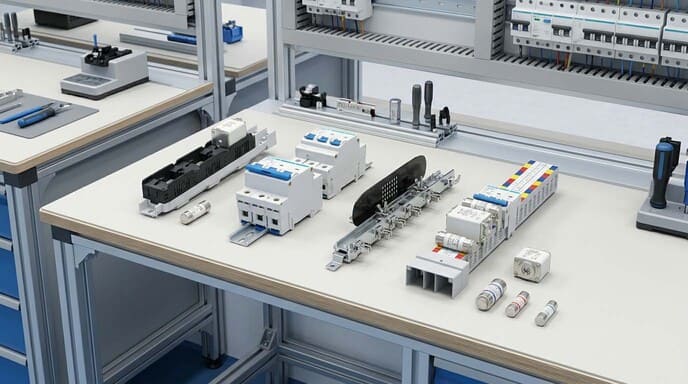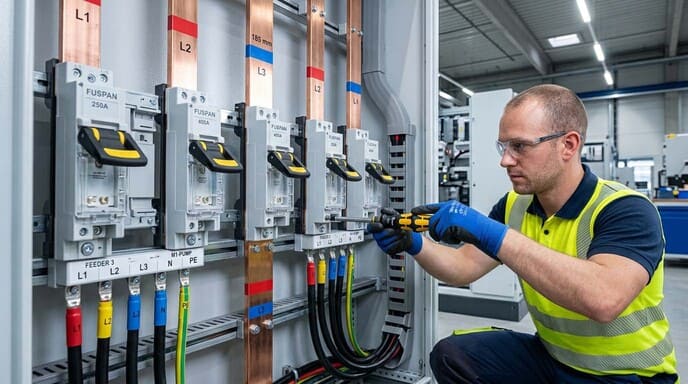
Many engineers face costly downtime when fuse switch disconnectors fail under load or lack expansion room.
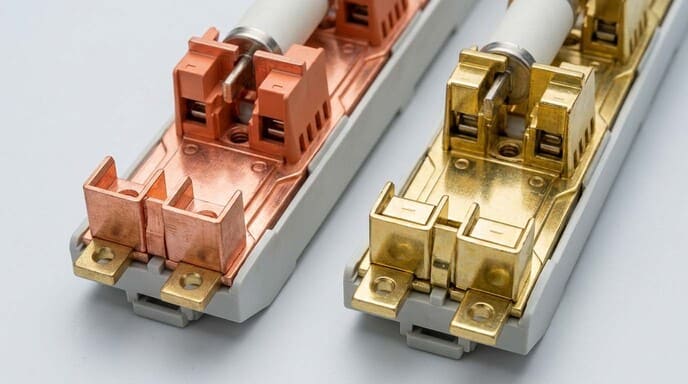
A fuse switch disconnector combines a visible isolation switch and fuse protection in one unit1. It gives clear visual confirmation of a de-energized circuit for safe maintenance and melts the fuse during short circuits to protect wiring and equipment. Pick one with breaking capacity above your max short-circuit current and fuse rating 1.5-2.5 times load for reliability.
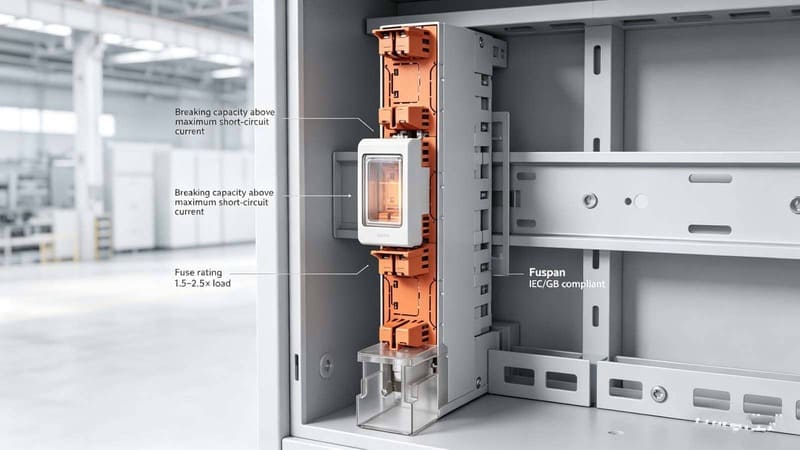
You need to know these basics before diving in. Let me share what I have seen in my years at Fuspan.
Fuse Switch Disconnectors for Industrial and Energy Storage Applications?
Industrial sites and energy storage systems often suffer from unexpected outages due to mismatched protection gear.
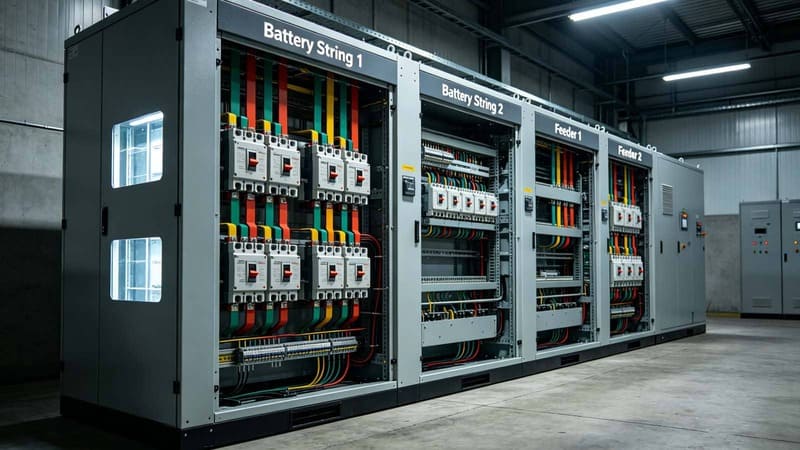
Fuse switch disconnectors for industrial and energy storage handle high breaking capacities up to 100kA2. They ensure safe isolation and selective fault clearing, protecting batteries and motors from short circuits while allowing quick maintenance access.
Why Breaking Capacity Matters Most
I once helped a client in Europe with an energy storage project. They picked a disconnector with low breaking capacity. A short circuit fried the panel. We fixed it with our high-capacity units.
Breaking capacity is the max short-circuit current the device can safely interrupt. For industrial use, aim for at least 50kA, but 80-100kA for energy storage. This matches IEC standards we follow at Fuspan.
Key Ratings Table
| Rating | Industrial Need | Energy Storage Need |
|---|---|---|
| Breaking Capacity | 50-80kA | 80-100kA |
| Voltage | 690V AC | 1000V DC |
| Current | 16-630A | 125-400A |
Selectivity for System Reliability
Selectivity means only the faulty branch trips. This keeps the rest of your system running.
In energy storage, batteries need this to avoid full shutdowns. Our disconnectors use gG or aM fuses3 for perfect coordination.
Coordination Steps
- Calculate max short-circuit current at each point.
- Choose fuses with time-current curves that do not overlap.
- Test upstream breakers for backup protection.
Future Expansion Planning
Think ahead. Customers often add loads later. Our modular designs let you upgrade without full replacement.
I specify panels with 20% spare capacity. This avoids rework.
Fuse Switch Disconnector for Motor Control Center?
Motor control centers overload and arc without proper fusing, leading to fires and repair bills.
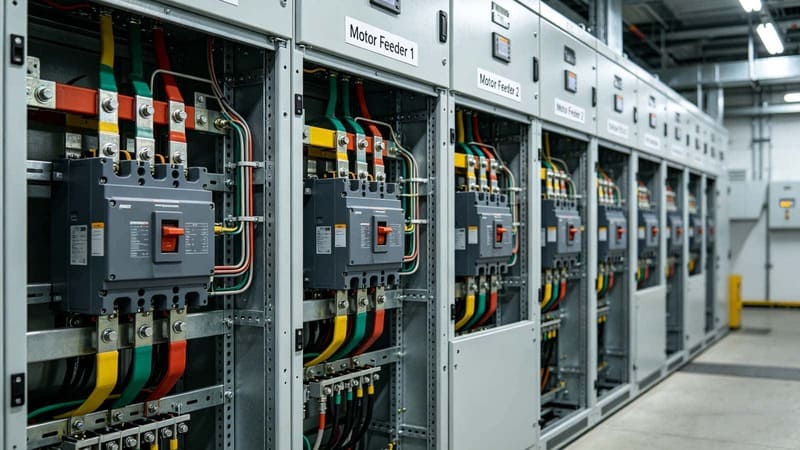
In motor control centers, fuse switch disconnectors provide short-circuit protection and isolation for starters. They use aM fuses rated 1.5-2.5 times motor full load current to handle inrush without tripping, ensuring reliable starts and safe lockout.
Handling Motor Inrush Currents
Motors draw 5-8 times full load on start. Standard fuses trip too soon.
We use aM fuses at Fuspan. They tolerate inrush but melt fast on faults.
Fuse Sizing Guide
| Motor Power (kW) | Full Load Current (A) | Fuse Rating (A) |
|---|---|---|
| 5.5 | 10 | 16 |
| 11 | 20 | 32 |
| 22 | 40 | 63 |
Visible Isolation for Safety
Lockout/tagout saves lives. Our disconnectors show a clear blade position.
Never operate under load. I saw an arc injure a technician once. Visible break prevents that.
Integration with MCC Panels
Our vertical fuse switch disconnectors mount directly in MCCs. They fit DIN rails and work with all major contactors.
Fuse Switch Disconnector for Energy Storage System?
Energy storage systems risk battery damage from DC arcs without proper DC-rated protection.
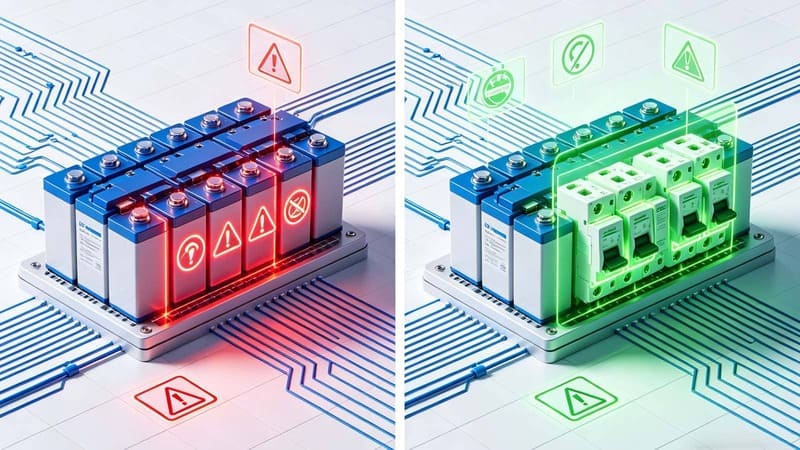
For energy storage, DC-rated fuse switch disconnectors break up to 1000V and 100kA. They isolate battery strings safely for maintenance and use fast-acting fuses to protect inverters from overcurrents, meeting IEC 60269 standards.
DC vs AC Differences
DC arcs sustain longer than AC4. You need higher breaking capacity.
Our products handle 1000V DC. This protects lithium batteries from thermal runaway.
DC Protection Features
- Arc chutes for safe extinction.
- Bipolar designs for full isolation.
- IP65 rating for outdoor ESS.
Battery String Protection
ESS uses many strings in parallel. Selectivity prevents cascade failures.
Fuses clear faults in milliseconds. We test every unit at Fuspan.
Compatibility with Inverters
Match with brands like Huawei or Tesla. Our terminals accept various cable sizes.
I customized for a South American project. It integrated perfectly.
Is a Fuse Switch Disconnector Necessary for Industrial Electrical Panels?
Panels without proper isolation lead to unsafe maintenance and fault escalation.
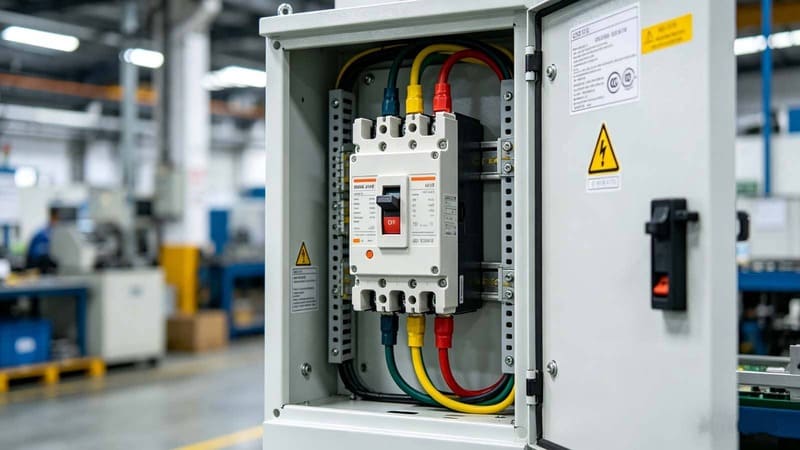
Yes, fuse switch disconnectors are essential for industrial panels. They combine fusing for protection with visible isolation for LOTO procedures, ensuring compliance with IEC 61439 and preventing arc flash during service.
When You Must Use One
NEC and IEC require isolation. For panels over 100A, it's a must.
Without it, you risk energized work. Our clients avoid fines this way.
Compliance Checklist
- Visible break confirmed.
- Breaking capacity > prospective short-circuit.
- Padlocking provisions.
Alternatives and Why They Fall Short
MCBs lack high breaking capacity. Contactors do not isolate fully.
Fuse switches beat both. They predict fault behavior perfectly.
Cost vs Safety Tradeoff
Upfront cost is higher. But downtime savings pay back fast.
One client saved $50k in repairs after switching to ours.
Conclusion
Fuse switch disconnectors ensure safe, reliable protection. Choose based on breaking capacity, selectivity, and expansion needs for long-term success.
-
"Disconnector - Wikipedia", https://en.wikipedia.org/wiki/Disconnector. A technical definition source should verify that a switch-disconnector-fuse or fuse-switch-disconnector is a switching device that provides isolation while incorporating fuse-based overcurrent protection; this supports the functional description but not any specific product design. Evidence role: definition; source type: encyclopedia. Supports: A fuse switch disconnector combines an isolation switch and fuse protection in one unit.. Scope note: Device terminology and construction can vary by standard and manufacturer. ↩
-
"IEC 60269 - Wikipedia", https://en.wikipedia.org/wiki/IEC_60269. A fuse standard or independent technical reference should show that low-voltage fuse systems are commonly specified with rated breaking capacities in the tens of kiloamperes and may reach around 100 kA for suitable fuse types; this supports the plausibility of the rating but not that every industrial or ESS disconnector has this capability. Evidence role: general_support; source type: institution. Supports: Fuse switch disconnectors used in industrial and energy-storage contexts can be specified with breaking capacities up to about 100 kA.. Scope note: Breaking capacity is product- and standard-specific and must be verified on the device rating label or datasheet. ↩
-
"IEC 60269 - Wikipedia", https://en.wikipedia.org/wiki/IEC_60269. A fuse classification source should explain that IEC aM fuse-links are intended for motor-circuit short-circuit protection and are coordinated with separate overload protection; this supports their use with motor starters but not any specific coordination outcome. Evidence role: definition; source type: institution. Supports: aM fuses are used in motor circuits because they tolerate motor starting current while providing short-circuit protection.. Scope note: aM fuses do not provide full-range overload protection and must be coordinated with suitable overload devices. ↩
-
"A No-Arc DC Circuit Breaker Based on Zero-Current Interruption - ADS", https://ui.adsabs.harvard.edu/abs/2017MS%26E..199a2079X/abstract. A peer-reviewed paper or electrical safety reference should explain that DC arcs are harder to extinguish than AC arcs because DC current lacks natural current zero crossings; this supports the need for DC-rated interruption equipment but not a specific voltage rating. Evidence role: mechanism; source type: paper. Supports: DC arcs can persist longer or be more difficult to interrupt than AC arcs.. Scope note: Arc duration also depends on circuit inductance, voltage, gap distance, and the interrupting device design. ↩