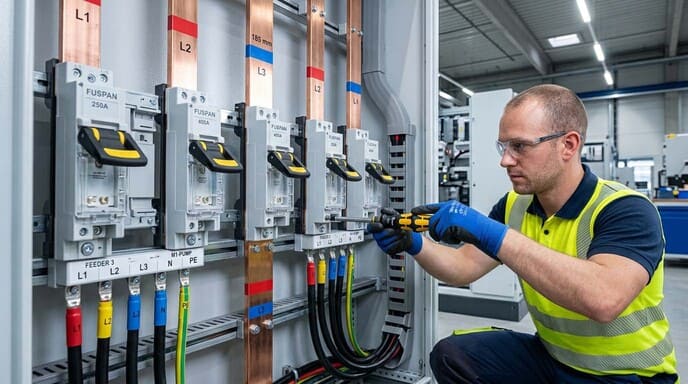
Power panels often feel rigid and wasteful. I see builders forced into one-size layouts. This leads to higher cost and poor fit for real loads.
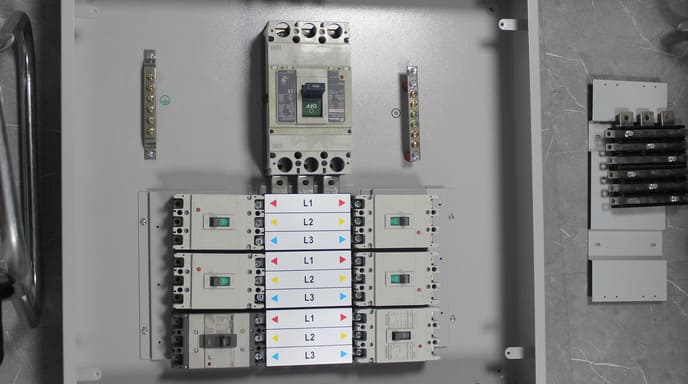
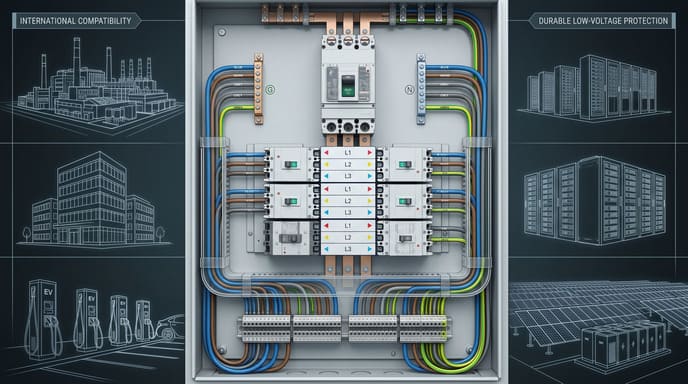
A hybrid pan assembly is a distribution board base that supports both MCCBs and MCBs on outgoing feeders1. It lets me match protection to each circuit, reduce cost, and keep the panel compact without redesign.
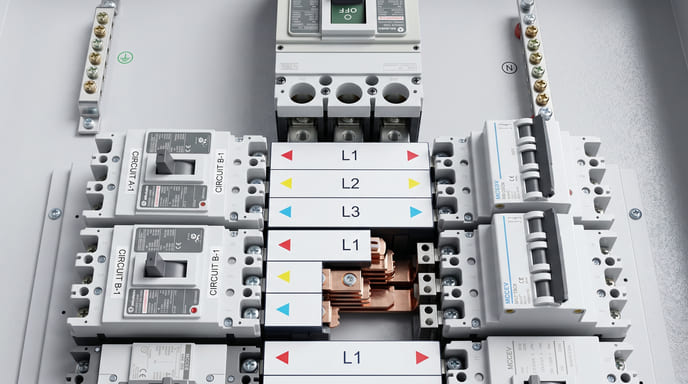
I have worked on many panels where every feeder used an MCCB. I saw empty space and over-spec devices. I needed a better way that keeps safety but adds choice.
Can MCCB and MCB Be Installed on the Same Pan Assembly?
Old habits make me think I must pick one device type. That limits design and raises cost when loads are small or mixed.
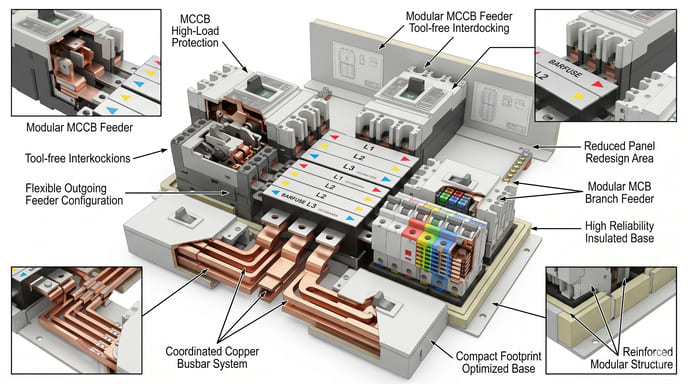
Yes, a hybrid pan assembly allows MCCBs and MCBs on the same base. I can install MCCBs for high-current feeders and MCBs for smaller circuits in one coordinated system.
Device coordination basics
I focus on matching device type to load. I also check breaking capacity and selectivity. I keep wiring simple and safe.
Mounting compatibility
I use standardized rails and busbar interfaces. I make sure spacing and terminals fit both device sizes.
Practical layout choices
I place larger MCCBs near main bus. I group MCB rows for branch circuits. I keep clear labels and access.
Comparison of options
| Aspect | MCCB only pan | MCB only pan | Hybrid pan |
|---|---|---|---|
| Device range | High current only | Low current only | Mixed current |
| Flexibility | Low | Low | High |
| Space use | Often wasteful | Dense but limited | Optimized |
| Cost control | Weak | Moderate | Strong |
I once built a panel for a small factory. The main feeders needed MCCBs. The lighting and sockets did not. With a hybrid pan, I used both. I saved space and parts. The wiring stayed clean.
What Is the Difference Between Traditional and Hybrid Pan Assemblies?
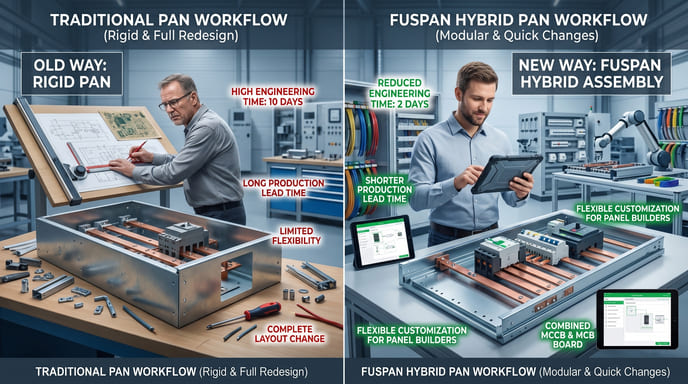
I used traditional pans for years. They were stable but rigid. I had to overdesign to fit the rules.
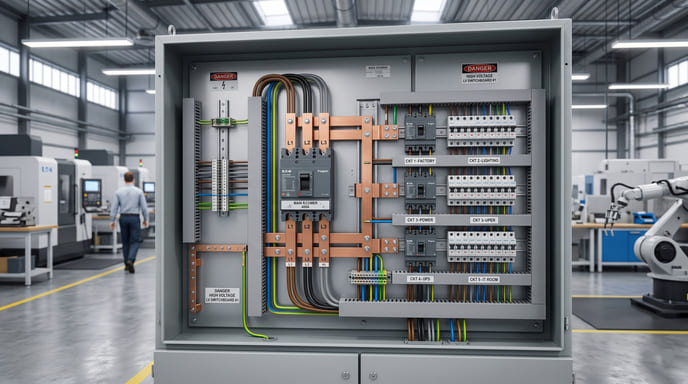
Traditional pans are fixed for one device type, usually MCCB. Hybrid pans are designed with adaptable busbar and mounting systems to support both MCCB and MCB in one assembly.
Structure differences
Traditional pans use fixed pitch and terminals. Hybrid pans use modular busbars and adjustable mounts.
Electrical interface
Traditional designs assume one rating range. Hybrid designs support multiple ratings and connection types.
Upgrade path
Traditional pans are hard to change. Hybrid pans allow device swaps with minimal change.
Key differences table
| Feature | Traditional MCCB Pan | Hybrid Pan |
|---|---|---|
| Mounting pitch | Fixed | Modular/adjustable |
| Busbar design | Single pattern | Multi-interface |
| Device mix | Not supported | Fully supported |
| Retrofit ease | Low | High |
I remember a retrofit where we had to replace several feeders. With a traditional pan, we would rebuild the section. With a hybrid pan, I swapped devices and kept the busbar. The downtime was short.
Why Combine MCCBs and MCBs in One Distribution Board?
I often see mixed loads in real projects. One device type cannot serve all needs well.
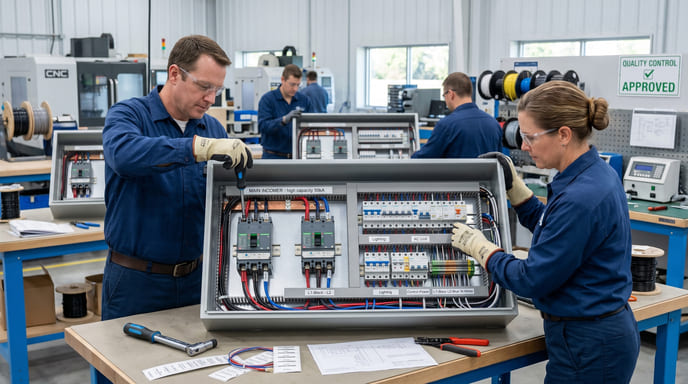
Combining MCCBs and MCBs lets me assign high breaking capacity where needed and use compact, lower-cost protection for small circuits, improving safety, density, and total cost.
Load diversity
Industrial panels have motors, heaters, and control circuits. Each needs a different protection level.
Cost optimization
MCCBs cost more. I avoid using them where an MCB is enough. This reduces bill of materials.
Space efficiency
MCBs are compact. I fit more circuits in the same enclosure without crowding.
Performance balance
I keep selectivity and coordination. I use MCCBs upstream and MCBs downstream2 where suitable.
Benefits overview
| Goal | How hybrid helps |
|---|---|
| Safety | Right device for each load |
| Cost | Use MCB where possible |
| Density | More circuits per panel |
| Flexibility | Easy mix and match |
In one data center project, I had large UPS feeders and many small branch circuits. The hybrid layout let me keep strong protection at the top and dense distribution below. The panel stayed within size limits.
Why More Panel Builders Are Switching to Hybrid Pan Assemblies?
I talk with builders every week. Their needs have changed. They want speed and control, not just space saving.
Builders switch to hybrid pans to gain flexibility, faster customization, and better cost control without redesigning the whole board, which shortens lead time and supports mixed-load applications.
Faster engineering
I reuse one base design. I change only device types and counts. This cuts drawing time.
Standardization
I keep a common platform across projects. I reduce part variety and errors.
Supply chain control
I can choose from multiple device options. I avoid delays when one item is short.
Retrofit and expansion
I add or replace feeders later. I do not rebuild the panel.
Impact metrics
| Metric | Traditional approach | Hybrid approach |
|---|---|---|
| Design time | Long | Short |
| Inventory | High variety | Reduced |
| Lead time | Unstable | More stable |
| Upgrade effort | High | Low |
From my experience at Fuspan, I saw a shift. Builders no longer choose hybrid only to save space. They want flexibility and speed. Our 3-Phase MCCB Panel Assembly supports MCCB and MCB on outgoing feeders. I can match each load, cut cost, and keep the panel compact. I can also simplify retrofits and keep future options open.
Conclusion
Hybrid pan assemblies give me flexible, compact, and cost-efficient panels by mixing MCCBs and MCBs, which fits real loads and speeds up delivery.
-
"How Do You Choose the Right MCCB Pan Assembly in Distribution ...", https://fuspan.com/how-do-you-choose-the-right-mccb-pan-assembly-in-distribution-box/. A standards or manufacturer-neutral technical source should verify that distribution boards can be constructed with busbar and mounting arrangements for different outgoing protective devices, including molded-case and miniature circuit breakers; this supports the functional description rather than proving any specific product design. Evidence role: definition; source type: institution. Supports: A hybrid pan assembly is a distribution board base that supports both MCCBs and MCBs on outgoing feeders.. Scope note: Support may be contextual because “hybrid pan assembly” is a trade/design term rather than a universally standardized category. ↩
-
"Circuit Breaker Selective Coordination - YouTube", https://www.youtube.com/watch?v=R64Wm1GNQDg. Selective-coordination guidance for low-voltage distribution systems commonly discusses upstream and downstream protective-device coordination so that downstream devices clear local faults before upstream devices operate; this supports the logic of coordinating MCCBs upstream with MCBs downstream where ratings permit. Evidence role: mechanism; source type: institution. Supports: Using MCCBs upstream and MCBs downstream can be suitable when selectivity and coordination are verified.. Scope note: The source would support the coordination concept; actual selectivity between a particular MCCB and MCB must be verified with time-current curves or manufacturer data. ↩