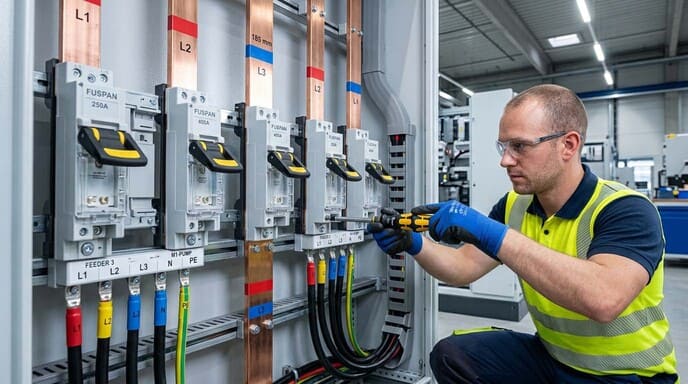
I often see panel builders lose time, space, and margin when one fixed panel design cannot match real project loads.
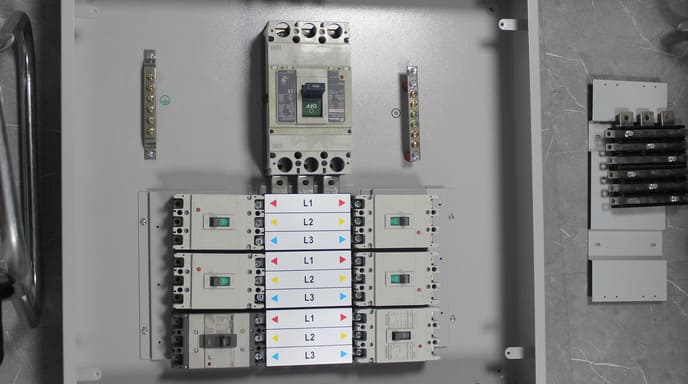
A hybrid pan assembly is a distribution board base that allows MCCBs and MCBs to be installed in one structured system1. I use it to match protection devices to actual loads, reduce wasted space, and improve project flexibility without redesigning the full board.
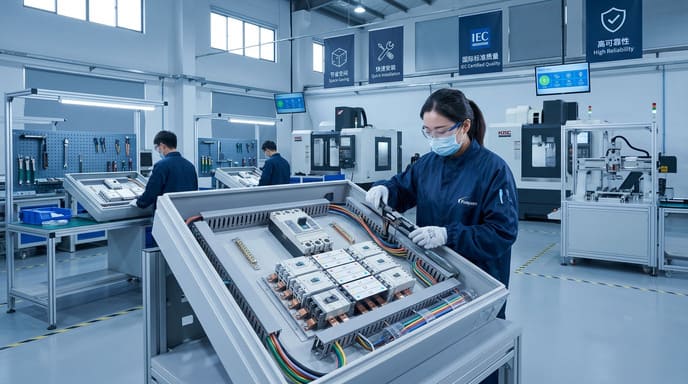
I have seen a clear change in the market. Panel builders are not only asking for smaller boards now. They are asking for a smarter internal structure. They want one distribution board design that can handle large feeders, small feeders, and mixed loads without many special changes. This is where a hybrid pan assembly becomes useful. It gives the board a fixed and clean base, but it still lets me choose MCCBs or MCBs based on each outgoing circuit. That one change can reduce cost, shorten production time, and make the board easier to standardize.
Can MCCB and MCB Be Installed on the Same Pan Assembly?
Many panel builders face pressure when one board has both heavy loads and small branch circuits, but the structure does not support both.
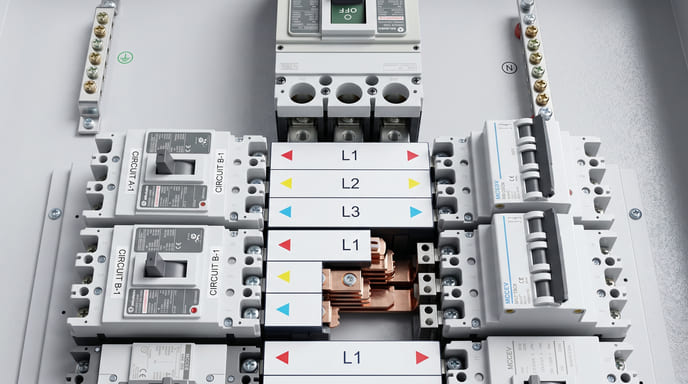
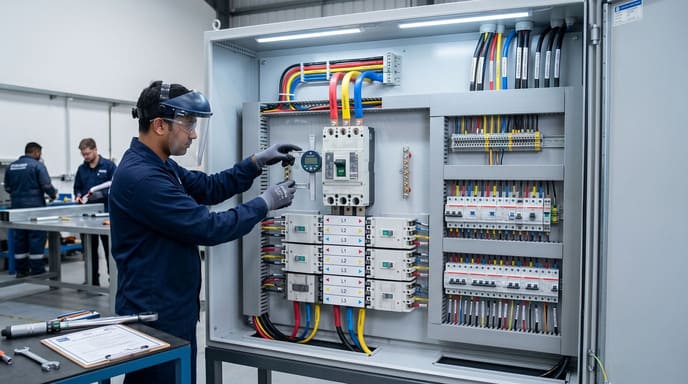
MCCBs and MCBs can be installed on the same pan assembly when the assembly is designed as a hybrid system. I use this design to support different breaker sizes, load levels, and outgoing feeder types in one distribution board.
How I Understand Mixed Breaker Installation
In a normal distribution board, I often see MCCBs used for main incoming protection and larger outgoing feeders. I also see MCBs used for smaller lighting, socket, control, and auxiliary circuits. The problem starts when the pan assembly only supports MCCBs. In that case, every outgoing feeder must use an MCCB, even when the load does not need that level of protection. This increases cost and uses more space.
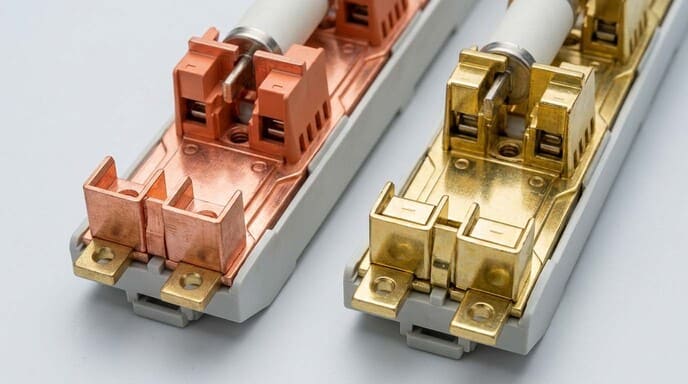
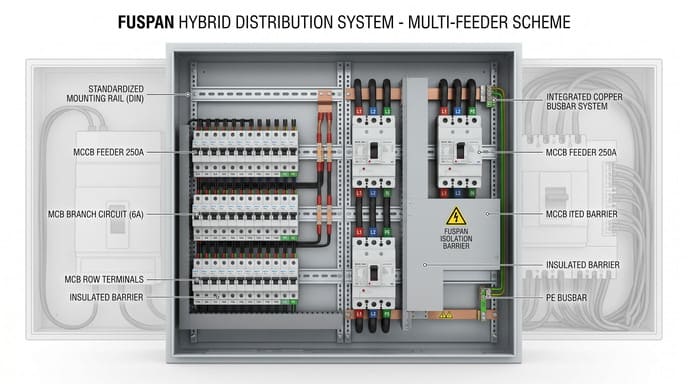
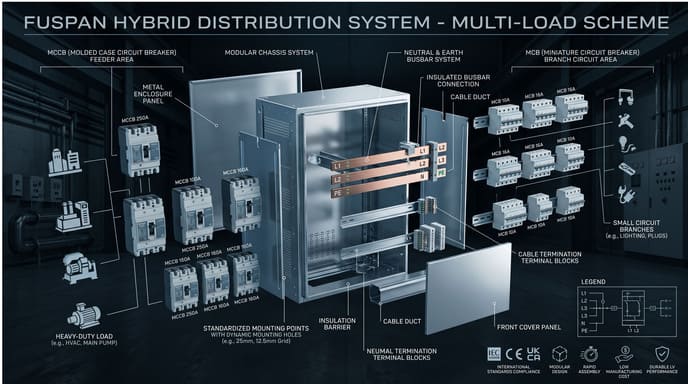
A hybrid pan assembly solves this problem by giving the internal structure enough support for both breaker types. The copper busbar, insulation base, mounting holes, and feeder positions must be designed together2. I do not treat this as a simple mix of parts. I treat it as a complete electrical and mechanical system.
| Item | MCCB Use | MCB Use | My Practical View |
|---|---|---|---|
| Load size | Higher current | Lower current | I match the device to the load |
| Space need | Larger | Smaller | I reduce wasted board space |
| Cost level | Higher | Lower | I control project cost better |
| Application | Motors, main feeders, large equipment | Lighting, sockets, controls | I build one board for mixed loads |
What I Check Before Using Both
I always check current rating, short-circuit level, phase layout, mounting strength, and heat space. A hybrid design must look simple from the outside, but the internal coordination must be correct. If the design is not tested well, mixed installation can create risk3. At Fuspan, I prefer a modular base because it keeps the layout clear. It also helps technicians install breakers faster. I have seen that when the MCCB and MCB areas are clearly arranged, wiring mistakes are reduced. The panel also looks more professional during factory inspection and project handover.
What Is the Difference Between Traditional and Hybrid Pan Assemblies?
A traditional pan assembly can look strong, but it can also force one protection choice across too many different loads.
The main difference is flexibility. A traditional MCCB pan assembly normally supports only MCCB outgoing feeders. A hybrid pan assembly supports both MCCBs and MCBs, so I can match each feeder to real load demand.
Traditional Design Is Often Too Fixed
In many older 3-phase MCCB panel assemblies, the structure is simple but rigid. The board has one incoming MCCB area and several outgoing MCCB positions. This works well when all outgoing circuits are large. It becomes less efficient when the board includes small loads. I have seen projects where a small control circuit used an MCCB only because the pan assembly had no MCB position. That choice made the board more expensive and larger than needed.
A hybrid pan assembly keeps the strength of a traditional MCCB system, but it adds more practical feeder options. I can still use MCCBs for larger loads. I can also install MCBs for smaller branch circuits. This makes the distribution board more balanced.
| Feature | Traditional MCCB Pan Assembly | Hybrid Pan Assembly | My Result |
|---|---|---|---|
| Breaker support | Mainly MCCB | MCCB and MCB | I get more design freedom |
| Panel space | Often larger | More compact | I use space better |
| Cost control | Harder for mixed loads | Easier for mixed loads | I avoid oversizing |
| Customization | More redesign needed | Less redesign needed | I deliver faster |
| Load matching | Less accurate | More accurate | I improve protection planning |
Hybrid Design Supports Standardization
I see standardization as one of the biggest hidden benefits. A panel builder can prepare one board platform for many project types. The same base can support a commercial building, an industrial plant, an EV charging project, or a renewable energy system. The outgoing feeders can change based on the load schedule. The core structure does not need to change every time.
This helps purchasing teams too. They do not need to manage too many special parts. Production teams can also build panels with a repeatable method. Quality teams can inspect the same layout more easily. I believe this is why hybrid pan assemblies are becoming more than a space-saving product. They are becoming a planning tool for better project control.
Why Combine MCCBs and MCBs in One Distribution Board?
A distribution board becomes costly and hard to build when every feeder uses the same breaker style, even when loads are different.
I combine MCCBs and MCBs in one distribution board because real electrical systems have mixed loads. MCCBs protect higher-current feeders, and MCBs protect smaller circuits. The hybrid design lets me use both in one clean structure.
Real Projects Have Mixed Loads
In my work with panel builders, I rarely see a project where every outgoing feeder has the same current demand. A commercial building may have air-conditioning feeders, lighting circuits, socket circuits, pump control, and monitoring systems. An industrial plant may have motors, small machines, control panels, and auxiliary circuits. A data center may need larger feeders and many smaller support circuits. If I use only MCCBs, the board becomes expensive and oversized. If I use only MCBs, the board may not support larger loads.
The hybrid pan assembly gives me a practical middle point. I can place MCCBs where high breaking capacity and higher current are needed. I can place MCBs where compact size and lower current rating are enough. This makes the protection system more logical.
| Load Type | Common Device | Reason I Choose It |
|---|---|---|
| Main outgoing feeder | MCCB | I need higher current capacity |
| Motor feeder | MCCB | I need stronger protection and control |
| Lighting circuit | MCB | I need compact and simple protection |
| Socket circuit | MCB | I need lower current protection |
| Control circuit | MCB | I need space and cost savings |
| EV support circuit | MCCB or MCB | I choose based on actual load |
I Use the Right Device for the Right Load
A good panel design is not about using the largest device everywhere. It is about using the correct device in the correct position. This idea sounds simple, but many traditional assemblies make it hard to do. A hybrid pan assembly supports this idea from the structure itself.
I also find that mixed breaker installation improves maintenance. Technicians can understand the board faster when the layout follows the load type. Larger feeders are easy to find. Smaller circuits are grouped in a clean way. The wiring route is shorter and more direct. Heat space can also be planned better because the breaker sizes are not forced into one pattern. This helps the board look clean, but it also helps the board work safely for a long time.
Why More Panel Builders Are Switching to Hybrid Pan Assemblies?
Many panel builders are under pressure to deliver faster, control costs, and accept changing project needs without rebuilding every panel design.
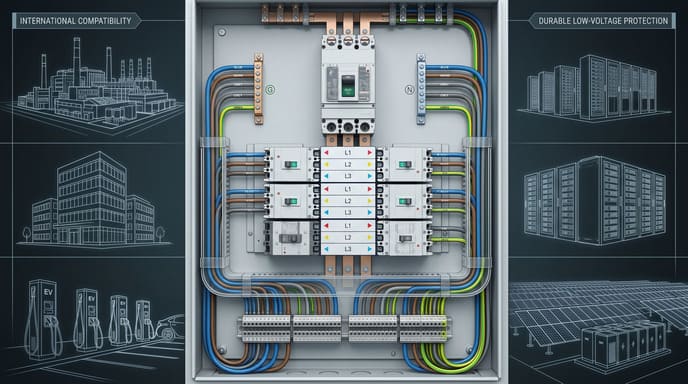
More panel builders are switching to hybrid pan assemblies because they offer faster customization, better space use, easier standardization, and stronger cost control. I see this demand growing in industrial, commercial, data center, EV charging, and renewable energy projects.
The Market Is Asking for Faster Changes
I have noticed that project requirements now change more often than before. A customer may update the load schedule after the first design. A consultant may ask for a different feeder arrangement. A contractor may need a faster delivery time. If the panel builder uses a very fixed assembly, every change can create delay. It can also create extra cost for new drawings, new parts, and new testing steps.
A hybrid pan assembly helps reduce this pressure. The same base structure can support several outgoing arrangements. I can adjust the mix of MCCBs and MCBs with less change to the main board. This makes engineering work easier. It also helps the production team because the panel layout stays familiar.
| Panel Builder Concern | Traditional Challenge | Hybrid Assembly Benefit |
|---|---|---|
| Delivery time | More redesign work | I shorten preparation time |
| Cost control | Too many MCCBs | I use MCBs where suitable |
| Space use | Oversized outgoing area | I make the board more compact |
| Project changes | Layout changes are slow | I adjust feeder mix faster |
| Inspection | Wiring can be less organized | I keep a clean structure |
I See Cost Control as the Main Driver
Many people think hybrid pan assemblies are only about saving space. I do not see it that way. Space saving is important, but cost control is often the stronger reason. When a panel builder can avoid unnecessary MCCBs, the total board cost can drop. The saving becomes more clear when the project has many small outgoing circuits.
I also see value in stable mass production. Panel builders need suppliers that can deliver the same quality again and again. A hybrid pan assembly must have accurate copper parts, strong insulation, clean phase layout, and reliable mounting points. At Fuspan, I see this as both a product issue and a manufacturing issue. A good design is not enough if the factory cannot produce it consistently.
Where I See Hybrid Assemblies Used
I see hybrid pan assemblies used more often in mixed-load projects. Industrial plants use them when equipment loads and auxiliary loads sit in the same board. Commercial buildings use them when main services and small branch circuits share one distribution area. Data centers use them when power needs must stay organized and easy to expand. EV charging and renewable energy projects also use them because load patterns can change by site.
This is why I believe hybrid pan assemblies will continue to grow. They help panel builders stay flexible without losing control of structure, quality, and cost.
Conclusion
I see hybrid pan assemblies as a practical way to build safer, cleaner, and more flexible distribution boards for mixed-load projects.
-
"IEC 61439 Standard Explained: Low Voltage Switchgear Design ...", https://www.keentelengineering.com/iec-61439-switchgear. A standards or technical reference on low-voltage distribution assemblies supports that distribution boards may incorporate multiple types of protective switching devices within a coordinated assembly, although it may not use the specific commercial phrase “hybrid pan assembly.” Evidence role: definition; source type: institution. Supports: A hybrid pan assembly is a distribution board base that permits MCCBs and MCBs to be installed together in a structured system.. Scope note: Support is likely contextual because “hybrid pan assembly” is an industry/product term rather than a universally standardized category. ↩
-
"IEC 61439 Designs Verification & Compliances for Low Voltage ...", https://payapress.com/iec-61439-design-verification-compliance-eu-guide/. IEC 61439-based guidance states that low-voltage switchgear assemblies require verification of busbar systems, insulation distances, mechanical construction, and arrangement of functional units, supporting the need for integrated electrical and mechanical design. Evidence role: mechanism; source type: institution. Supports: A hybrid pan assembly must be designed as an integrated electrical and mechanical system, including busbars, insulation, mounting, and feeder positions.. Scope note: The standard supports the design principles for assemblies generally, not a specific hybrid pan product unless that product is tested to the standard. ↩
-
"[PDF] Work book The standard IEC 61439 in practice - ABB", https://library.e.abb.com/public/32f98df19e5849e1b6b5d6172e00be73/2CPC000313B0201.pdf. IEC 61439 guidance emphasizes design verification and routine verification for low-voltage assemblies, supporting the claim that unverified configurations can introduce safety and performance risks. Evidence role: expert_consensus; source type: institution. Supports: Insufficient testing of a mixed breaker assembly can create electrical or mechanical risk.. Scope note: The source establishes the importance of verification generally; it may not specifically test the article’s described mixed MCCB/MCB layout. ↩