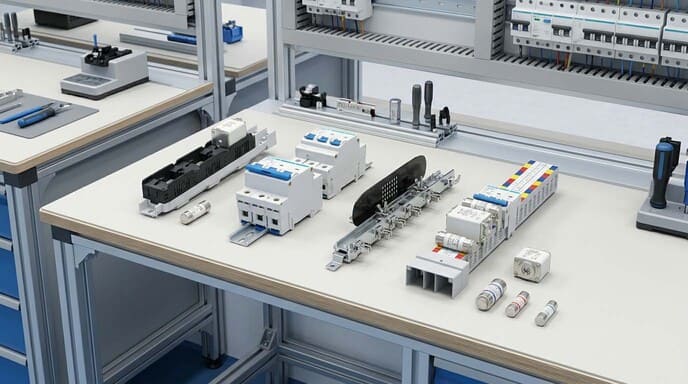
I see many panel builders still struggle with messy MCB bases, and I feel that pain when I visit sites with rushed cabling.
A modular MCB pan assembly1 allows fast, clean, and safe breaker mounting with plug-and-play busbars, reducing wiring time and errors compared with loose rods and bars.
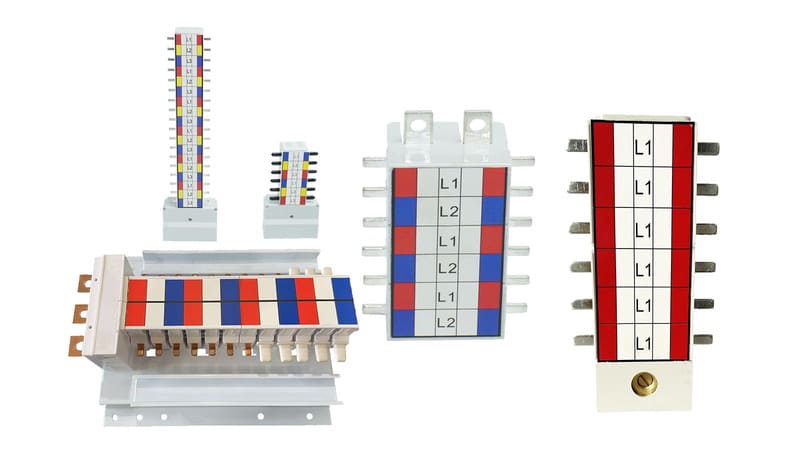
I learned that readers stay when I share how I solved these same layout and expansion issues in my own projects, so stay with me as I unpack each variant.
busbar mcb 1 phase, 1P MCB Pan Assembly?
I often start with single-phase boards, and I remember how a simple 1P busbar saved me hours during a tight retrofit.
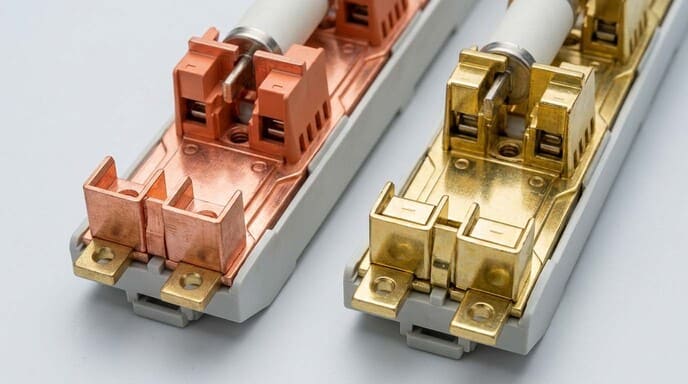
A 1P MCB pan assembly2 combines a single-phase busbar and modular base, letting you slot in miniature breakers quickly while keeping spacing and phase identification clear.
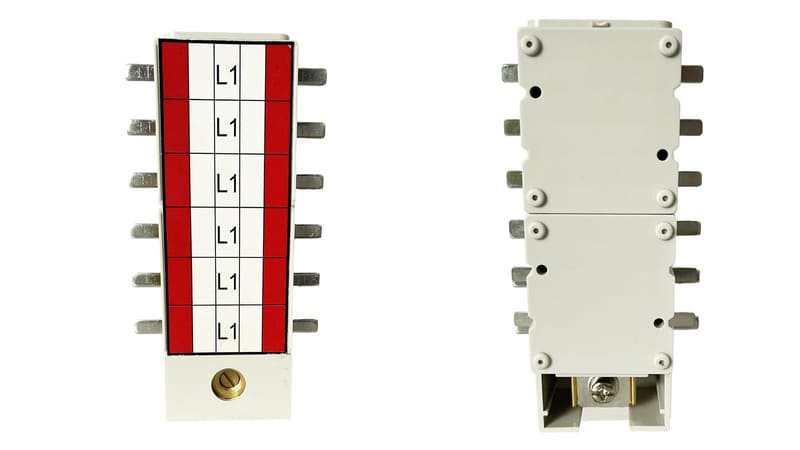
How a 1P assembly keeps things simple
When I work on small distribution boxes3, I want speed and safety. A 1P pan assembly gives me both. The base is pre-drilled and aligned, so I do not measure hole by hole. The busbar comes insulated, so I avoid taping or sleeving in the field. I can add breakers as the load list grows, which is common when a client asks for one more circuit after inspection. Below is how I break down the fit for common needs:
| Need | 1P Pan Benefit |
|---|---|
| Fast install | Pre-cut busbar, no extra tools |
| Clean look | Uniform spacing, fewer wires |
| Future expansion | Plug-and-play extra poles |
| Safety | Insulation, clear L marking |
I once swapped out a loose rod system for a 1P pan in a small shop. The wiring time dropped, and the owner liked the neat look. That made me trust these assemblies for every small job.
busbar mcb 2 phase, 2P MCB Pan Assembly?
My first two-phase job was a cramped control cabinet, and I learned the hard way that a tidy 2P busbar makes maintenance less risky.
A 2P MCB pan assembly4 provides a ready-made two-phase busbar and mounting base that align both poles, simplifying balanced loading and reducing wiring mistakes in dual-phase panels.
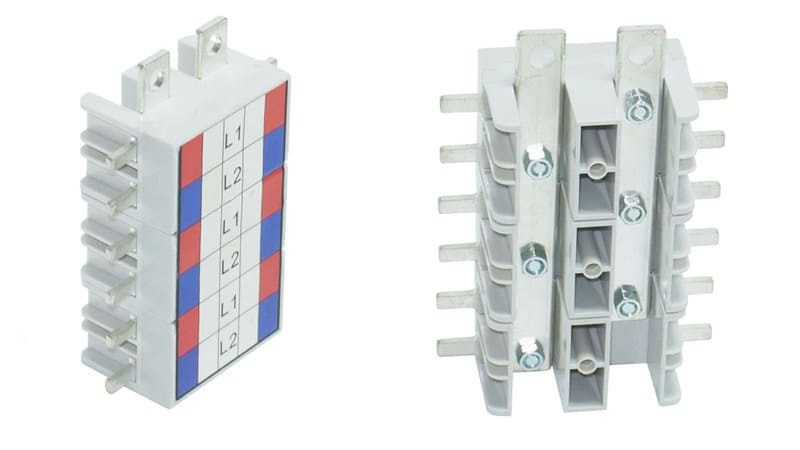
Why two-phase pans reduce errors
In dual-phase systems, I must keep phases in order. A 2P pan assembly uses color coding and fixed spacing to guide me. I can feed both poles with one move, and the shared base keeps breakers straight. Here is how I see its value:
| Aspect | 2P Pan Feature |
|---|---|
| Phase order | Color-coded L1/L2 |
| Balanced loading | Even spacing for heat control |
| Time saving | Fewer point-to-point wires |
| Expansion | Add pairs without drilling |
I recall a time when a site electrician miswired phases using loose links, and the client had flickering lights. After switching to a 2P pan, the issue stopped. The modular approach made training new techs easier. I now insist on 2P pans for any dual-phase board I design because they cut risk and make audits smoother.
busbar mcb 3 phase, 3P MCB Pan Assembly?
I have seen three-phase panels turn into spaghetti, and that pushed me to adopt structured 3P pans with clear L1, L2, L3 markings.
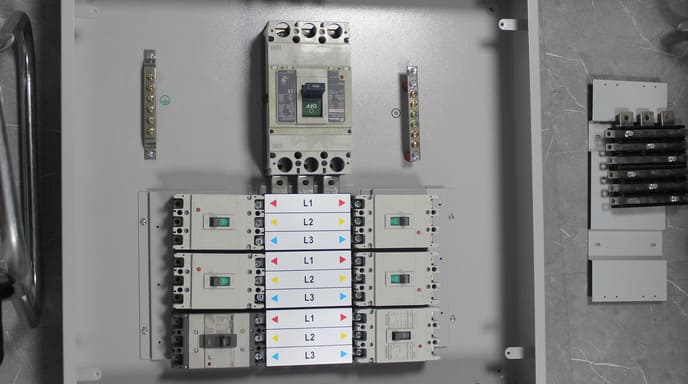
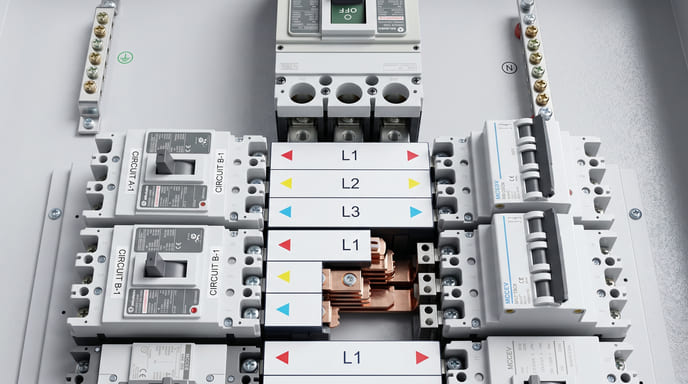
A 3P MCB pan assembly5 integrates a three-phase busbar and mounting plate, allowing quick plug-in of three-pole breakers with proper spacing, color coding, and reduced field wiring.
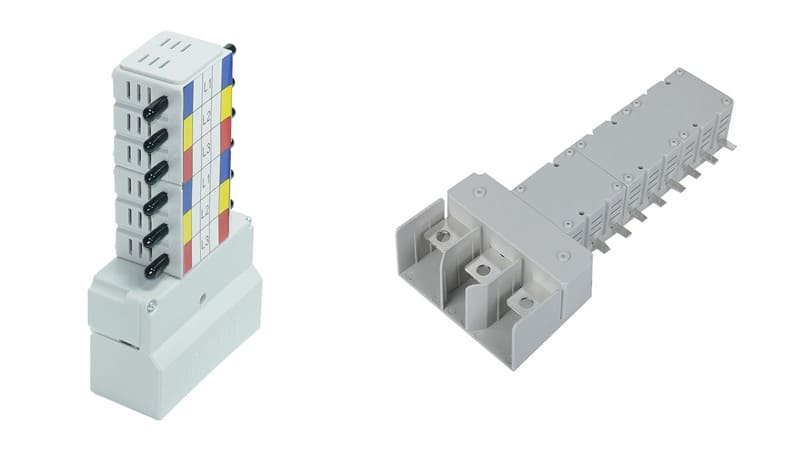
Making three-phase boards neat and future-ready
Three-phase distribution needs clarity. I like that a 3P pan assembly arrives with insulated bars in standard IEC colors. I mount the plate, land the incoming feed, and then add breakers as circuits grow. This reduces my drilling and cutting on site. I also keep airflow uniform, which helps with heat. A quick view:
| Key Point | 3P Pan Advantage |
|---|---|
| Phase ID | L1/L2/L3 colors on busbar |
| Uniform spacing | Even breaker gaps |
| Plug-and-play | Tool-minimized insertion |
| Scalability | Add 3P feeders easily |
In one factory upgrade, the inspector noted the clean interior and passed the board without extra questions. I credit the 3P pan assembly for that. The modular build cut install time by about one-third, and my team felt less pressure. I see clients ask for expansion often, so being able to add poles without rework is a real win.
3P MCB Pan Assembly With dock?
I once had to fit an MCCB6 and several 3P MCBs in one compact panel, and the dock-style assembly saved us from cramped wiring.
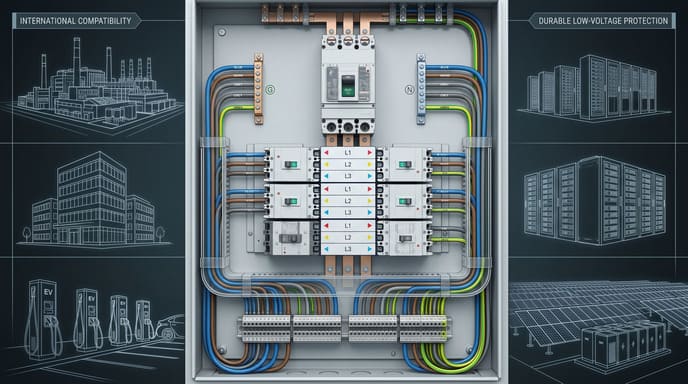
A 3P MCB pan assembly5 with dock offers a combined base for an MCCB and outgoing 3P MCBs, creating a tidy, modular layout that reduces cabling and supports fast expansion.
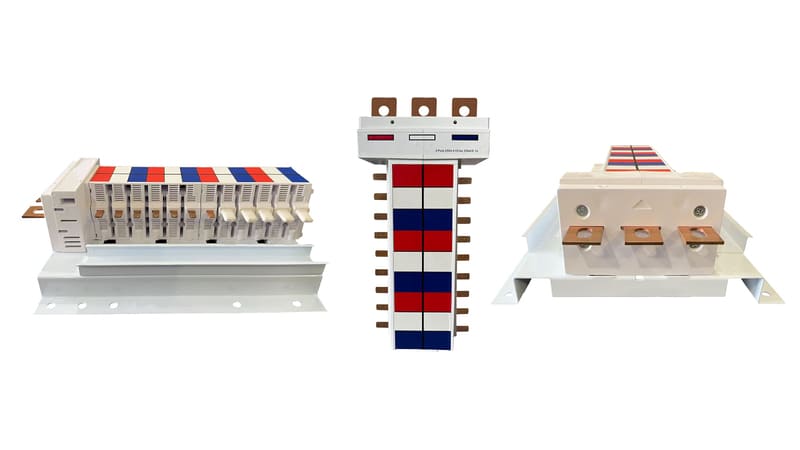
How a dock-style base elevates panel builds
When I need to integrate an incoming MCCB with multiple outgoing MCBs, I look for a dock. It acts as a strong backbone. I mount the MCCB on the pan, connect the vertical busbar, and then dock the MCBs along the bus. The grounding terminal is often included, so earthing stays simple. Here is how I map its benefits:
| Feature | Docked 3P Pan Benefit |
|---|---|
| Integrated MCCB base | Secure incoming breaker mount |
| Vertical busbar | Clear phase routing |
| Outgoing organization | Symmetrical MCB alignment |
| Inspection-ready | Professional look, easy tracing |
In a Middle East project, I used such a dock system. The internal structure looked neat and symmetric. The client appreciated the clear phase markings and fast installation. We cut wiring time by about 35%. That success made me push for dock-style pans for any project that needs both incoming protection and multiple feeders. It keeps the panel ready for audits and later changes without chaos.
Conclusion
Modular MCB pan assemblies make installs faster, cleaner, safer, and easier to expand, whether for 1P, 2P, 3P, or docked three-phase boards.
-
Explore how modular MCB pan assemblies enhance efficiency and safety in electrical installations. ↩
-
Learn about the advantages of 1P MCB pan assemblies for quick and safe installations. ↩
-
Learn about the essential features that make distribution boxes efficient and safe. ↩
-
Discover how 2P MCB pan assemblies reduce errors and enhance maintenance in dual-phase systems. ↩
-
Find out how 3P MCB pan assemblies streamline three-phase installations and improve clarity. ↩ ↩
-
Get insights into the role of MCCBs in protecting electrical circuits and ensuring safety. ↩