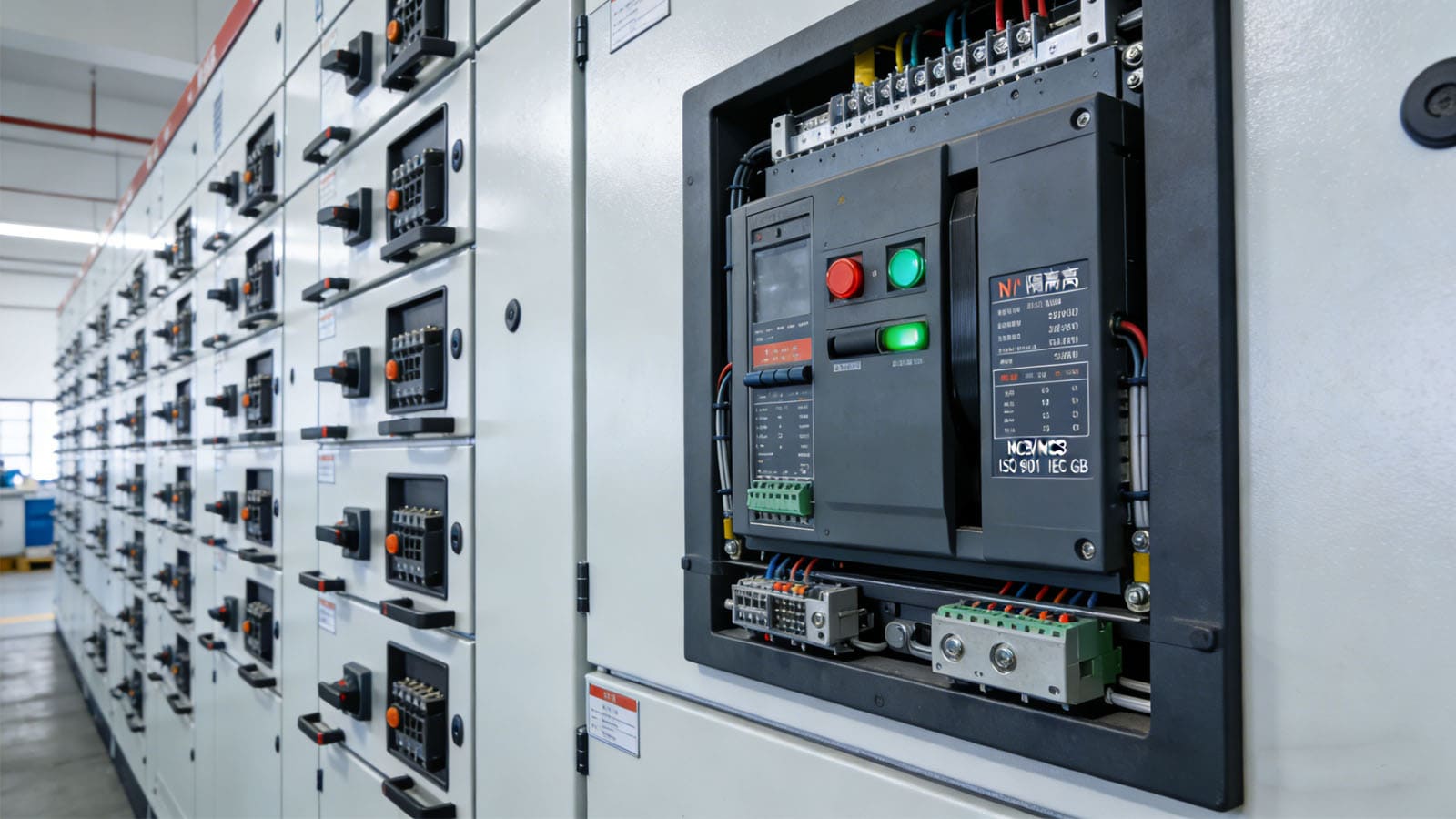
Most arguments about “bad distribution boxes” in my work do not start with the enclosure itself. They usually start with a hidden problem in the pan assembly that nobody checked carefully.
Pan assembly quality decides how safe and reliable a distribution box will be, because it controls electrical connections, temperature rise, short-circuit strength, and insulation paths, which all determine whether the box can run safely for years.
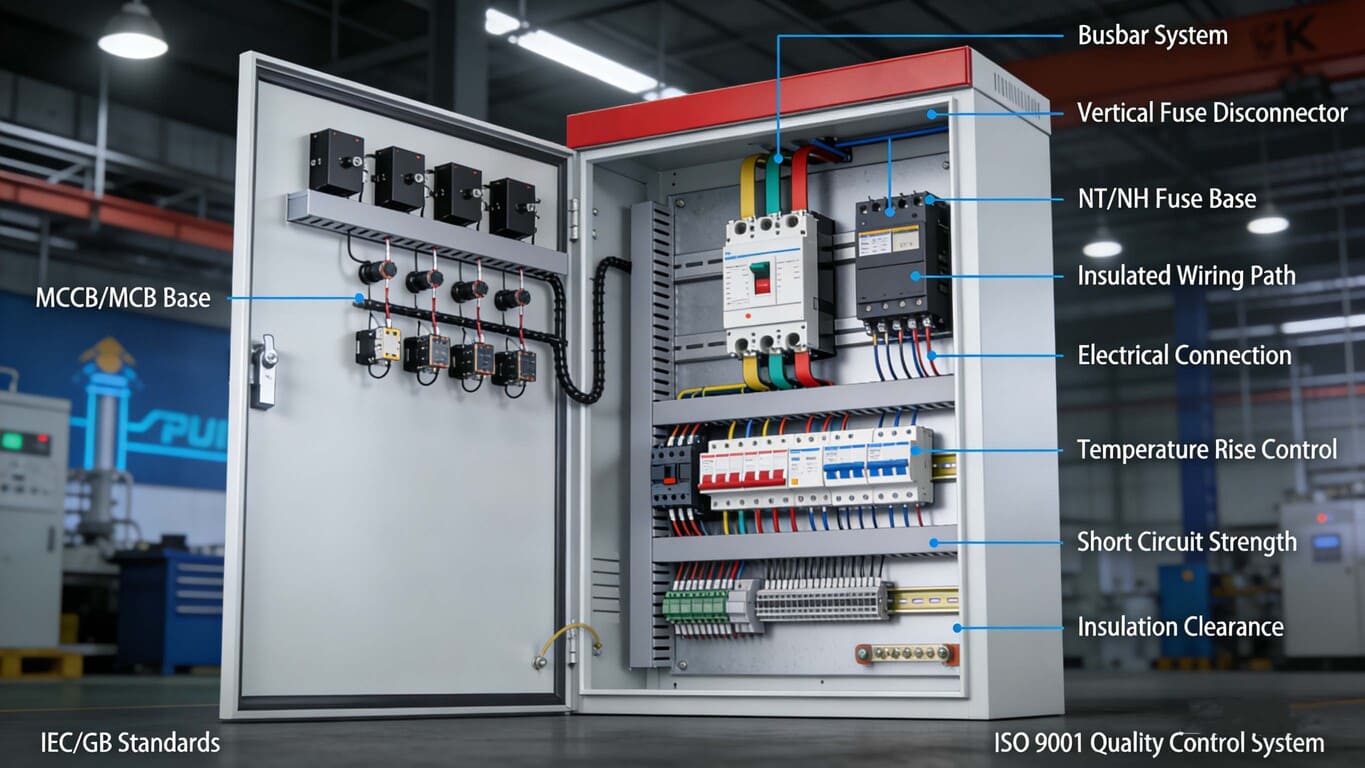
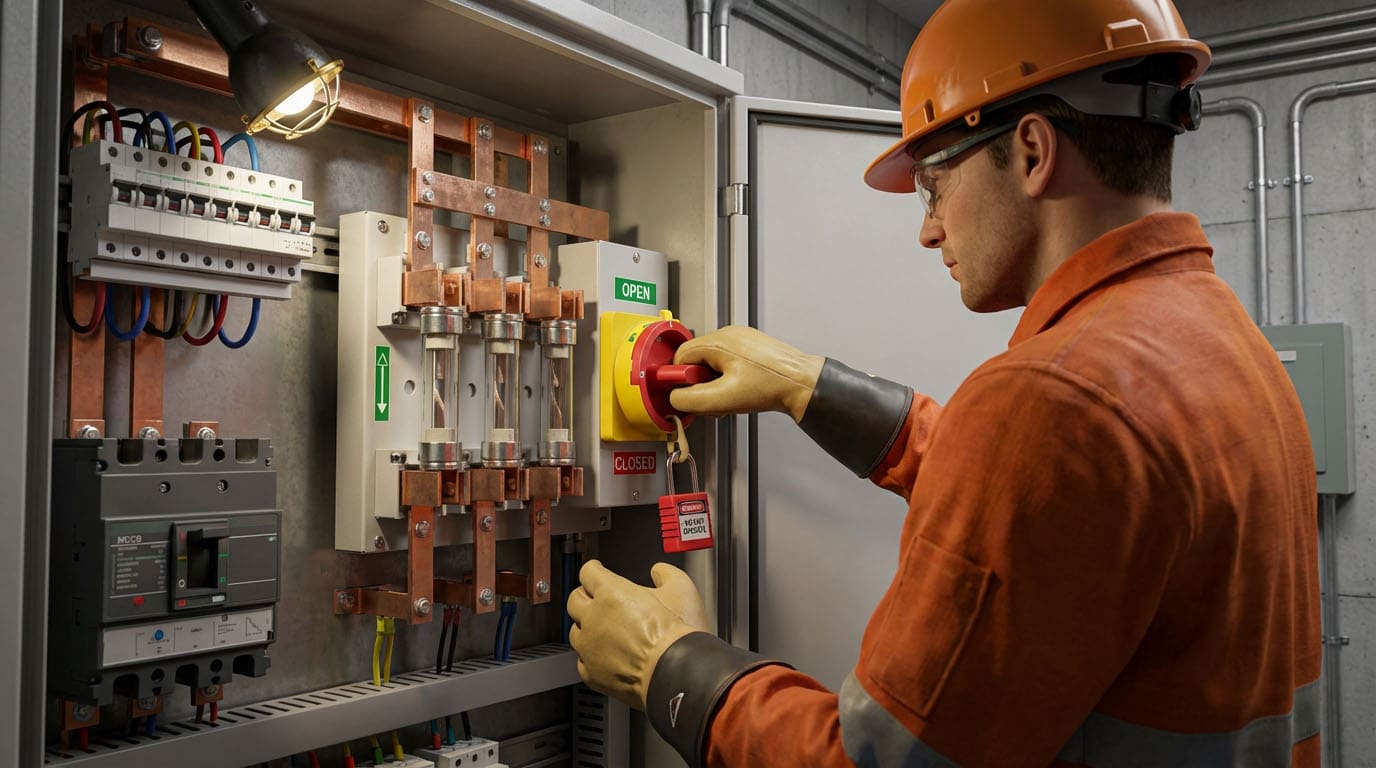
I see burned copper, loose joints, and twisted parts inside a box that looked fine from outside. So I stopped looking at distribution boxes as “metal + door + breakers”. I see them as complete systems. In this system, the pan assembly acts like the skeleton and main blood vessels. If the skeleton is weak, no label or logo can save the box. That is why I now pay far more attention to pan assembly details than to any paint color or window design.
Pan Assembly: The "Skeleton" and Core of Electrical Connections in Low-Voltage Power Distribution?
I often learn that buyers are more concerned with the circuit breaker brand, housing thickness, and IP protection rating. They forget that everything depends on how the internal "skeleton" secures and connects these components.
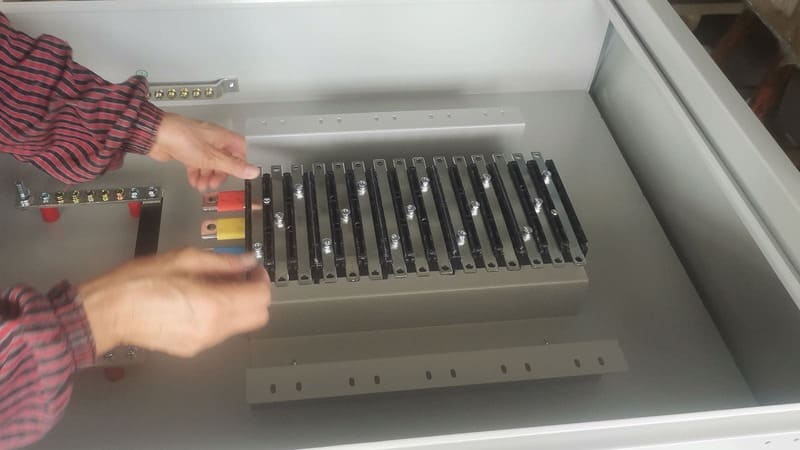
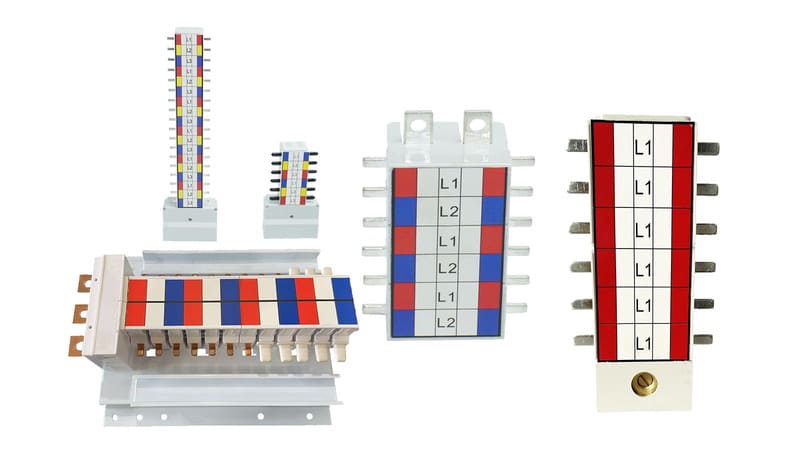
The pan assembly acts as the structural and electrical backbone of a distribution box. It supports breakers, busbars, and terminals, defines clearances and creepage, and dictates how current flows and how forces spread during faults.
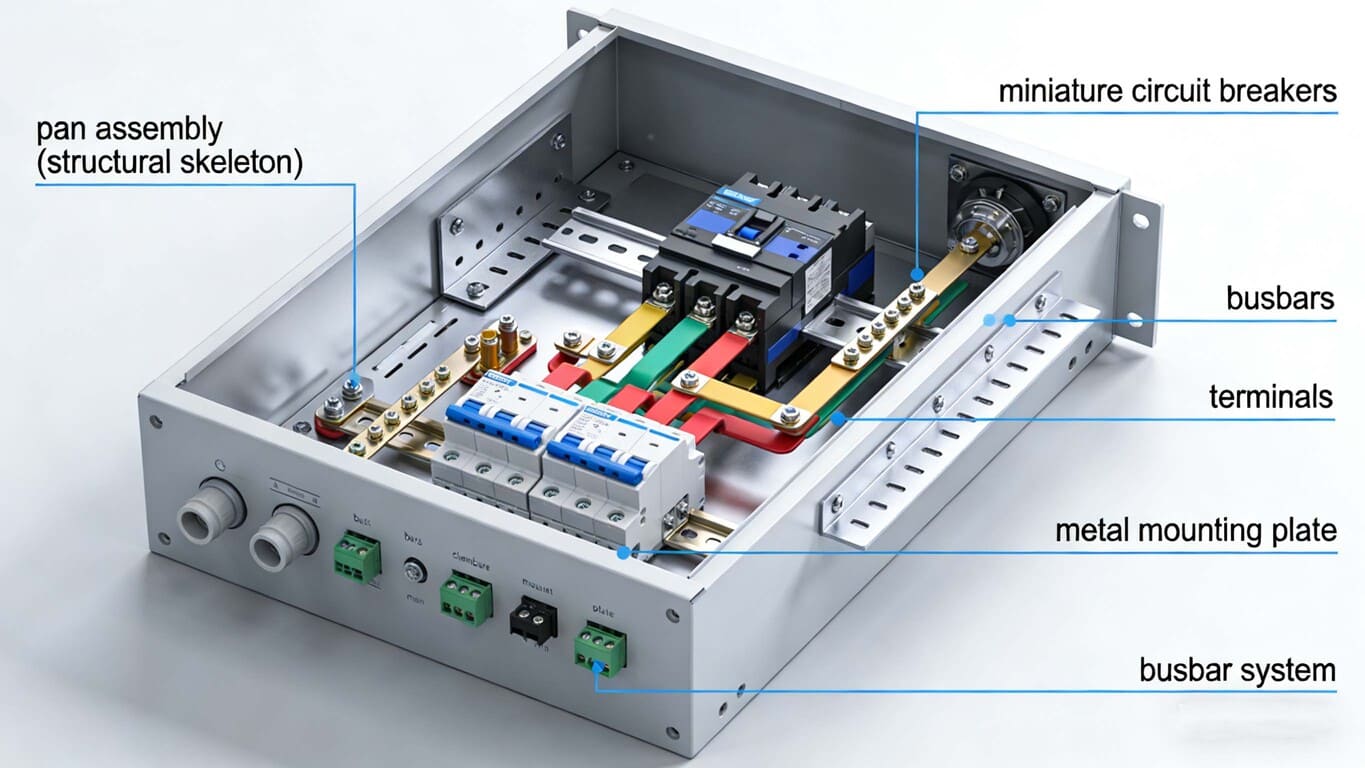
Previously, I focused on eye-catching specifications. I would discuss rated current and enclosure dimensions with clients. Later, I started to delve into fault analysis. I've seen busbars bend under fault forces and molded case circuit breakers severely misaligned, causing terminals to loosen under vibration. I realized then that a distribution box assembly is not just a mounting plate; it simultaneously withstands electric field forces, mechanical stresses, and heat conduction. So now, when I design or evaluate a distribution box, I first open it and carefully examine its internal structure.
What makes a pan assembly the real core of the system?
| Element | Role in the system | Risk if ignored |
|---|---|---|
| Mechanical structure | Holds MCCBs, MCBs, and busbars in fixed positions | Misalignment, loose joints, vibration damage |
| Electrical connection layout | Defines current paths and contact points | Hot spots, uneven load, unexpected parallel paths |
| Clearances and creepage | Sets insulation distances between phases and to earth | Tracking, flashover, surface discharge |
| Mounting holes and tolerances | Aligns devices and accessories with proper pressure and contact area | Poor contact pressure, fast loosening |
| Material stiffness and shape | Resists mechanical forces from short circuits or switching operations | Deformation, cracked supports, dangerous movement |
I sometimes explain it this way to customers: the enclosure is only the shell, the breakers are the organs, and the pan assembly is the bones and main vessels. If the skeleton is poorly designed, even the best organs cannot work well. Once I started to treat pan assembly design as the main engineering job, my rate of after-sales issues dropped sharply. That is also why I believe most “distribution box quality” disputes actually begin in this hidden skeleton.
Temperature Rise and Short-Circuit Withstand: The Bottom Line Requirements for Safe Operation?
I have seen well-known brands fail temperature-rise tests when we tested real, worst-case loads. The catalog looked perfect. The metal plate looked thick. The weak points were in the pan assembly design.
Safe pan assemblies must keep temperature rise within standard limits at rated current and withstand mechanical and thermal forces during short circuits, without deformation, insulation damage, or loss of contact pressure.
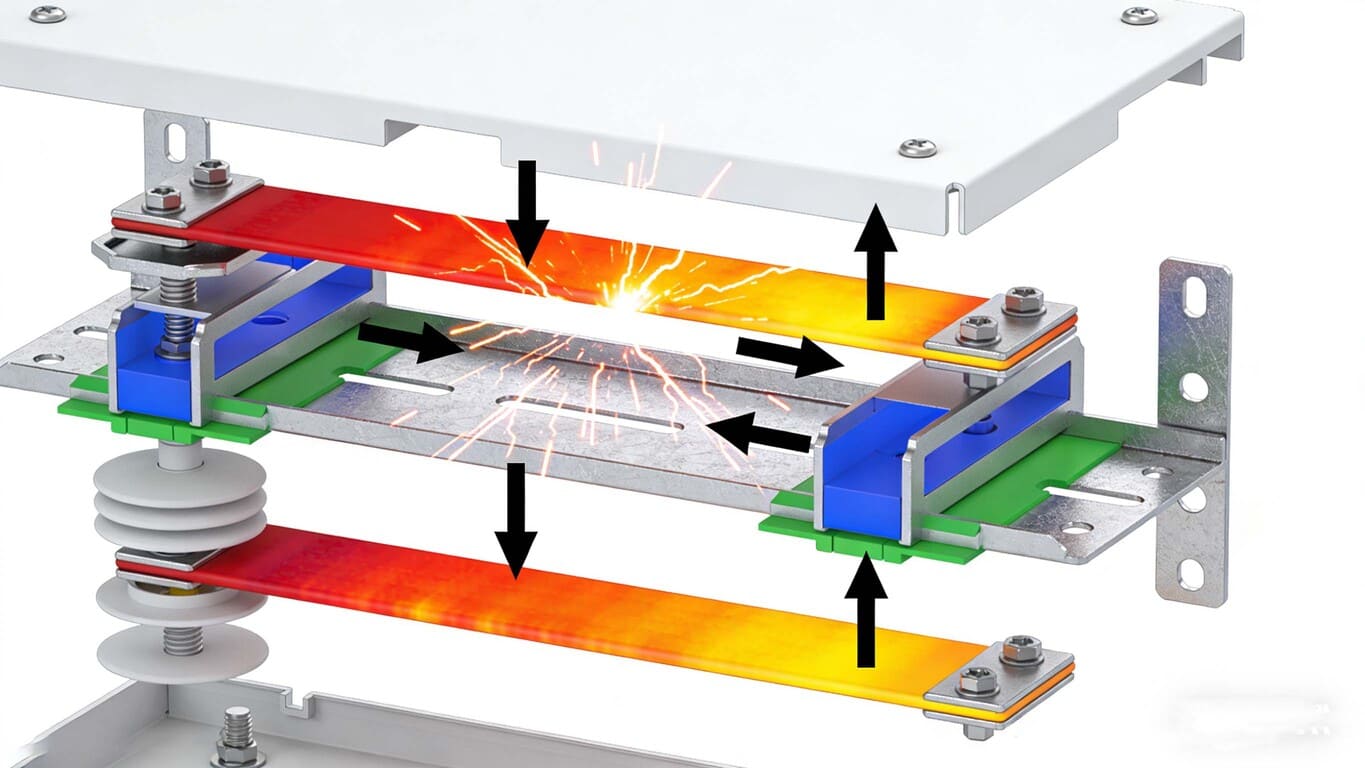
In some customer projects, the complaints started after a few months. Breakers felt hot to the touch. Plastic around terminals turned slightly brown. When we traced the problem, we saw that the busbars and pan had passed a basic check, but no one had tested a true worst-case combination: full load, maximum ambient, and continuous operation. We also saw pan assemblies that bent slightly when facing short-circuit forces. They did not collapse fully, but they weakened contact pressure over time. These are not dramatic failures on day one. They become chronic issues and unplanned downtime later.
How do temperature rise and short-circuit withstand set the safety baseline?
| Aspect | What I check in real projects | What can go wrong if done poorly |
|---|---|---|
| Temperature rise at terminals | Max load, worst ambient, full circuit usage | Loose joints, melting insulation, broken breakers |
| Busbar cross-section and shape | Real current paths, not only rated nameplate | Hot spots, uneven heating, thermal fatigue |
| Contact area and pressure | Washer types, tightening access, repeatable torque in the field | Micro-arcing, noise, fast oxidation |
| Short-circuit mechanical forces | Support points, bracing, and fixing of pan and busbars | Bending, twisting, broken supports |
| Post-fault integrity | Whether the pan can still hold devices safely after a fault | Devices shift, clearances reduce, new risks appear |
From my point of view, real product differentiation happens here. Many pan assemblies look similar at a glance. However, when a third-party lab pushes them near their limits, the differences appear. I now insist on third-party temperature-rise verification as a basic entry ticket. I also run my own internal stress tests that cover short-circuit forces and worst-case loads. This costs time and money. It also saves me many arguments and failures later. I would rather discover a weak connection hole pattern in my lab than see a burned bar in a customer’s plant.
Protection Rating, Flame Retardant Materials, and Environmental Adaptability Standards?
I often hear customers only focus on protection ratings like IP54 and IP65 when choosing distribution boxes, but rarely ask about the performance of the distribution box enclosure material in high-temperature, humid, or polluted environments.
A safe pan assembly must match the enclosure’s protection rating with proper insulation, flame-retardant materials, and corrosion-resistant parts, so that temperature, humidity, and pollution do not slowly destroy the internal structure.
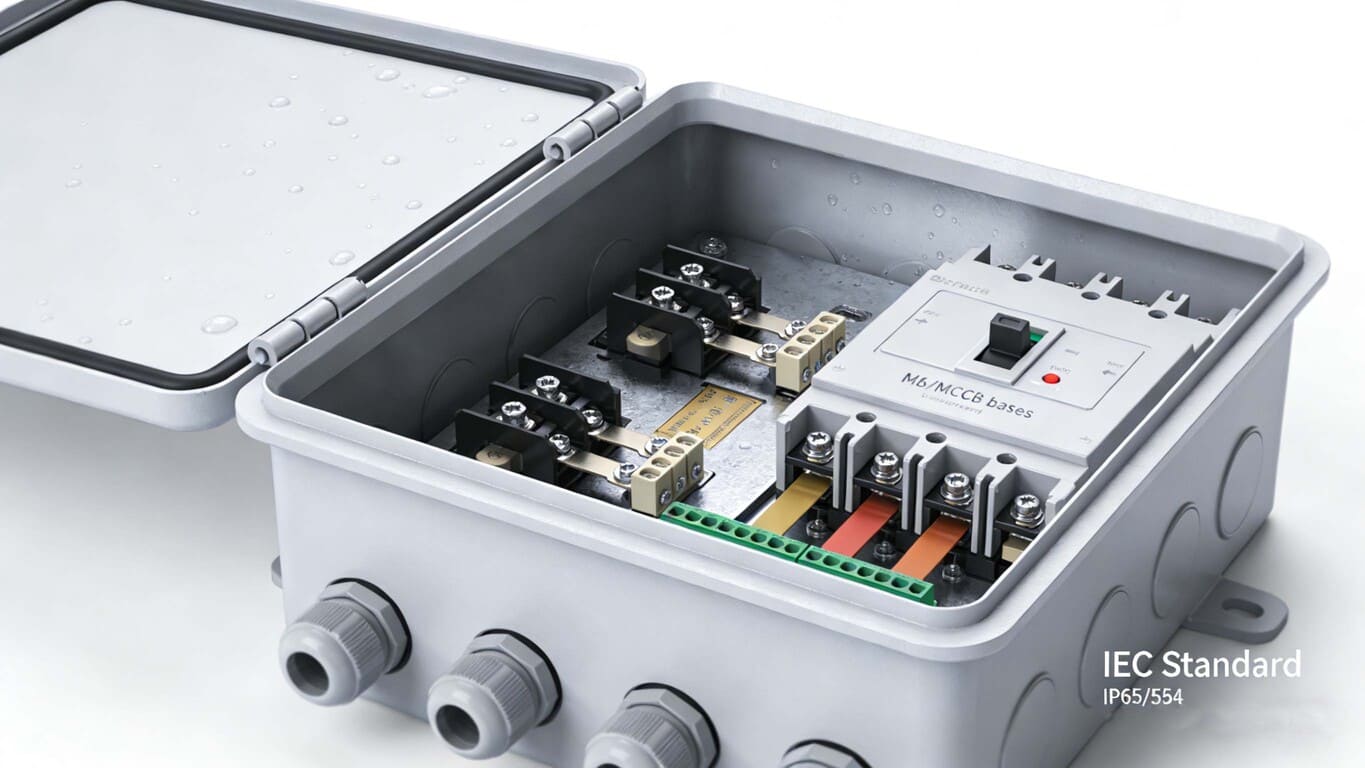
I worked on a project near the coast where salty air attacked metal parts inside the box. The enclosure had a good IP rating, but the internal supports and small hardware did not use the right materials. The pan assembly aged faster than expected. In another project, I saw plastic supports that softened under repeated warming and cooling cycles. No fire started, but clearances changed and terminals loosened. After these cases, I started to treat material choice and environmental matching as part of the pan assembly design, not as small accessory decisions.
What standards and choices matter for pan assembly material and environment?
| Factor | What I look for in design and supply | Risk if ignored |
|---|---|---|
| Protection rating (IP) | Proper seals + internal layout that stays dry and clean | Condensation, corrosion, tracking |
| Flame retardant level | Verified UL94 V-0 or similar for supports, bases, and insulators | Dripping plastic, fire spread inside the box |
| UV and temperature stability | Stable properties under full operating temp range and sunlight where needed | Cracking, embrittlement, loss of mechanical strength |
| Corrosion resistance | Galvanized or coated metal parts, stainless hardware where needed | Rust, weakened supports, poor earthing |
| Pollution degree and creepage | Correct creepage distances and material groups for local environment | Surface tracking, flashover, partial discharge |
In my orders, I now lock material types in contracts, not only dimensions. I ask suppliers for flame-retardant and environmental certificates. If I change a resin or coating, I run at least small-batch trials in real or simulated conditions. This looks strict, but I have learned that one “silent” change in plastic grade can ruin years of field performance. Many end users cannot see these choices at purchase time. They only see the results years later. So I feel responsible for making these choices visible and controlled from the start.
Key Focus Areas of Third-Party Certification and Factory Quality Inspection?
I've seen clients blindly trust any product with a testing report. I've also seen well-known brands fail re-inspections because their products deviated from the certified samples. These deviations are often hidden in the details of cookware assembly.
Third-party certification and internal factory quality checks must focus on pan assembly design, temperature rise, short-circuit performance, material control, and assembly consistency, so that every batch matches the tested and approved design.
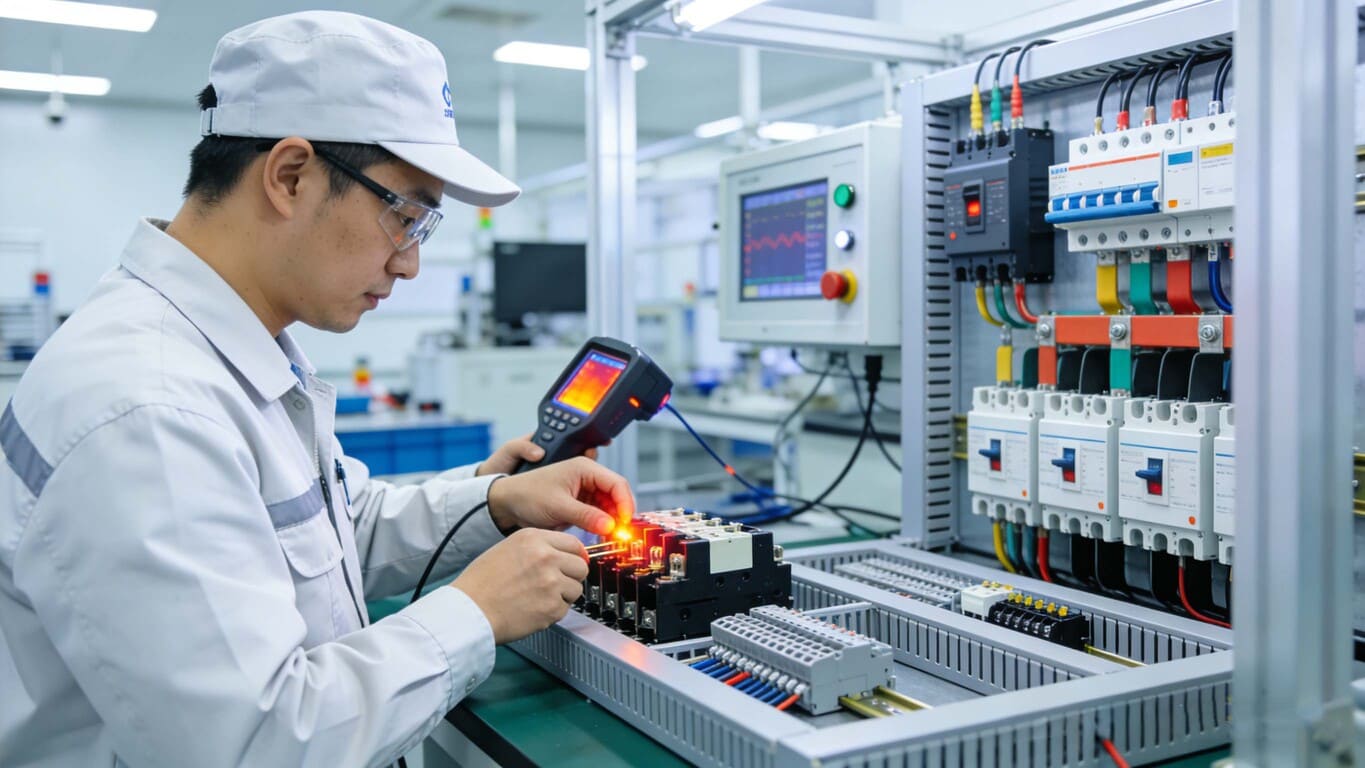
In my own work, I rely on third-party labs to validate that my design passes standards. However, I do not stop there. I know that once a design passes, daily production can slowly shift. A supplier might change a bolt coating, a copper supplier, or a plastic formulation. None of these changes show in the catalog, but they can change performance. So I treat pan assembly quality1 as a living process, not as a one-time certificate. This means I run regular internal audits and tests on random batches.
How do I use certification and inspection to control pan assembly quality?
| Area | What third-party and in-house checks target | How this reduces risk for buyers |
|---|---|---|
| Type tests (design level) | Temperature rise, short-circuit withstand, dielectric strength | Confirms that design is safe under worst-case use |
| Routine tests (factory) | Visual checks, torque checks, dielectric test, functional checks | Stops obvious assembly mistakes before shipment |
| Material traceability | Batch records for copper, steel, plastic, and coatings | Prevents hidden material changes from lowering quality |
| Process audits | Periodic review of assembly steps, tools, and work instructions | Keeps production aligned with tested design |
| Small-batch field trials | Limited first deliveries to real sites with monitoring | Finds real-world issues before mass rollout |
When helping clients develop solutions, I typically recommend a simple approach. First, request an independent temperature rise report. Second, clearly define critical materials and processing techniques in the contract. Third, conduct small-scale pilot production before placing large orders. Finally, consider the total cost of ownership, not just the purchase price. I've seen many clients try to save on upfront investment only to end up losing more due to downtime and repairs. Robust switchboard components and a robust quality management system do require an initial investment, but they pay off throughout the switchboard's lifespan.
Conclusion
From my experience, distribution box safety does not depend on the door or nameplate. It depends on how seriously the pan assembly is designed, tested, and controlled from factory to field.
-
Understanding pan assembly quality is crucial for ensuring the safety and reliability of distribution boxes. ↩