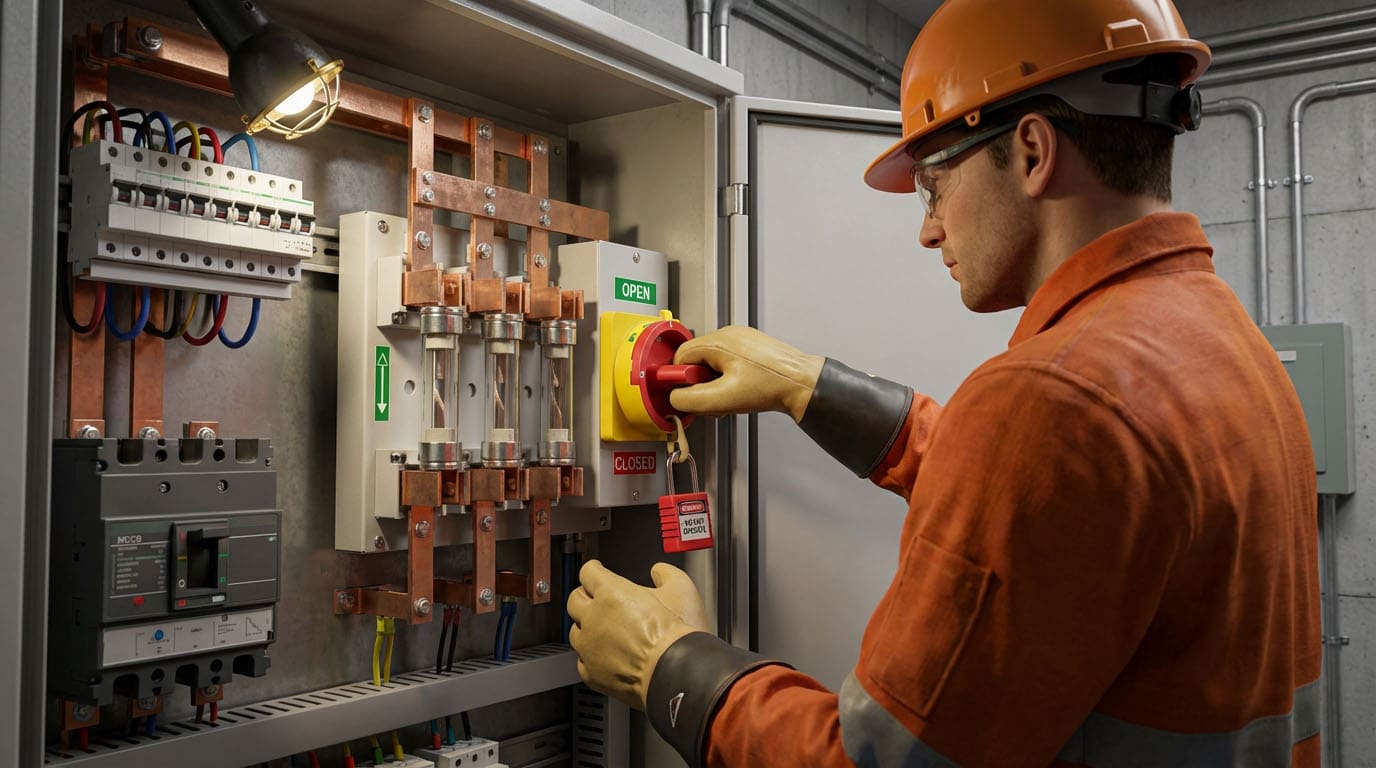
When designing or assembling a distribution board, selecting the right fuse switch disconnector1 is a critical decision. A wrong choice can lead to insufficient protection, non-compliance with standards, unnecessary downtime, or even safety risks.
This guide is written for panel builders, system integrators, and electrical contractors who want to avoid common selection mistakes and ensure their distribution boards are safe, reliable, and compliant.
1. Start with the Application, Not the Product
One of the most common mistakes is choosing a fuse switch disconnector based only on price or current rating, without fully considering the application.
Before selecting a model, ask yourself:
-
Is this for an industrial distribution board2, a commercial panel, or a specific system such as motors or energy storage?
-
Will it operate under continuous load or frequent switching?
-
Is installation space limited inside the enclosure?
Different applications place very different demands on the fuse switch disconnector. A solution suitable for a small commercial panel may be completely inappropriate for an industrial distribution board.
2. Rated Voltage and Current Must Match the System
A fuse switch disconnector must be rated for both the system voltage and the maximum operating current.
Key points to verify:
-
Rated operational voltage (e.g. 400V, 690V)
-
Rated operational current (e.g. 160A, 400A, 630A)
-
Compatibility with the fuse type used (typically NH fuses in distribution boards)
It is not enough that the rating “looks close.” Underrating can cause overheating and premature failure, while excessive oversizing increases cost and wastes space.
If your distribution board serves multiple outgoing feeders, the actual load profile should always be considered, not just the main incoming rating.
3. Short-Circuit Withstand and Breaking Capacity
In industrial environments, short-circuit levels can be very high. This is where fuse switch disconnectors show a clear advantage.
When selecting, pay close attention to:
-
Short-circuit breaking capacity
-
Coordination between fuse and disconnector
-
Expected fault level at the installation point
A properly selected fuse switch disconnector can safely interrupt very high fault currents and protect downstream equipment. This is especially important in distribution boards installed close to transformers or in heavy industrial plants.
4. Compliance with Standards and Local Codes
For many projects, compliance is not optional.
Most distribution boards must meet standards such as:
Using a compliant fuse switch disconnector reduces approval risks and avoids costly redesigns later. For panel builders exporting to multiple regions, standard compliance is often a decisive factor in product selection.
5. Installation Space and Panel Design
Modern distribution boards are becoming more compact, while power density continues to increase.
When space is limited, consider:
-
Overall dimensions of the fuse switch disconnector
-
Mounting method (DIN rail or base mounting)
-
Front operation and safe isolation features
A compact design with clear ON/OFF indication and safe isolation makes installation, operation, and maintenance much easier for end users.
6. Material Quality and Reliability
In real-world operation, fuse switch disconnectors are exposed to heat, vibration, and long-term electrical stress.
Reliable products typically feature:
-
Flame-retardant insulating materials
-
Robust contact systems
-
Solid mechanical structure for repeated operation
Choosing a reliable device is not just about product life—it directly affects the long-term safety of the entire distribution board.
7. Common Selection Mistakes to Avoid
Based on real project experience, the most frequent mistakes include:
-
Selecting only by current rating without checking short-circuit level
-
Ignoring application-specific requirements
-
Choosing non-compliant products to reduce upfront cost
-
Not considering space constraints during panel design
Any of these mistakes can lead to rework, delays, or field failures.
Conclusion: Get the Selection Right from the Start
Selecting the right fuse switch disconnector for a distribution board is not a one-size-fits-all decision. It requires a clear understanding of the system, application, and standards involved.
If you are working on a distribution board project and are not fully sure which fuse switch disconnector is the right choice, it is always safer to confirm before finalizing your design.
If you would like support with selection, you can send us:
-
System voltage and current
-
Application type
-
Space constraints inside the panel
Our team can recommend a suitable4 fuse switch disconnector solution based on your real project requirements.
-
Understanding the function and benefits of a fuse switch disconnector is crucial for making informed choices in electrical design. ↩
-
Exploring the features of industrial distribution boards can help you select the right components for your specific application. ↩
-
Familiarizing yourself with IEC 60947 can help ensure compliance and safety in your electrical projects. ↩
-
Explore expert services to ensure you select the right fuse switch disconnector for your specific needs and avoid costly mistakes. ↩