Data centers face constant threats of costly downtime, increasing power densities, and rapidly evolving technology demands. Traditional switchgear solutions often fail to meet these challenges, leaving facilities vulnerable to disruptions that can cost thousands per minute.
High-end customized switch cabinet solutions specifically engineered for data centers provide the reliability, scalability, and advanced monitoring capabilities required for modern computing facilities. These solutions integrate intelligent power distribution with predictive maintenance features to maximize uptime while accommodating future growth and changing power needs.
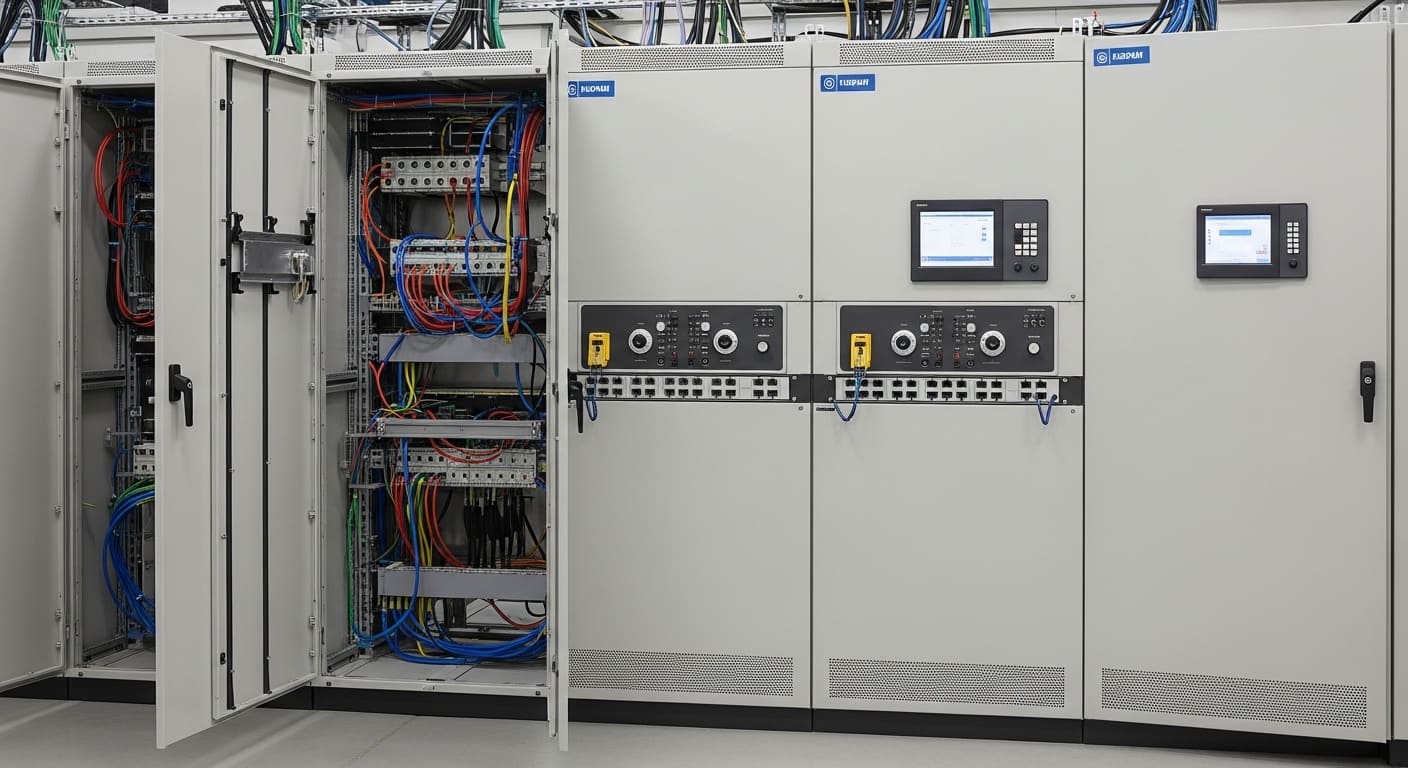
In my work with data center operators, I've witnessed a fundamental shift in how they approach power distribution infrastructure. It's no longer sufficient to simply install standard electrical cabinets and hope they meet future needs. Today's hyperscale facilities require switchgear that functions as an intelligent, adaptable system rather than just a collection of breakers and busbars. This evolution reflects the critical nature of data center operations where even moments of downtime can result in massive financial losses and reputational damage.
The Difference Between Switchgear and Distribution Cabinets?
Power system designers often confuse switchgear and distribution cabinets, leading to costly specification errors. Selecting inappropriate equipment can result in inadequate protection, maintenance complications, and potentially catastrophic system failures.
Switchgear refers to metal-enclosed equipment designed for high fault current interruption and protection of power systems, typically operating at medium to high voltages with sophisticated protection relays. Distribution cabinets are simpler enclosures that house lower-voltage circuit breakers and fuses, primarily focused on dividing electrical power into secondary circuits rather than major fault protection.

When I consult with clients on electrical system design, I find that understanding this distinction is crucial for building reliable data center infrastructure. The differences go far beyond mere terminology and touch on fundamental aspects of system design, safety requirements, and operational capabilities.
Key Differentiating Factors
| Feature | Switchgear | Distribution Cabinet |
|---|---|---|
| Primary Function | System protection and isolation | Power distribution to sub-circuits |
| Voltage Rating | Medium to high voltage (>1kV) | Low voltage (<1kV) |
| Fault Handling | High fault current interruption | Limited fault current handling |
| Protection Systems | Advanced protection relays, zones | Basic overcurrent protection |
| Physical Construction | Heavy-duty metal enclosures, compartmentalized | Simpler enclosure designs |
| Maintenance Requirements | Regular specialized testing | Basic visual inspections |
| Cost | Significantly higher | More economical |
In data center applications, these differences become particularly important when designing redundancy systems. I've worked with several clients who initially underspecified their power protection needs by installing distribution cabinets where switchgear was required. In one case, a rapidly growing cloud provider experienced a catastrophic failure when a short circuit exceeded the interruption capacity of their distribution equipment – an expensive lesson that resulted in nearly 4 hours of downtime.
For modern data centers, especially those with N+1 or 2N redundancy1 requirements, proper switchgear selection becomes critical to maintaining the fault isolation necessary to prevent cascading failures. I recommend developing a comprehensive power system study that includes fault current analysis2, coordination studies, and arc flash assessments before finalizing any switchgear specifications.
How to Troubleshoot Switchgear Faults?
Unexpected switchgear failures in data centers can cause devastating downtime, data loss, and equipment damage. Without a systematic troubleshooting approach, technicians waste precious time while critical systems remain offline.
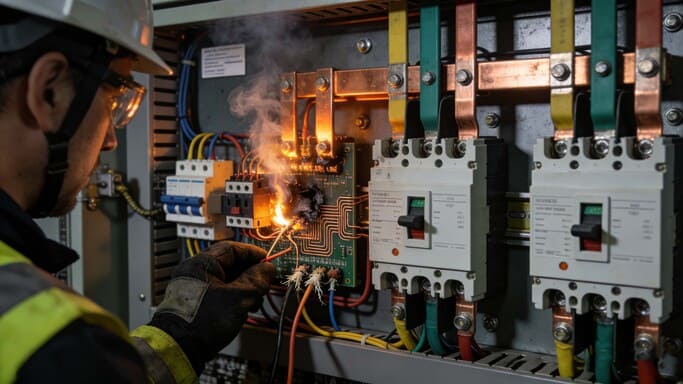
To troubleshoot switchgear faults, first ensure personal safety by verifying equipment is de-energized. Document all abnormal conditions, check for tripped breakers or blown fuses, inspect for visible damage or burning, test insulation resistance, and verify protection relay settings. Use thermal imaging to identify hotspots and test control circuit continuity.
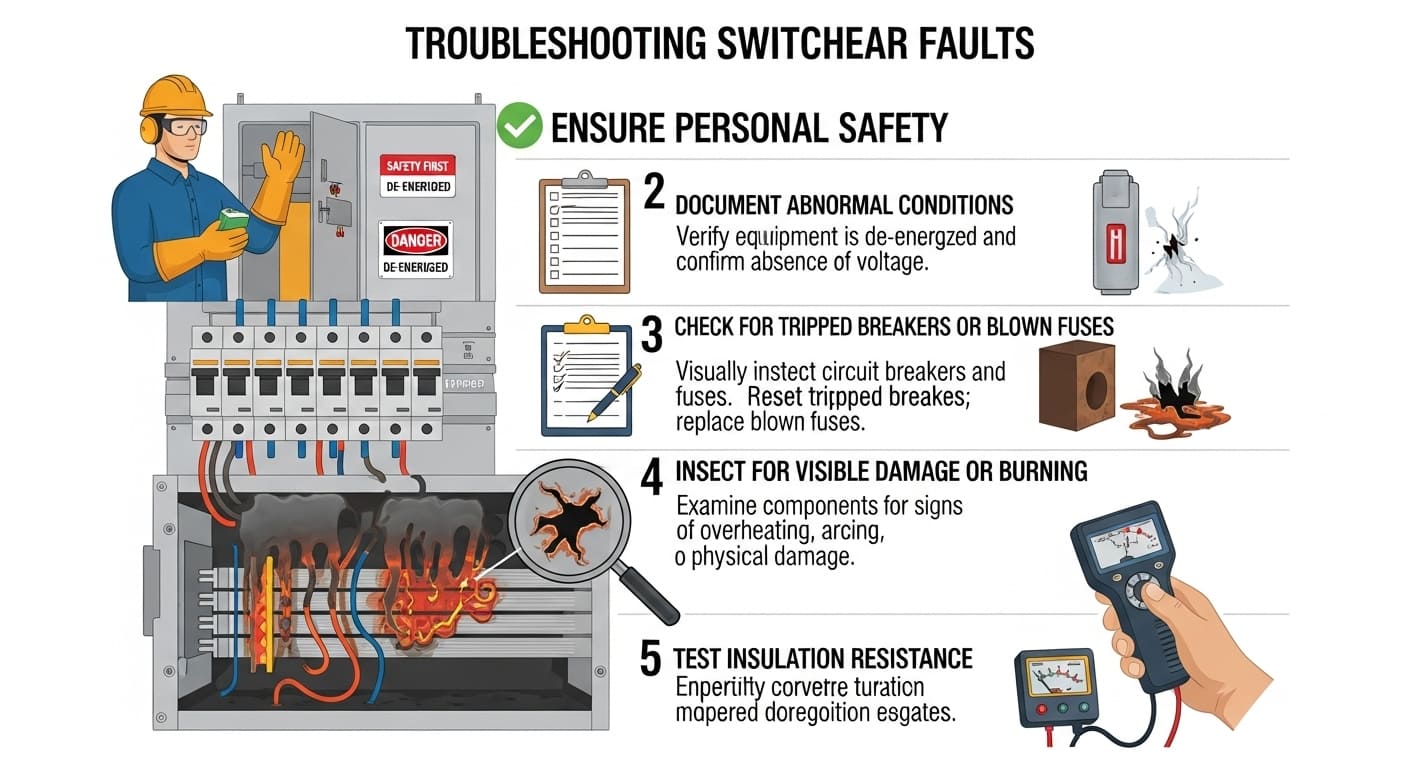
In my experience overseeing maintenance for critical power systems, successful switchgear troubleshooting requires both technical knowledge and a methodical approach. When a fault occurs, the pressure to restore power quickly can sometimes lead to overlooking crucial diagnostic steps or, worse, creating unsafe conditions.
Systematic Fault Diagnosis Process
I've developed a comprehensive troubleshooting framework that has proven effective across numerous data center environments:
-
Safety First Assessment
- Verify isolation and lockout/tagout procedures
- Use appropriate PPE based on arc flash study results
- Confirm zero-energy state with properly rated test equipment
-
Visual Inspection Protocol
- Check for discoloration, burning, or physical damage
- Inspect insulator condition and busbar connections
- Look for evidence of moisture, contamination, or foreign objects
-
Electrical Testing Sequence
- Measure insulation resistance of cables and components
- Perform contact resistance tests on breakers and switches
- Verify proper operation of protection relays and trip circuits
-
Documentation and Analysis
- Record all fault indicators and alarm histories
- Review recent maintenance records for patterns
- Analyze power quality data from before the fault
I once managed an emergency response for a critical financial data center where initial troubleshooting efforts focused on a tripped main breaker. By following this systematic approach, we discovered the actual issue was an intermittent ground fault in a feeder circuit that was causing nuisance tripping. The methodical investigation prevented repeated failures that would have continued had we simply reset the breaker without identifying the root cause.
For data center operators, I strongly recommend developing facility-specific troubleshooting procedures that account for the unique configuration of their switchgear. Training maintenance personnel through simulated fault scenarios can dramatically reduce response times during actual emergencies.
Common Problems and Solutions for Switchgear
Aging switchgear creates reliability risks through hidden deterioration, while improper maintenance procedures often exacerbate underlying issues. Without addressing these common problems proactively, data centers remain vulnerable to sudden catastrophic failures.
The most common switchgear problems include overheating connections due to loose terminals, insulation deterioration from environmental contaminants, mechanical failures in operating mechanisms, moisture ingress causing tracking, and outdated protection settings. Solutions involve regular thermographic surveys, proper torque verification, environment control, mechanism testing, and protection coordination studies.

Throughout my career designing and maintaining electrical systems for mission-critical facilities, I've encountered certain switchgear issues that appear with remarkable consistency across different installations. Recognizing these patterns has helped me develop preventative approaches that substantially improve reliability.
Most Frequent Switchgear Issues and Mitigation Strategies
| Problem Category | Common Symptoms | Preventative Solutions | Corrective Actions |
|---|---|---|---|
| Thermal Issues | Discolored connections, burning smell, nuisance tripping | Regular infrared scanning, proper torque verification, connection coating | Re-torque connections, replace damaged components, upgrade undersized conductors |
| Insulation Failures | Tracking marks, flashover evidence, low insulation resistance | Regular cleaning, environmental controls, insulation testing | Replace damaged insulators, improve enclosure sealing, apply insulation treatments |
| Mechanical Failures | Difficult operation, failure to trip/close, unusual sounds | Lubrication program, operation counting, mechanism timing tests | Mechanism overhaul, replacement of worn parts, alignment adjustments |
| Protection Coordination | Nuisance tripping, failure to isolate faults, cascading outages | Periodic coordination studies, relay testing, settings review | Update protection settings, replace outdated relays, implement zone-selective interlocking |
| Environmental Degradation | Corrosion, moisture accumulation, rodent damage | Climate control, proper enclosure rating, pest management | Enclosure upgrades, dehumidification systems, environmental monitoring |
In one particularly memorable case, I worked with a data center that was experiencing intermittent breaker failures despite following standard maintenance practices. Through detailed investigation, we discovered that harmonic currents from their UPS systems were causing overheating in neutral conductors that wasn't being detected during routine inspections. By implementing specialized harmonic monitoring and upgrading neutral conductors, we eliminated a problem that had plagued their facility for years.
For modern data centers, I recommend implementing a condition-based maintenance approach rather than strictly following time-based schedules. By collecting and analyzing real-time data on switchgear performance, maintenance can be performed when actually needed rather than on arbitrary intervals. This approach has helped several of my clients reduce both maintenance costs and failure rates.
The Latest Switchgear Technologies and Industry Trends
Traditional switchgear technology struggles to provide the real-time insights needed for modern data center operations. Without embracing innovation, facilities face increasing maintenance costs, energy inefficiency, and potential reliability gaps as infrastructure ages.
The latest switchgear technologies include digital monitoring systems that provide real-time condition assessment, solid-state and hybrid circuit breakers enabling faster fault clearing, integrated arc flash mitigation systems, and IoT connectivity for predictive maintenance. Industry trends focus on reduced physical footprints, sustainability through SF6 alternatives, and enhanced cybersecurity protocols.

Having worked closely with data center electrical infrastructure for many years, I've had a front-row seat to the technological evolution transforming switchgear design and functionality. The pace of innovation has accelerated dramatically in recent years, driven by demands for greater reliability, efficiency, and intelligence in power distribution systems.
Emerging Technologies Reshaping Switchgear
The most significant advancements I'm seeing implemented in modern data centers include:
-
Digital Twin Integration
Digital replicas of physical switchgear are revolutionizing how we monitor and maintain critical equipment. These systems create virtual models that simulate performance under various conditions and provide early warning of potential failures. I recently helped implement a digital twin system for a hyperscale data center that identified an impending failure three weeks before it would have caused an outage, saving an estimated $300,000 in potential downtime costs. -
AI-Powered Predictive Analytics3
Beyond simple monitoring, artificial intelligence algorithms now analyze patterns in switchgear performance data to predict failures before they occur. These systems learn from historical data across multiple installations to identify subtle precursors to common failure modes. The predictive accuracy continues to improve as more operational data becomes available. -
Environmentally Sustainable Designs
With growing environmental concerns about traditional SF6 insulation gas (which has 23,500 times the global warming potential of CO2), manufacturers are developing alternative technologies. Vacuum circuit breakers, solid dielectric insulation, and clean air technology are gaining traction as sustainable alternatives without compromising performance. -
Cybersecurity Enhancements
As switchgear becomes more connected, cybersecurity has emerged as a critical consideration. Next-generation equipment incorporates secure-by-design principles, encrypted communications, and rigorous access controls to prevent unauthorized access to critical power systems.
In my consultations with data center operators, I'm increasingly recommending modular, scalable switchgear architectures4 that can evolve with changing technology. This approach allows facilities to incorporate new innovations incrementally without wholesale replacement of existing infrastructure. I believe the most successful data centers will be those that view their switchgear as a dynamic system rather than a static installation.
The integration of these technologies represents not just incremental improvement but a fundamental reimagining of what switchgear can be—transforming from simple electrical distribution equipment into intelligent power management systems that actively contribute to facility efficiency, reliability, and sustainability.
Conclusion
Modern data centers require specialized switchgear solutions that go beyond standard power distribution to address unique challenges of uptime, scalability, and intelligence. Fuspan's customized switch cabinet solutions integrate advanced monitoring, predictive maintenance, and adaptable designs to meet these critical needs while preparing facilities for future technological demands.
-
Find out how redundancy strategies enhance reliability and uptime in critical systems. ↩
-
Learn about the importance of fault current analysis for safe and reliable operations. ↩
-
Explore how AI can predict failures and improve maintenance strategies. ↩
-
Discover how modular designs allow for flexible upgrades in data centers. ↩