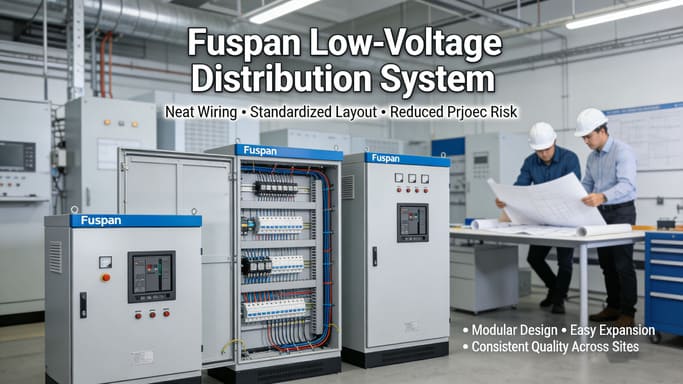
I often see projects fail not because the fuse burned, but because no one could isolate the fault fast enough under pressure.
A fuse switch disconnector1 combines a fuse and an isolating switch in one device. It provides overcurrent protection and clear on/off isolation, so I can safely disconnect, inspect, and restore only the faulty section without shutting down the whole system.
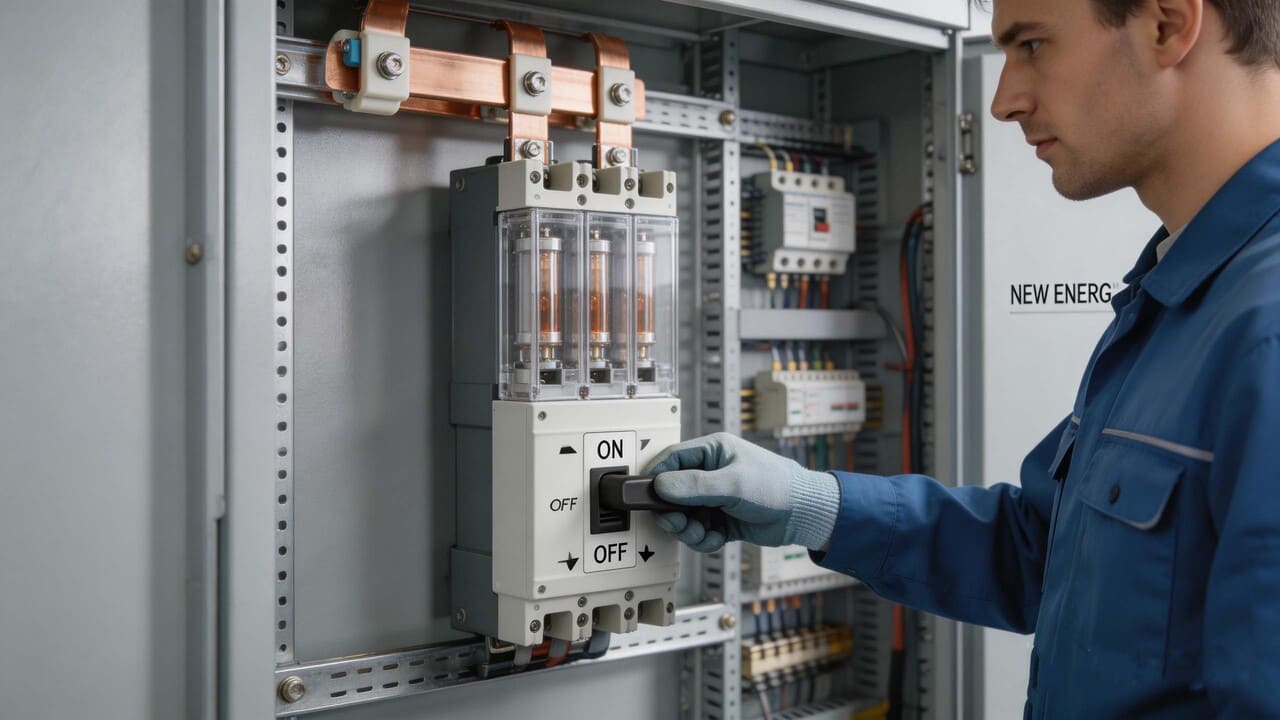
When I design a panel, I never see the fuse switch disconnector as a small accessory. I see it as a core part of my operating strategy. I know that one wrong choice here can decide if a fault is handled in minutes or in hours. It can also decide if my team walks away safe or faces a serious arc event, so I always look deeper than the basic datasheet.
What is a fuse disconnector switch?
Many people I meet on projects see a fuse disconnector switch as just a fuse holder with a handle. This sounds simple, but it hides real risk.
A fuse disconnector switch is a device that holds a fuse and also provides a switch mechanism that can isolate a circuit. It allows me to both protect against overcurrent and safely disconnect the circuit with a visible, lockable off position.
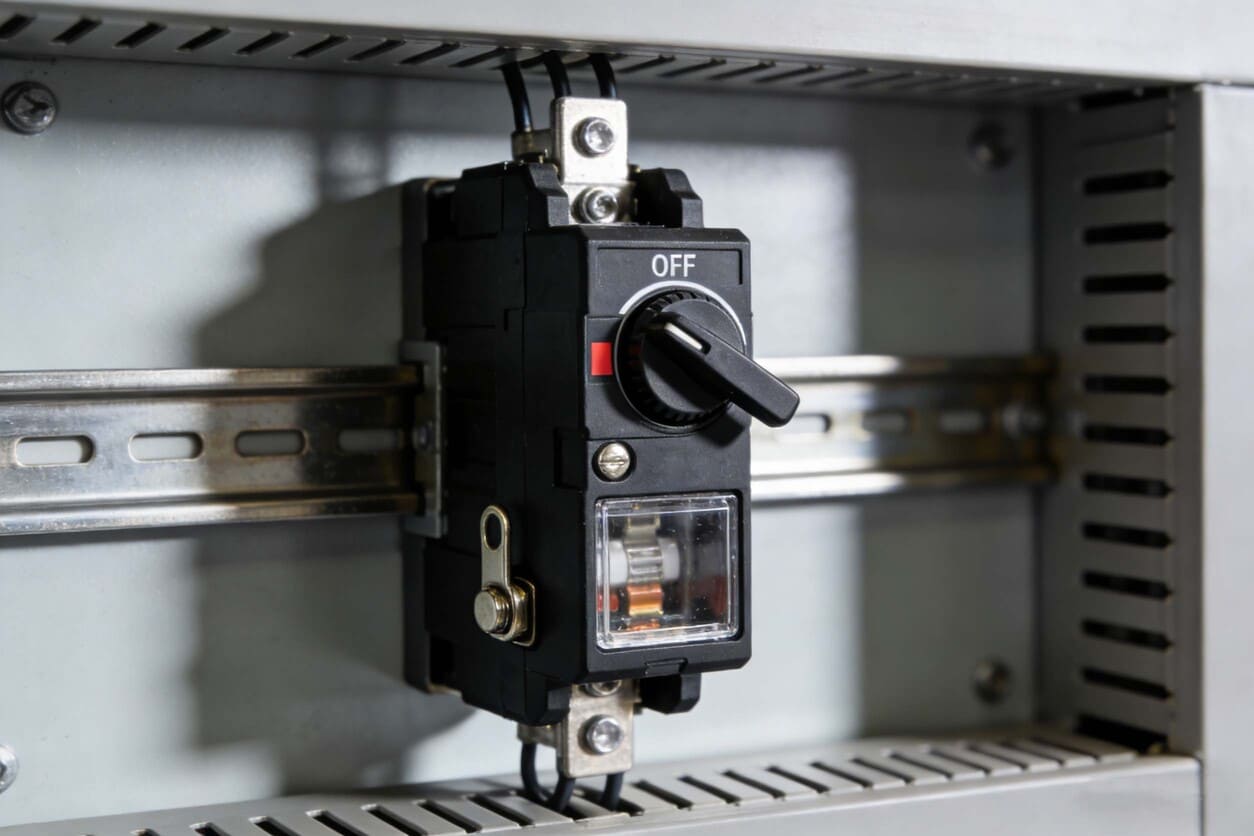
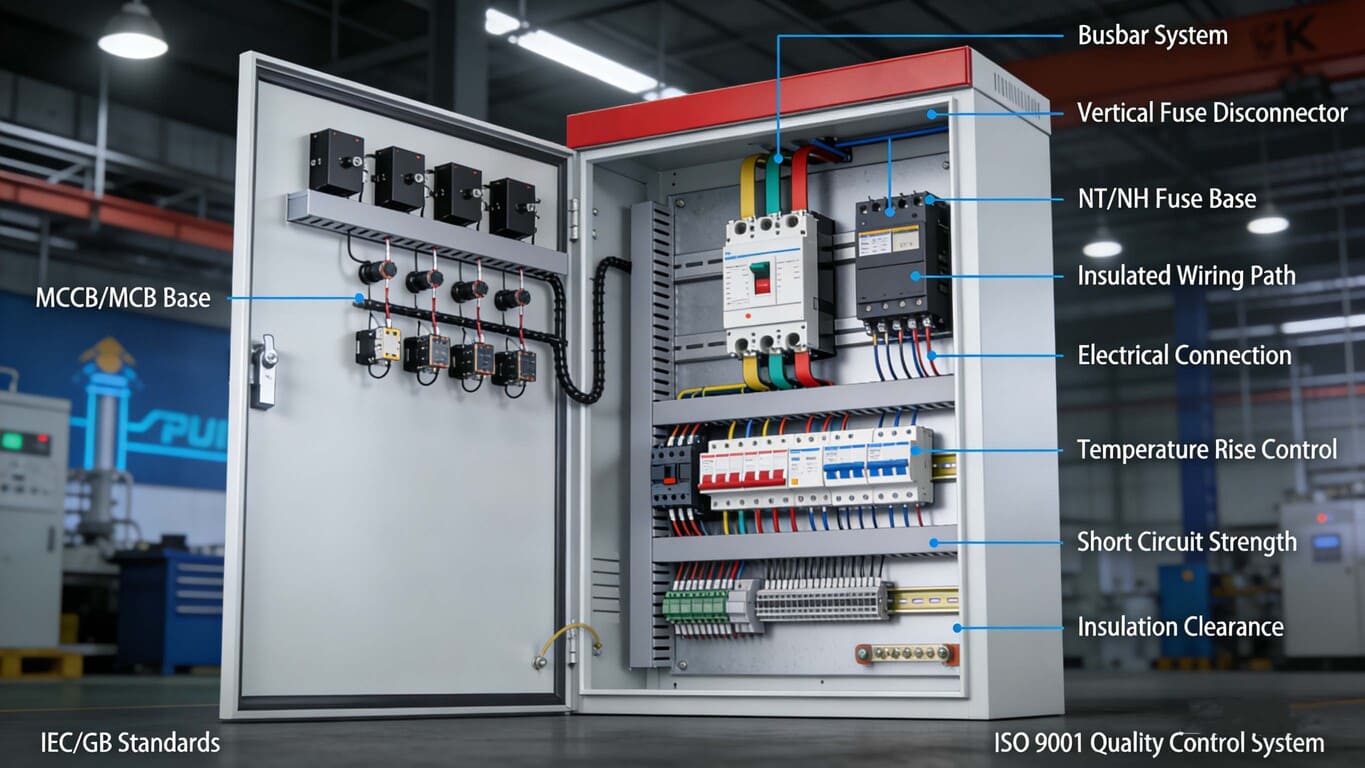
When I stand in front of a live panel, I do not only think about current ratings and breaking capacity. I think about what I can touch, what I can see, and what I can lock. A fuse disconnector switch gives me three key functions in one body: protection, isolation, and maintainability. The fuse gives overcurrent and short‑circuit protection. The switch gives safe isolation with a defined contact gap. The housing and mechanism give me a clear way to mount, operate, and check status.
I break the idea of a fuse disconnector switch into a few simple pieces:
Core functions of a fuse disconnector switch
| Aspect | What it means in practice for me | Why it matters on site |
|---|---|---|
| Protection | Fuse link melts under overload or short circuit | Limits fault energy, protects cables and equipment |
| Isolation | Switch opens and creates a visible, defined contact gap | Lets me work downstream with safety |
| Operation | Handle or knob with clear ON/OFF positions | Reduces misuse, supports safe switching sequences |
| Integration | Mounts on DIN rail or panel, accepts standard NH/NT/BH fuses | Fits easily into my panel layout |
| Safety features | Optional door interlock, padlock, touch‑safe terminals | Prevents access to live parts and wrong operation |
| Indication | Windows or indicators for blown fuse or switch position | Speeds up fault finding and reduces downtime |
When I design for DC systems2, like PV or energy storage, I pay more attention. Arcs are harder to break. So I use DC‑rated fuse switch disconnectors with tested arc chambers, proper creepage distance, and solid terminal design. I accept a higher unit price, because I know a cheap switch is not cheap when something goes wrong.
What is the difference between fuse holder and fuse disconnector?
I often see spec sheets where someone says “just use a fuse holder, it is cheaper.” On paper, this seems fine, but I know that in real life it often causes long outages.
A fuse holder only holds and connects the fuse, while a fuse disconnector adds a switch mechanism for safe isolation. I choose a fuse holder for simple protection, and a fuse disconnector when I also need clear, load‑side isolation and faster maintenance.
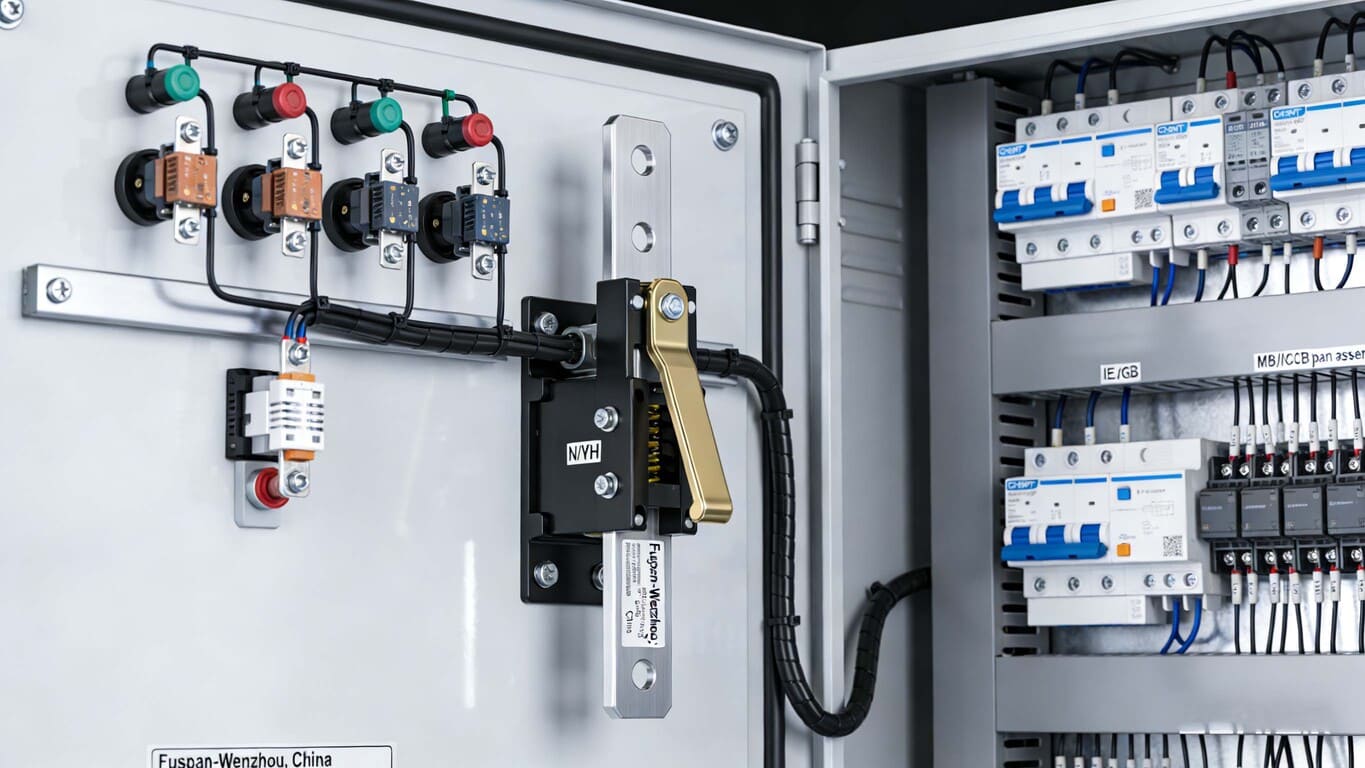
When I compare a fuse holder and a fuse disconnector, I do not start with the product. I start with the task my on‑site team needs to perform. If they only need basic protection, a fuse holder is enough. If they must find faults quickly, isolate only one branch, lock it off, and then restart the rest of the system, I know they need a fuse disconnector.
Here is how I normally break down the difference when I explain it to a customer:
Fuse holder vs fuse disconnector: how I decide
| Feature / Question | Fuse Holder | Fuse Disconnector |
|---|---|---|
| Basic role | Holds and connects fuse | Holds fuse and provides switching |
| Built‑in isolation | No | Yes, with defined contact gap |
| Can I switch under load? | Usually no, unsafe | Designed and rated for isolation, some for load |
| Typical use | Simple branch protection, compact circuits | Feeders, sub‑circuits, maintenance points |
| Maintenance process | Remove fuse under possible live conditions | Switch off, verify, then access fuse |
| Downtime when fault occurs | Often longer, more trial and error | Shorter, clear separation of sections |
| Safety against wrong operation | Lower, relies on procedure | Higher, with handle, interlocks, padlocking |
| Price per unit | Lower | Higher, but often cheaper at system level |
In my own projects, I have seen the cost of a “cheap” fuse holder choice. In one factory, a single fault on a small branch forced the team to shut down a full distribution panel because they had no local isolation. They had to test multiple fuse holders with a meter, pull fuses one by one, and restart the entire line. The lost production in that one shift was many times the cost of proper fuse switch disconnectors. After that, we redesigned the panel and used modular vertical fuse switch disconnectors on each main outgoing circuit. The team could see and isolate the faulty line within minutes.
What does a switch disconnector do?
Many engineers I talk to still mix up “switch”, “isolator”, and “switch disconnector”. I understand why. The names sound similar, but the behavior in a fault is very different.
A switch disconnector is a mechanical switching device that can open and close a circuit and provides isolation in the open position. It creates a safe gap so I can work on the downstream side with confidence.
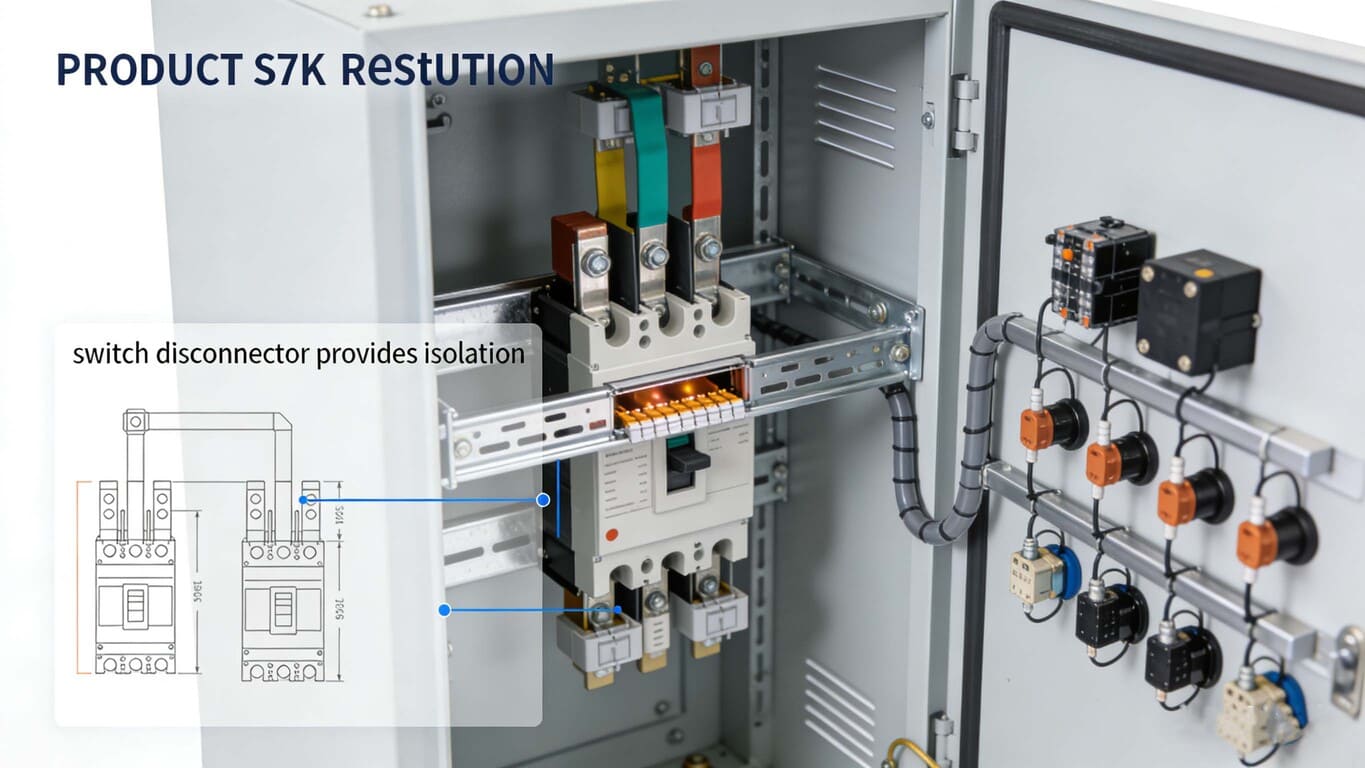
When I stand next to a switch disconnector, I expect one main thing: when it is off, the circuit must be safely separated. This means a defined contact gap, proper insulation distance, and a clear position of the handle. For low‑voltage AC and DC systems, I usually pick devices that meet IEC 60947‑3 requirements for switch disconnectors. This gives me a technical base, but I still check the real build quality.
I see the role of a switch disconnector in three steps: service, fault, and maintenance.
Key roles of a switch disconnector in real operation
| Stage | What I need it to do | How this helps my project |
|---|---|---|
| Normal use | Turn circuits on and off as part of routine operation | Lets me control loads and sections clearly |
| Fault event | Stay intact while upstream protection clears the fault | Prevents damage or fire during high stress |
| Maintenance | Provide a visible and lockable off position | Keeps my team safe when they work downstream |
When I also add a fuse into a switch disconnector, I get a fused switch disconnector. Then the device can not only isolate, but also provide short‑circuit protection. In DC applications, like battery systems, this combination is very useful. I can isolate each battery string or PV string with a fused switch disconnector. When a fault happens, the fuse operates fast, and the switch gives me a safe way to change the fuse and re‑energize.
Many problems I see in the field come from devices that pretend to be switch disconnectors, but lack proper arc handling and contact design. Under a real fault, they might weld, burn, or fail to open fully. That is why I always insist on tested products with solid terminals, arc chambers, and clear mechanical travel, even if they cost more.
What is the purpose of a fused disconnect switch?
On site, I see fused disconnect switches used in very different ways. Some see them as just another protective device. I use them as a tool to keep systems running while I deal with faults safely.
The purpose of a fused disconnect switch is to combine short‑circuit and overload protection with safe isolation in one device. It lets me quickly cut off a faulty circuit, replace the fuse, and restore power without affecting healthy sections.
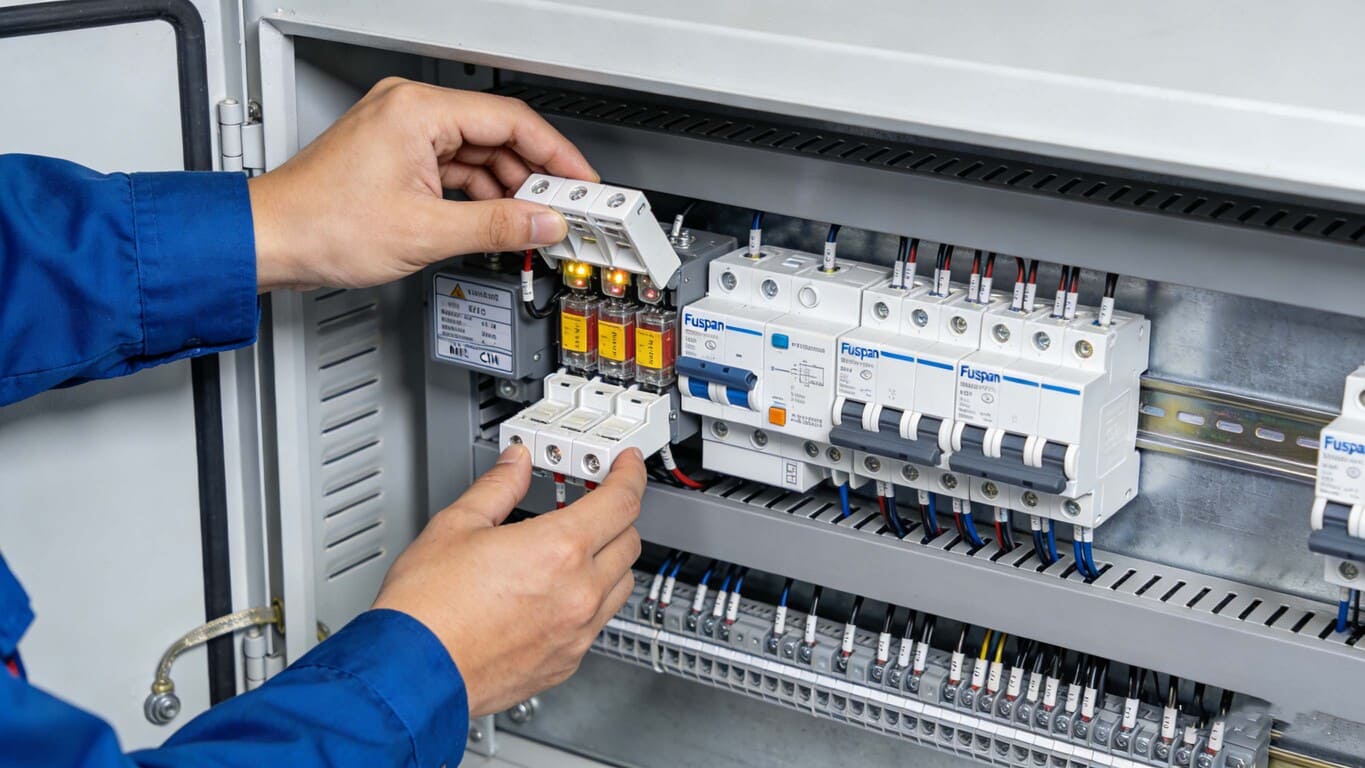
When I look at a fused disconnect switch inside a PV combiner box or an industrial distribution panel, I think about time and safety. Time, because every extra minute of fault finding and downtime has a cost. Safety, because a wrong operation on a poor device can cause an arc, a burn, or worse. In my experience, a good fused disconnect switch helps me on both.
I usually break down its purpose like this:
Why I use fused disconnect switches in my designs
| Purpose | What it looks like in real work | What I watch out for |
|---|---|---|
| Protection | Fuse opens during overload or short circuit | Correct fuse curve, tested breaking capacity |
| Isolation for maintenance | Switch gives visible OFF and lockout | Clear handle, padlock points, door interlocks |
| Fast fault location | Each branch has its own fused disconnect | Good labeling and clear blown‑fuse indication |
| System availability | Healthy branches stay live while I fix one section | Modular design and safe access to fuse links |
| Operator safety | No need to pull live fuses by hand | Arc‑safe design and touch‑safe terminals |
| Compliance and documentation | Matches standards and customer specs | IEC / GB compliance, test reports, marking |
One pain point I often see is unclear fuse status. Some cheap devices give no visible sign when a fuse opens. Technicians have to pull each fuse under stress and check continuity with a meter. This slows down fault finding and increases the chance of touching live parts by mistake. In my own designs, I prefer vertical fuse switch disconnectors with windows or mechanical indicators for blown fuse status. This allows the team to see the fault position at a glance.
I also pay strong attention to counterfeit or substandard units. I have seen devices with poor contact pressure, thin copper parts, and weak arc chambers. Under real load, they heat up, deform, or fail to clear arcs. In DC systems in new energy projects, this is extremely dangerous. The cost of one unreliable device can be a fire or long outage. That is why, when I supply components from my factory, I insist on full testing, material traceability, and IEC‑compliant design, even if some buyers first focus only on price.
Conclusion
A good fuse switch disconnector is not just a fuse with a handle. It is a safety tool that shapes how I protect, isolate, maintain, and keep my electrical system running.