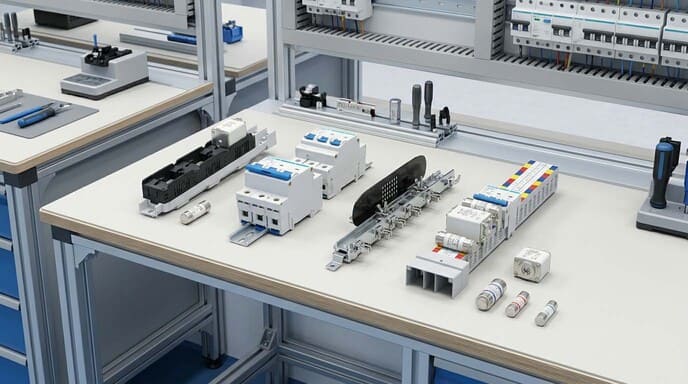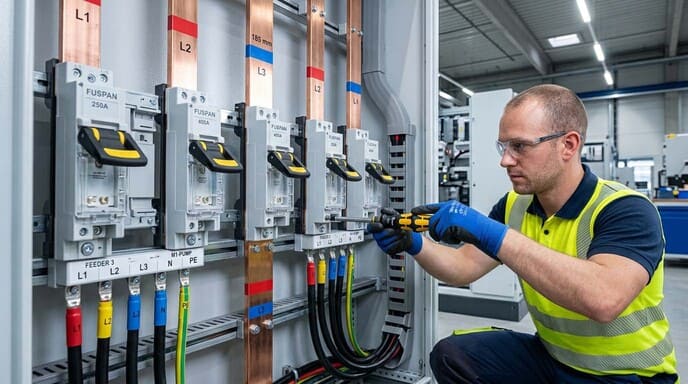
Every time I spec a fuse switch disconnector1 for a client panel, the first question I ask is not about current rating or short-circuit performance. I ask where the equipment will be installed and which approval authority will inspect it. That geography question changes everything, from physical footprint to compliance cost, and it forces OEM decision-makers to commit early to either IEC or UL paths—or pay double for dual compliance.
When you compare IEC vs UL fuse switch disconnectors, the biggest differences show up in project geography, panel density, and approval pathways. IEC units follow compact, modular design principles under IEC 60947-32 and suit global markets; UL disconnects comply with UL 983 for North America and often require larger mounting space but deliver instant AHJ acceptance.
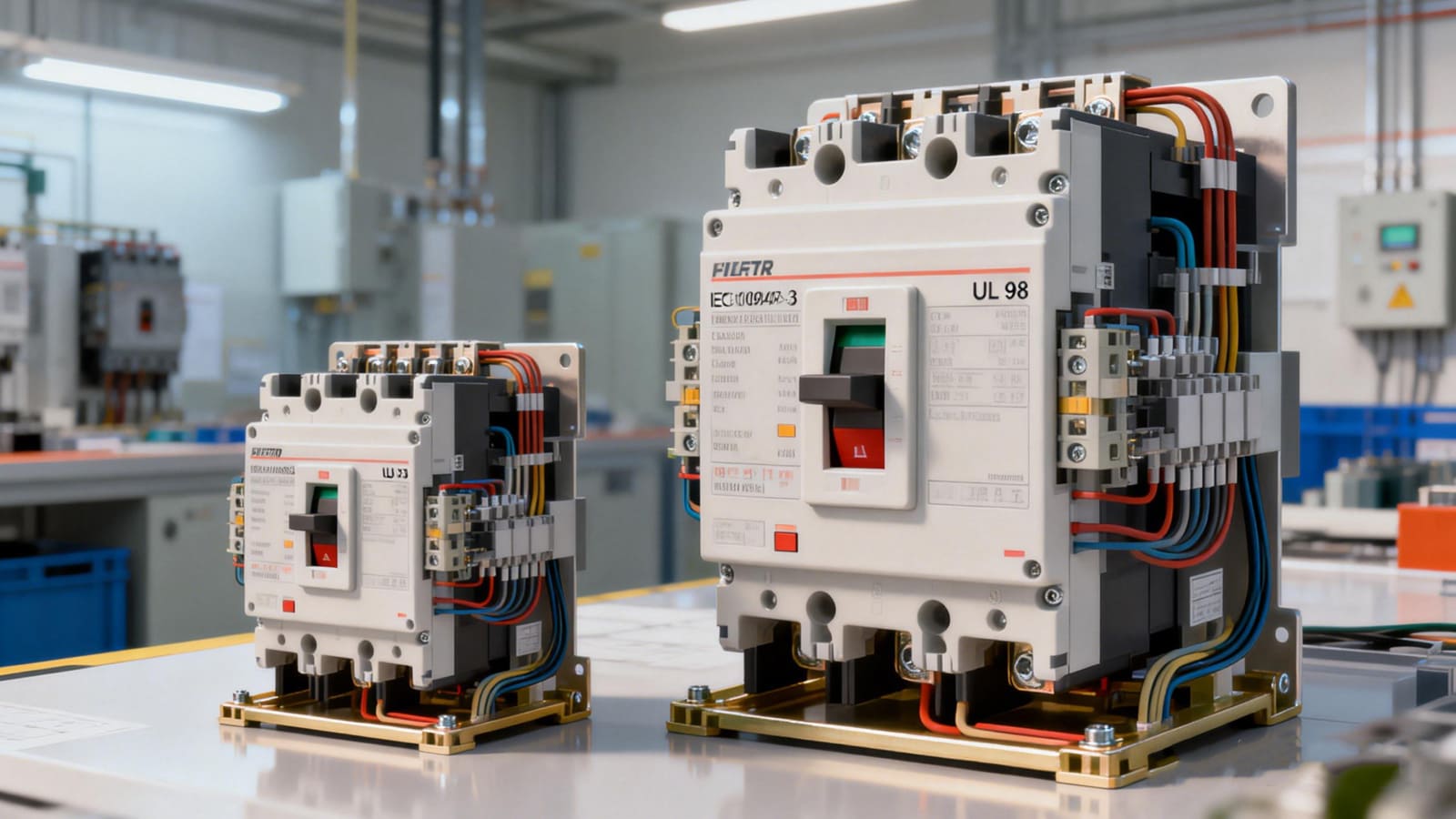
I have worked with distribution panel builders in Southeast Asia, Middle East, and Europe who chose IEC disconnectors because of tighter cabinet dimensions, and I have partnered with US-based integrators who demanded UL-listed units to avoid costly field-inspection delays. Both standards protect circuits reliably, but the roadmap you pick early dictates panel layout, supplier options, and long-term service logistics.
What Are the Core Standard Differences That Drive Design?
Every engineer knows that IEC and UL test philosophies differ, but how do those differences translate into real panel design constraints? I see teams overlook rating methods and endurance requirements until prototype testing, and that is when redesign headaches start.
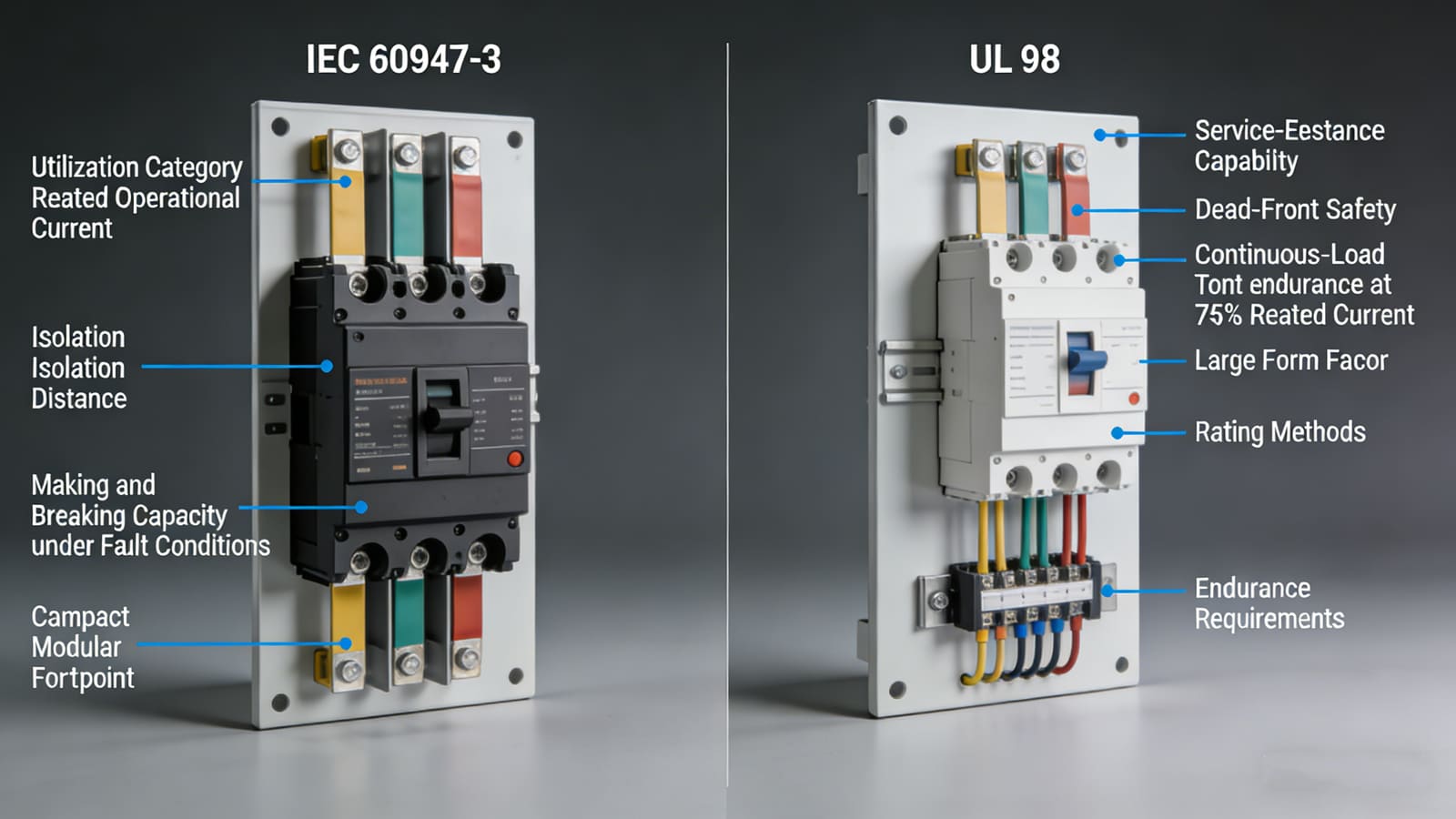
IEC 60947-3 defines fuse switch disconnectors by utilization category, rated operational current, and isolation distance, focusing on making and breaking capacity under fault conditions. UL 98 emphasizes service-entrance capability, dead-front safety, and continuous-load endurance, often requiring components to operate at 75 percent rated current for long-term reliability.
One critical derating rule catches many buyers off-guard. UL standards historically require fuses to withstand 100 to 110 percent rated current for four hours minimum, which means continuous loading above 75 percent can shorten fuse life. IEC fuses, by contrast, must handle 100 percent rated current indefinitely at room temperature. If your OEM panel runs near full load continuously, that 25 percent derating margin forces you to upsize UL fuse holders and increases enclosure cost. I have seen solar combiner-box projects where switching from IEC to UL mid-design required frame-size jumps from NH2 to NH3, eating into cabinet depth and forcing a complete busbar rework.
Another design driver is contact construction and utilization categories. IEC switch-disconnectors must declare AC-22A, AC-22B, or AC-23B categories, which define motor-load switching capability, resistive-load breaking, and frequency of operation. UL fusible disconnects focus on horsepower ratings, service-entrance duty, and short-circuit current ratings up to 200 kA, which directly impact panel-board SCCR certification4. For motor-control panels, I always verify whether the IEC AC-23B rating or UL horsepower rating matches the driven load, because mismatches lead to nuisance tripping or unsafe operation under locked-rotor current.
| Standard Aspect | IEC 60947-3 | UL 98 |
|---|---|---|
| Continuous load factor | 100% at room temperature | 75% for long-term reliability |
| Utilization category | AC-22A, AC-22B, AC-23B defined | Horsepower and service-entrance ratings |
| Isolation requirement | Clear contact gap per voltage class | Dead-front enclosure for operator safety |
| Fuse type compatibility | NH (DIN), BS88, NFC cylindrical | Class J, Class CC, Class R |
| Short-circuit rating | Declared ICWU and SCPD coordination | SCCR up to 200 kA with specific fuse |
When I specify a fuse switch disconnector, I cross-check the fuse-holder dimensions and fuse-link standards early. IEC systems use NH000 through NH3 sizes for 2 to 630 A, or BS88 and NFC cylindrical links in smaller frame sizes. UL disconnects accept Class J, Class CC, or Class R fuses with different physical dimensions and rejection features. Trying to retrofit a UL Class J holder into an IEC panel layout usually fails because mounting-hole spacing and terminal-bolt sizes do not align. At Fuspan, we maintain separate tooling for IEC NH holders and UL Class J bases to avoid cross-contamination in production batches, and that tooling investment is one reason dual-compliance products carry higher unit cost.
Why Does Physical Size Matter So Much in Panel Design?
Panel builders and cabinet integrators live and die by mounting depth and rail space. I have measured dozens of competitor units, and UL fusible disconnects consistently occupy 20 to 40 percent more volume than equivalent IEC switch-disconnectors.
UL 98 fusible disconnects typically require deeper enclosures and wider pole spacing to meet dead-front construction and service-entrance safety requirements, while IEC 60947-3 fuse switch disconnectors use vertical or horizontal mounting with compact, modular frames that save DIN-rail width and cabinet depth.
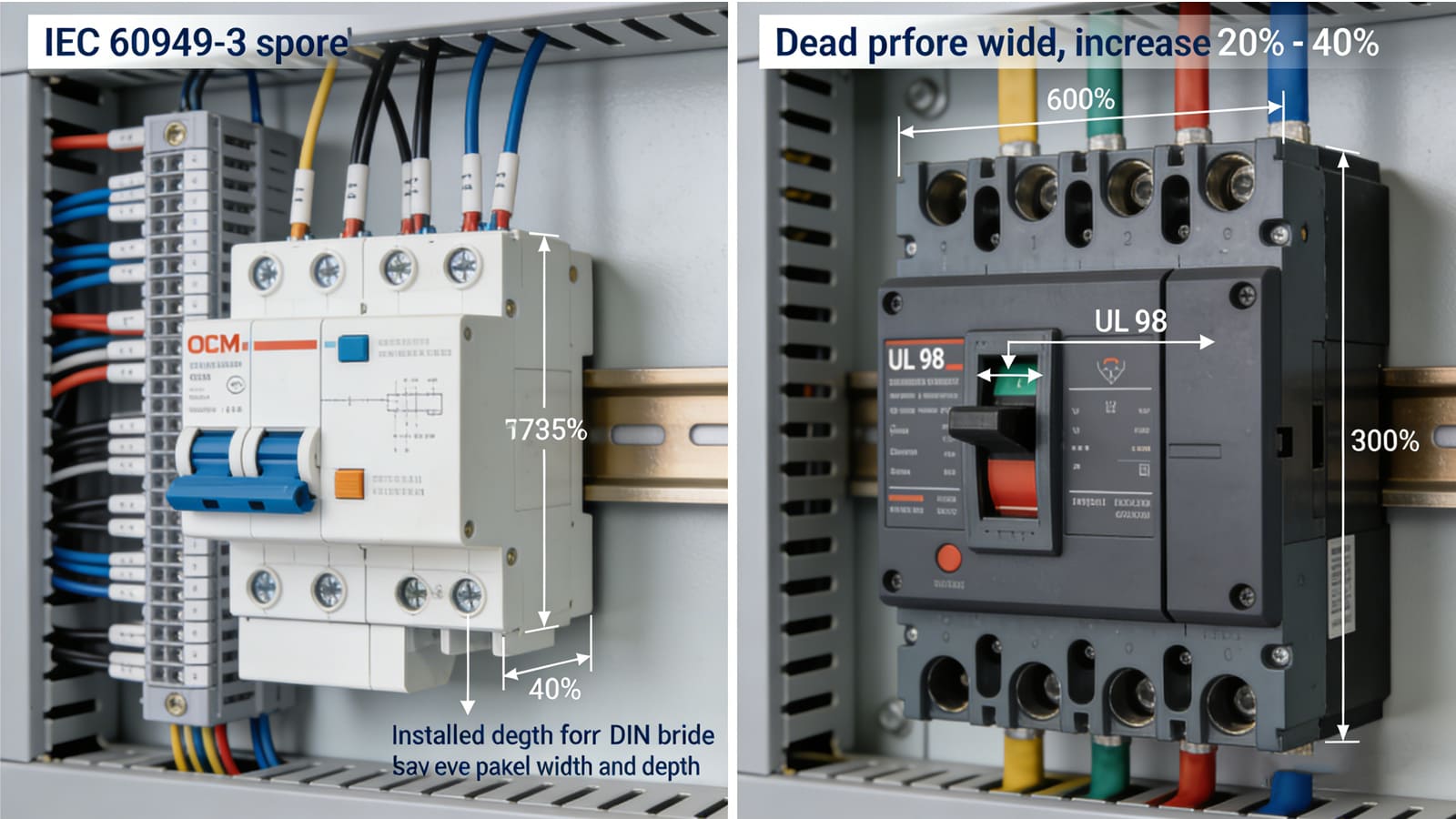
A real example from a recent battery-energy-storage project illustrates the difference. The client needed a 400 A DC fuse disconnect in a wall-mount outdoor enclosure with IP54 protection5. We first quoted a UL 98 three-pole unit that measured approximately 260 mm width, 350 mm height, and 180 mm depth, requiring substantial side and top clearance. When we proposed an IEC vertical NH2 fuse switch disconnector, the footprint shrank to roughly 140 mm width, 280 mm height, and 160 mm depth. That 46 percent reduction in frontal area let the integrator fit two additional DC strings into the same enclosure, directly improving project economics without sacrificing protection or isolation safety.
Mounting flexibility also diverges sharply between standards. IEC fuse switch disconnectors offer panel mounting, 60 mm busbar mounting, and DIN-rail mounting in the same product family. UL fusible switches prioritize front-accessible, dead-front enclosures with screw terminals sized for large copper conductors, and they rarely integrate directly onto busbar systems without adapters. For high-density combiner boxes or multi-circuit distribution boards, IEC modularity wins on space efficiency, while UL units excel in field-serviceability and inspector familiarity.
Weight and material cost correlate directly with size. A three-pole, 400 A UL disconnect typically weighs 4 to 5 kg, compared to 2 to 3 kg for an equivalent IEC unit. That mass difference accumulates in shipping cost, enclosure structural reinforcement, and installation labor. I have watched installation crews mount 20 IEC disconnectors per day on pre-assembled busbar panels, but only 12 UL units per day when wiring each terminal individually. The labor delta alone can justify IEC selection for projects with tight construction schedules, even if unit cost is slightly higher.
How Do Dual-Compliance and Late-Stage Redesign Kill Margins?
I meet OEM project managers who assume they can easily swap IEC for UL components mid-design, or pursue dual certification without front-loading engineering cost. Reality proves far messier, and I have seen it stall product launches by quarters.
Pursuing dual IEC and UL compliance after initial design locks forces parallel testing, duplicate bill-of-materials management, and separate production batches, which together can inflate component cost by 30 to 50 percent and extend certification timelines by six to nine months.
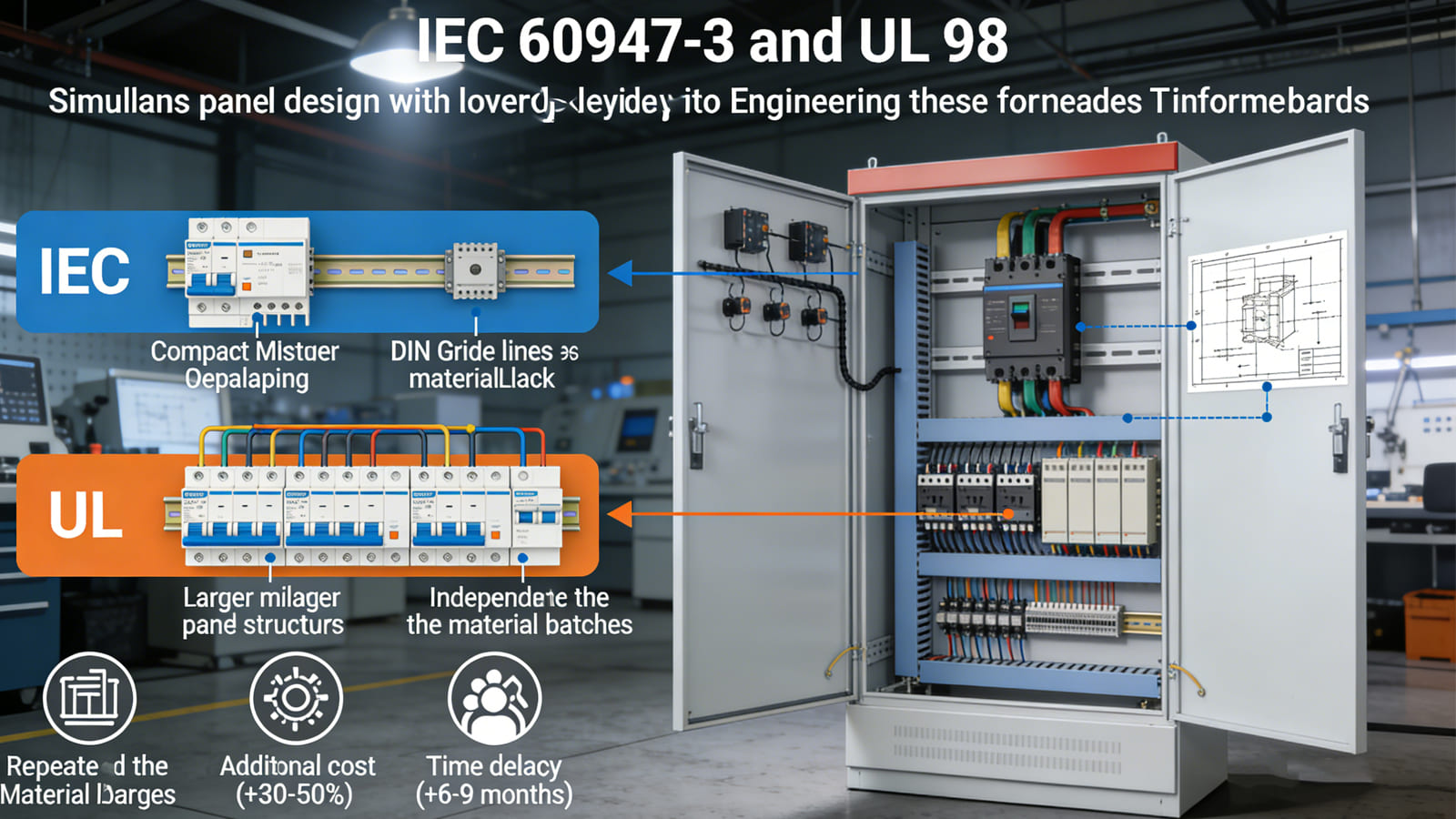
The testing delta between IEC and UL creates the biggest schedule risk. IEC 60947-3 testing covers temperature rise, dielectric strength, making and breaking capacity under declared utilization categories, and mechanical endurance. UL 98 adds service-entrance duty cycles, dead-front arc containment, and long-term 110 percent current withstand at elevated ambient temperature. When a component passes IEC tests but fails UL endurance at 75°C ambient, redesign touches contact material, spring pressure, terminal sizing, and enclosure ventilation. At Fuspan, we have invested in thermal chambers and UL-witnessed endurance rigs to front-load both test regimes, but that capital investment only makes sense for high-volume product families where dual-market demand justifies tooling duplication.
Fuse compatibility complicates dual compliance further. North American markets use UL-listed Class J or Class CC fuses with specific rejection features and interrupting ratings. European and global markets rely on IEC 60269-2 NH or BS88 fuse links with different physical dimensions and gG or aM characteristic curves. A fuse holder designed for NH3 links cannot physically accept a UL Class J fuse, and vice versa. If your OEM roadmap targets both markets, you must maintain separate SKU families, separate inventory, and separate service documentation, which fragments production volumes and drives up per-unit cost.
Market-specific accessories add hidden cost. UL disconnects often require lockable rotary handles, NEMA Type enclosures, and through-the-door operators that meet AHJ expectations for service-entrance equipment. IEC units use simpler front-operated handles, IP-rated enclosures, and modular auxiliary contacts. When a European OEM wins a US contract, retrofitting UL-compliant accessories can double lead time and require custom punch-tool modifications for handle cutouts. I always recommend deciding the primary market first and designing the base product around that standard, then evaluating whether a true dual-compliance variant justifies the incremental engineering investment, or whether maintaining two separate product lines proves more cost-effective long-term.
How Should OEMs Choose the Right Standard for Their Roadmap?
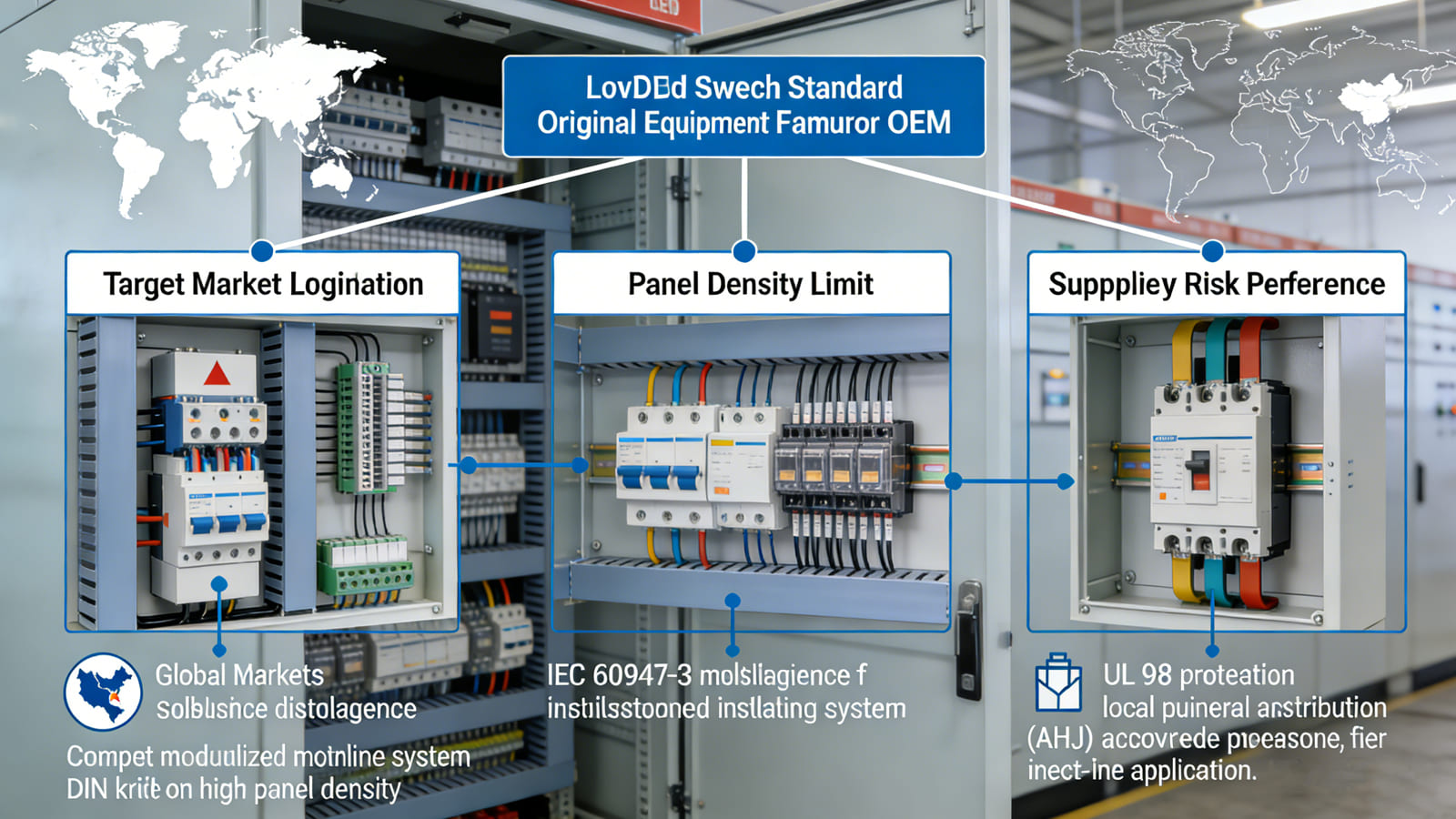
After spec'ing hundreds of fuse switch disconnectors across four continents, I know the decision framework boils down to three factors: target market geography, panel-density constraints, and supply-chain risk tolerance.
OEMs should choose IEC 60947-3 fuse switch disconnectors when targeting global markets, maximizing panel density, and leveraging modular busbar systems6; select UL 98 disconnects when North American AHJ acceptance, service-entrance duty, and field-inspector familiarity drive faster commissioning and lower approval risk.
For solar and energy-storage integrators selling into California, Texas, or Ontario, UL 98B listing for photovoltaic disconnect switches eliminates field-approval delays and accelerates interconnection agreements with utilities. I have watched projects pass AHJ inspection in one visit because the disconnect bore a UL label, while IEC-only units triggered multi-week documentation reviews and third-party equivalency reports. That schedule certainty justifies the larger footprint and higher unit cost when project incentives or power-purchase agreements impose strict commercial-operation deadlines.
Conversely, Middle Eastern and Southeast Asian EPC contractors building large-scale solar farms or industrial substations prioritize IEC certification, compact mounting, and compatibility with European MCB and contactor families. In these markets, UL certification adds no value and forces procurement of non-standard fuse links that extend supply lead times. I advise these clients to spec IEC components exclusively, invest in local technical support for IEC documentation, and avoid dual-compliance SKU proliferation that fragments inventory and complicates warranty management.
Panel density and thermal management also drive standard selection. High-power-density applications like EV charging stations, data-center PDUs, and battery-rack protection benefit from IEC vertical fuse switch disconnectors that mount directly onto copper busbar, minimize wiring inductance, and improve airflow. UL disconnect switches with enclosed dead-front construction trap heat and require forced ventilation or uprated enclosures when mounted side-by-side. For projects where cabinet volume is fixed and power density is climbing, IEC modularity delivers measurable thermal and cost advantages.
| Selection Criterion | Favor IEC 60947-3 | Favor UL 98 |
|---|---|---|
| Primary market | Europe, Asia, Middle East, Africa | USA, Canada, Mexico |
| Panel density priority | High; vertical mounting and busbar integration | Moderate; enclosed service-entrance duty |
| Fuse-link supply chain | NH, BS88, NFC readily available | Class J, Class CC standard in region |
| AHJ acceptance speed | Varies; may require equivalency review | Immediate; UL label recognized by inspectors |
| Long-term serviceability | Modular; fuse-link replacement simple | Enclosed; dead-front safety for field techs |
I always tell clients to map their five-year sales forecast by region before locking the standard choice. If 70 percent of revenue comes from North America, design for UL first and consider an IEC variant only if export volume justifies separate tooling. If the roadmap targets global OEM partnerships and multi-region deployment, build the platform around IEC and add UL certification selectively for strategic accounts. The worst outcome is launching with one standard, winning unexpected business in the other market, and burning engineering bandwidth on a rushed redesign that compromises quality and delivery schedules.
Conclusion
Choosing between IEC and UL fuse switch disconnectors is not a technical detail—it shapes your entire product architecture, supply chain, and market-entry timeline. Decide early based on geography and panel priorities to protect margins and avoid late-stage redesign chaos.
-
Understanding fuse switch disconnectors is crucial for selecting the right equipment for your projects. ↩
-
Explore the IEC 60947-3 standard to understand its global compliance and design principles. ↩
-
Learn about UL 98 to grasp its requirements for North American electrical safety and performance. ↩
-
Learn about SCCR certification to ensure your electrical systems meet safety standards. ↩
-
Understanding IP54 protection helps ensure your equipment is suitable for outdoor use. ↩
-
Discover the advantages of modular busbar systems for efficient electrical panel design. ↩