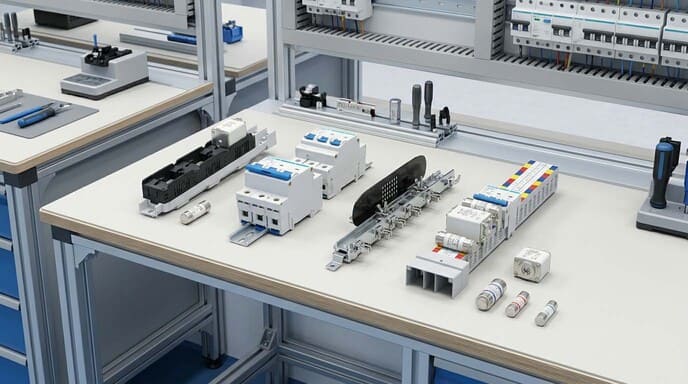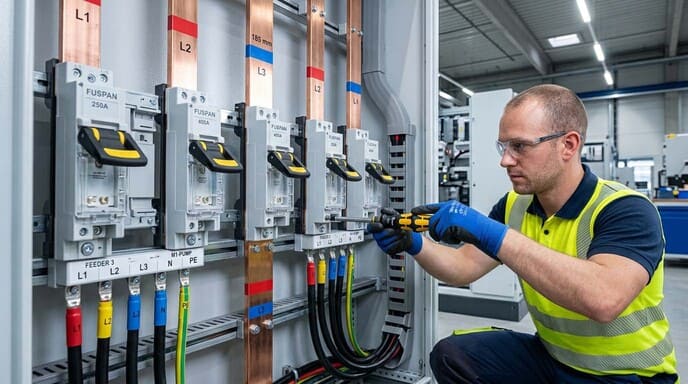
Your breaker just tripped again. Production stopped. Your team scrambles to reset the MCCB and troubleshoot the fault. You wonder if fused disconnectors might prevent this chaos next time. The choice between fuse switch disconnectors1 and MCCBs affects not just protection but downtime philosophy.
Fuse switch disconnectors combine manual switching, isolation, and fuse-based overcurrent protection in one device, while MCCBs offer resettable automatic fault protection with adjustable trip settings. The main difference lies in how each handles faults: fuses react ultra-fast (under 10ms) but need replacement after operation, whereas MCCBs can be reset manually but respond slightly slower (30-100ms).
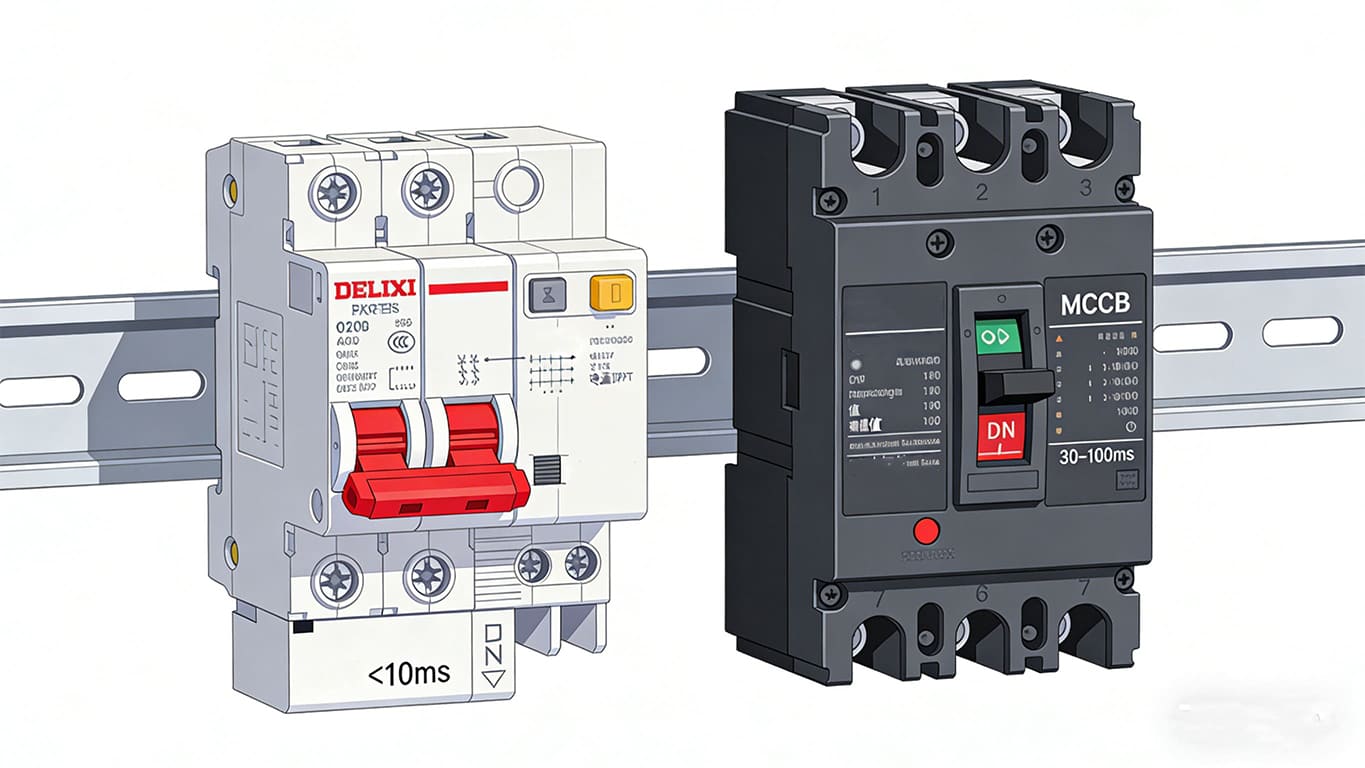
The debate extends beyond technical specs. We prioritize either quick restoration or maximum selectivity in fault clearing. MCCBs promise fast recovery but fused solutions offer simplicity and superior coordination in high-fault environments.
What Is the Difference Between Fuse Switch and MCCB?
You install an MCCB thinking it solves all protection needs. Then a fault occurs, and you realize adjustability alone doesn't guarantee the best protection. The fundamental difference shapes your entire maintenance strategy and operational philosophy.
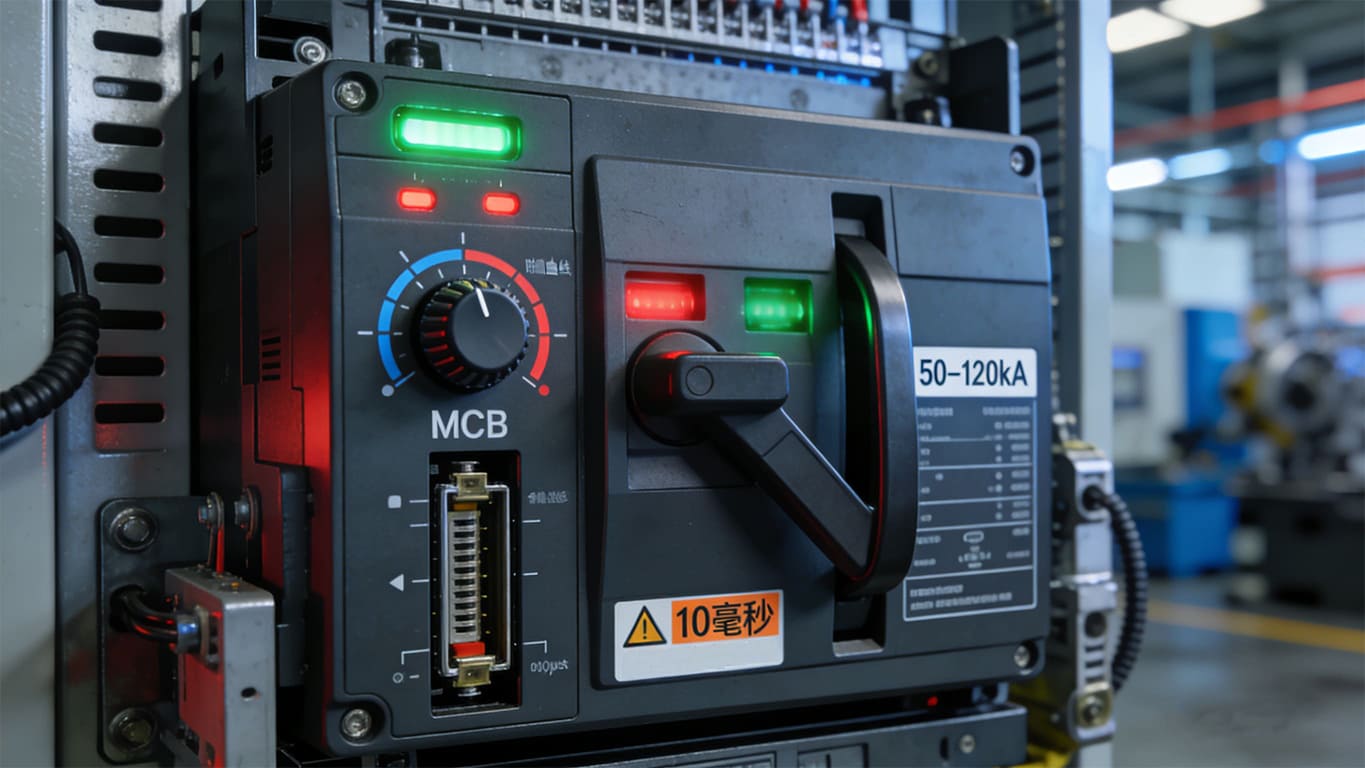
MCCBs provide resettable automatic protection with adjustable trip curves that adapt to varying load conditions, making them ideal for dynamic environments. Fuse switches deliver fixed but ultra-fast fault response (under 10ms) with high breaking capacity (50-120kA), particularly effective in surge-prone or high-fault-current applications.
Response Time and Fault Handling
MCCBs respond to faults in 30-100 milliseconds, which proves adequate for most commercial and industrial applications. The thermal-magnetic or electronic trip units detect overcurrent conditions and automatically open the circuit. This response time protects equipment reliably in standard environments.
Fuse switches react in under 10 milliseconds during fault conditions. The fuse element melts instantly when current exceeds its rating, creating an open circuit faster than any circuit breaker can trip. We see this speed advantage mattering most in applications with sensitive electronics or extremely high available fault currents where every millisecond counts.
| Aspect | MCCB | Fuse Switch Disconnector |
|---|---|---|
| Fault Response Time | 30-100 ms | <10 ms |
| Breaking Capacity | Standard ratings | 50-120 kA with NH/HRC fuses |
| Reset Capability | Manual or remote reset | Requires fuse replacement |
| Adjustability | Fully configurable trip curves | Fixed characteristics by fuse size |
| Initial Cost | Higher investment | Lower upfront cost |
| Maintenance Effort | Low (no consumables) | Moderate (spare fuses needed) |
Resettability and Downtime Considerations
MCCBs can be reset immediately after tripping, either manually at the panel or remotely through digital communication systems. This resettability eliminates the need for spare parts inventory and reduces restoration time to minutes. Plants prioritizing rapid recovery after nuisance trips or planned testing operations favor this feature.
Fuse switches require fuse replacement after each operation. You must keep spare fuses on hand and train technicians to replace them safely. However, in facilities where downtime costs exceed fuse replacement time, the ultra-fast fault clearing of fuses can actually minimize total downtime by preventing equipment damage that would require lengthy repairs. The fuse replacement process forces a visual inspection, which can reveal underlying issues MCCBs might mask through repeated resets.
Adjustability and Load Matching
MCCBs with adjustable trip units offer remarkable flexibility for matching protection to specific loads. You can configure overload settings, short-circuit instantaneous trips, and ground fault parameters. This adjustability proves essential when load conditions change over time, such as when adding equipment or modifying production processes. Adjustable MCCBs prevent nuisance tripping from motor inrush currents while still providing adequate protection during actual faults.
Fuse switches provide fixed protection characteristics determined by the installed fuse rating and type. While this seems limiting, the fixed time-current curve of fuses ensures predictable coordination with upstream and downstream devices. In systems where loads remain relatively static, fused protection offers simplicity without the risk of improper adjustment. We cannot accidentally misconfigure a fuse the way we might set an MCCB trip unit incorrectly.
Coordination and Selectivity
Fuses excel at selective coordination because their time-current curves naturally avoid overlap when properly sized. A 20A fuse downstream will always clear before a 100A fuse upstream during fault conditions. This predictable behavior minimizes the extent of power interruptions, keeping unaffected circuits operational.
MCCBs achieve coordination through careful programming of trip curves and sometimes through zone selective interlocking (ZSI) systems. ZSI allows breakers to communicate, ensuring the breaker closest to the fault trips instantaneously. Without ZSI, achieving full selective coordination with MCCBs requires time delays that can allow more energy to pass through during faults. The adjustability that makes MCCBs flexible also creates coordination challenges if settings change without updating the overall coordination study.
What Is the Difference Between Switch Disconnector and MCB?
You reach for the disconnect switch to isolate equipment for maintenance. Then you wonder why it looks so similar to the MCB next to it. The visible difference hides a fundamental distinction in function and safety standards.
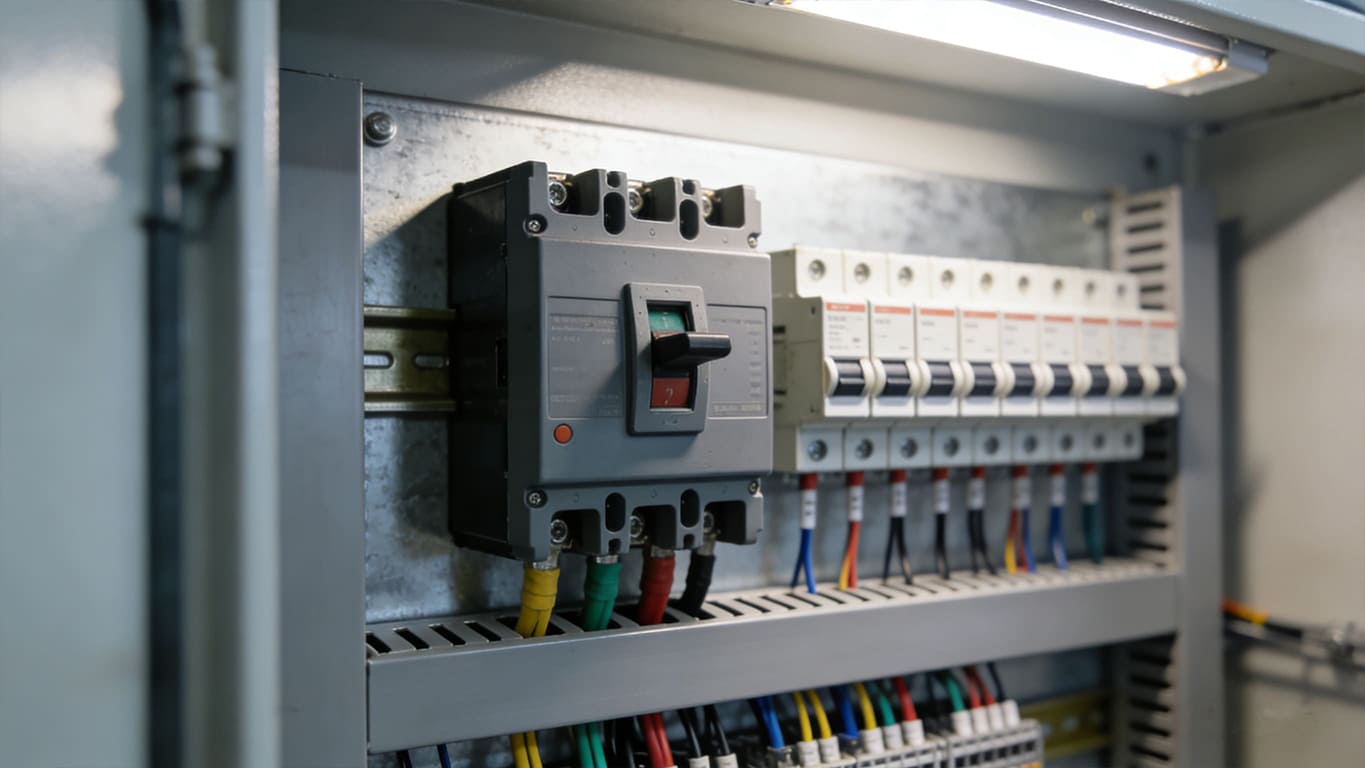
Switch disconnectors provide manual isolation with a visible break mechanism required by safety standards, designed primarily for safe equipment isolation during maintenance with no automatic fault protection. MCBs offer automatic overcurrent protection with manual operation capability but don't guarantee the visible break or isolation reliability required for maintenance work.
Primary Function and Design Intent
MCBs serve primarily as automatic fault protection devices. They detect overcurrent conditions through thermal or magnetic mechanisms and trip automatically to interrupt the circuit. While you can manually operate an MCB to switch a circuit on or off, its design optimizes for protection rather than isolation. The internal mechanism may not guarantee a visible break that confirms complete electrical separation.
Switch disconnectors focus on providing reliable manual isolation with visible verification of the open position. They feature a mechanical linkage or visible gap that clearly indicates when contacts are separated. This visible break meets safety standards for maintenance isolation, giving maintenance personnel confidence that equipment is truly de-energized. Switch disconnectors typically handle 16A to 200A and higher ratings, suitable for main panel isolation.
Visible Break Requirements
Safety standards require a visible break for maintenance isolation to ensure workers can verify electrical disconnection before working on equipment. Switch disconnectors incorporate mechanical indicators or transparent windows showing actual contact separation. You can physically confirm the circuit is open without relying on position indicators alone.
MCBs do not guarantee this visible break. The toggle or rocker indicates the intended position, but internal contact position may not be visible. While modern MCBs achieve reliable operation, they do not meet the specific visible break requirement that maintenance safety regulations demand for isolation applications.
Operational Lifespan Differences
Switch disconnectors (also called load-break switches) provide mechanical life typically exceeding 20,000 no-load operations and electrical life of 3,000 operations under AC-21 conditions (inductive loads) or 1,000 operations under AC-23 conditions (motor loads). This durability supports frequent isolation operations without degradation.
MCBs achieve 10,000+ mechanical operations and 2,000-6,000 electrical operations for MCCBs, or up to 10,000 for smaller MCBs. The shorter electrical life reflects their design for infrequent fault interruption rather than regular load switching. Using an MCB as a routine isolation device can exhaust its operational life prematurely.
| Feature | MCB/MCCB | Switch Disconnector |
|---|---|---|
| Primary Function | Automatic fault protection | Manual isolation with visible break |
| Operation Method | Automatic + Manual | Manual only |
| Visible Break | Not guaranteed | Required by design |
| Typical Rating | 6A - 125A (MCB), higher for MCCB | 16A - 200A+ |
| Mechanical Life | ≥10,000 operations | ≥20,000 operations |
| Electrical Life | 2,000-10,000 operations | 1,000-3,000 operations (load breaking) |
Combined Solutions in Distribution Panels
Many modern distribution panels integrate both functions by combining MCCBs with separate switch disconnectors. The MCCB handles automatic fault protection while the switch disconnector upstream provides maintenance isolation with visible break confirmation. This approach ensures compliance with both protection requirements and safety isolation standards.
Alternatively, some manufacturers produce switch-disconnector MCCBs that meet both IEC 60947-2 (circuit breaker) and IEC 60947-3 (switch-disconnector) standards. These hybrid devices qualify for maintenance isolation while providing automatic protection. However, you must verify specific compliance rather than assuming all MCCBs can serve as proper isolation switches.
Is a Fused Disconnect the Same as a Breaker?
Your electrician recommends a fused disconnect for your motor panel. You ask if it's just another type of breaker. The answer reveals why equipment manufacturers often specify one over the other in warranty requirements.
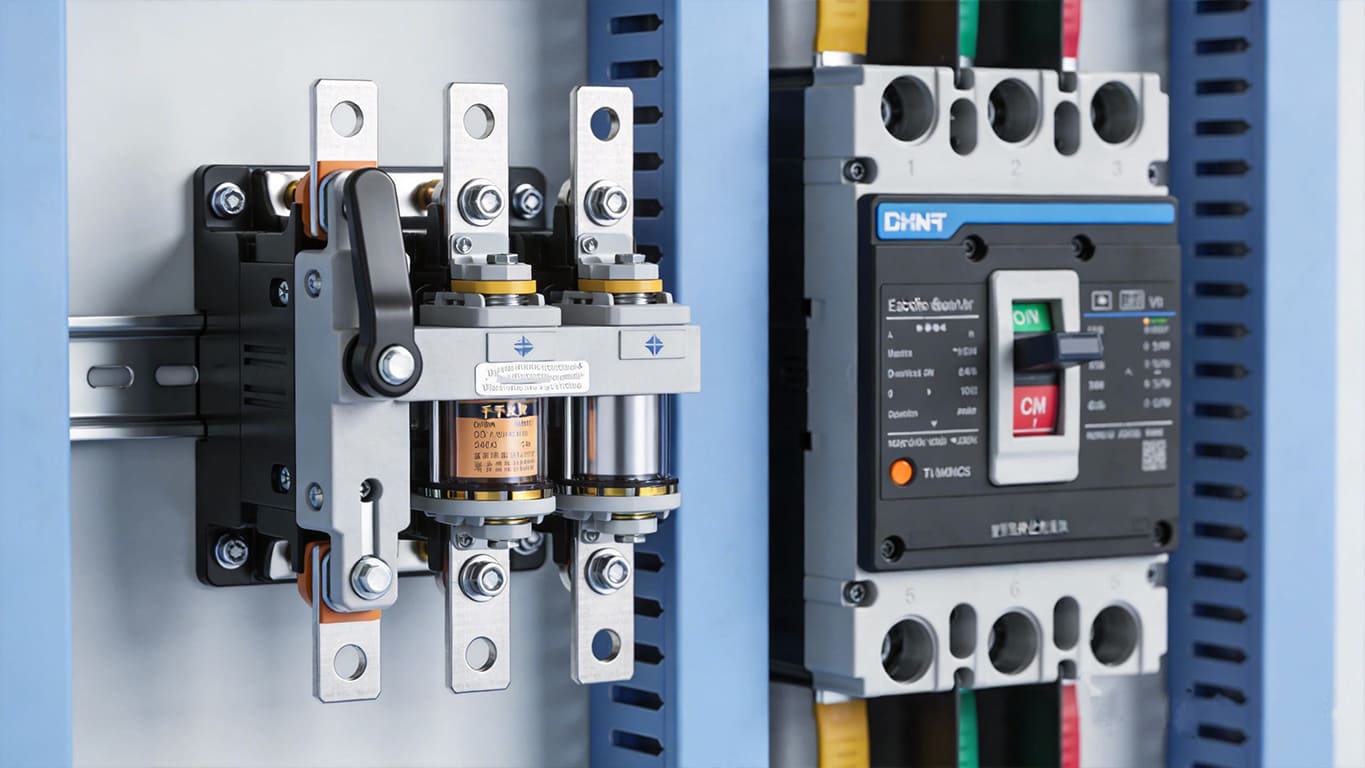
A fused disconnect is not the same as a breaker because it combines manual switching and isolation with fuse-based overcurrent protection that requires fuse replacement after operation, while a breaker provides automatic resettable protection. Fused disconnects lack the automatic trip mechanism of breakers but offer faster fault clearing and higher breaking capacity through cartridge fuses.
Protection Mechanism Differences
Circuit breakers use thermal-magnetic or electronic trip units that detect overcurrent conditions and mechanically separate contacts. The trip mechanism remains intact after operation, allowing reset without component replacement. This resettability makes breakers convenient for applications with occasional nuisance trips or testing requirements.
Fused disconnects rely on fusible elements that physically melt and vaporize when current exceeds their rating. The fuse destruction creates an open circuit that cannot be reset—you must replace the fuse element to restore the circuit. This sacrificial operation ensures the protection device operated and prevents hidden damage from allowing continued operation.
Breaking Capacity and Fault Current Handling
Fused disconnects with NH or HRC fuses2 achieve breaking capacities of 50-120 kA depending on fuse class and rating. The fuse clears faults in milliseconds while limiting let-through energy, protecting downstream equipment from destructive fault currents. This high breaking capacity makes fused disconnects essential in environments with extremely high available fault currents, such as industrial service entrances or near utility transformers.
Circuit breakers typically offer lower interrupting capacity than fused disconnects of comparable frame size. While modern MCCBs achieve substantial interrupting ratings (up to 100 kA for premium models), they generally cannot match the energy limitation characteristics of fast-acting fuses. In high-fault situations, the fuse's faster operation can significantly reduce arc flash incident energy, improving worker safety.
Application Requirements and Standards Compliance
Equipment manufacturers often specify fused disconnects for motor protection, HVAC equipment, and industrial machinery. These specifications stem from warranty requirements, insurance considerations, and proven performance in protecting specific equipment types. Fused protection provides precise overload characteristics that match motor starting curves better than some breaker settings.
Circuit breakers appear more commonly in building distribution panels, lighting circuits, and general branch circuits where frequent resets benefit operational continuity. Building codes accept breakers for most applications but may require fused disconnects for specific equipment or in locations with high available fault current. We select between them based on application requirements rather than assuming equivalence.
Cost Analysis Over Equipment Lifetime
Fused disconnects cost less initially than comparable MCCBs. However, you must factor in fuse replacement costs over the installation's lifetime. In facilities with stable electrical systems experiencing infrequent faults, fuse replacement costs remain minimal. The primary cost consideration becomes equipment protection—fuses that prevent expensive equipment damage by clearing faults faster may deliver better total value despite replacement costs.
MCCBs carry higher upfront costs but eliminate recurring consumable expenses. The total cost of ownership favors MCCBs in applications with frequent nuisance trips, testing requirements, or where trained personnel can reset breakers immediately. However, in critical processes where equipment damage from fault energy costs more than downtime for fuse replacement, the economics shift toward fused protection.
How Will Smart Monitoring Change This Decision?
The shift toward Industry 4.0 and IoT-enabled electrical systems transforms how we evaluate protection devices. Smart circuit breakers now offer remote monitoring, predictive maintenance, and real-time energy analytics that traditional fused disconnectors cannot provide.
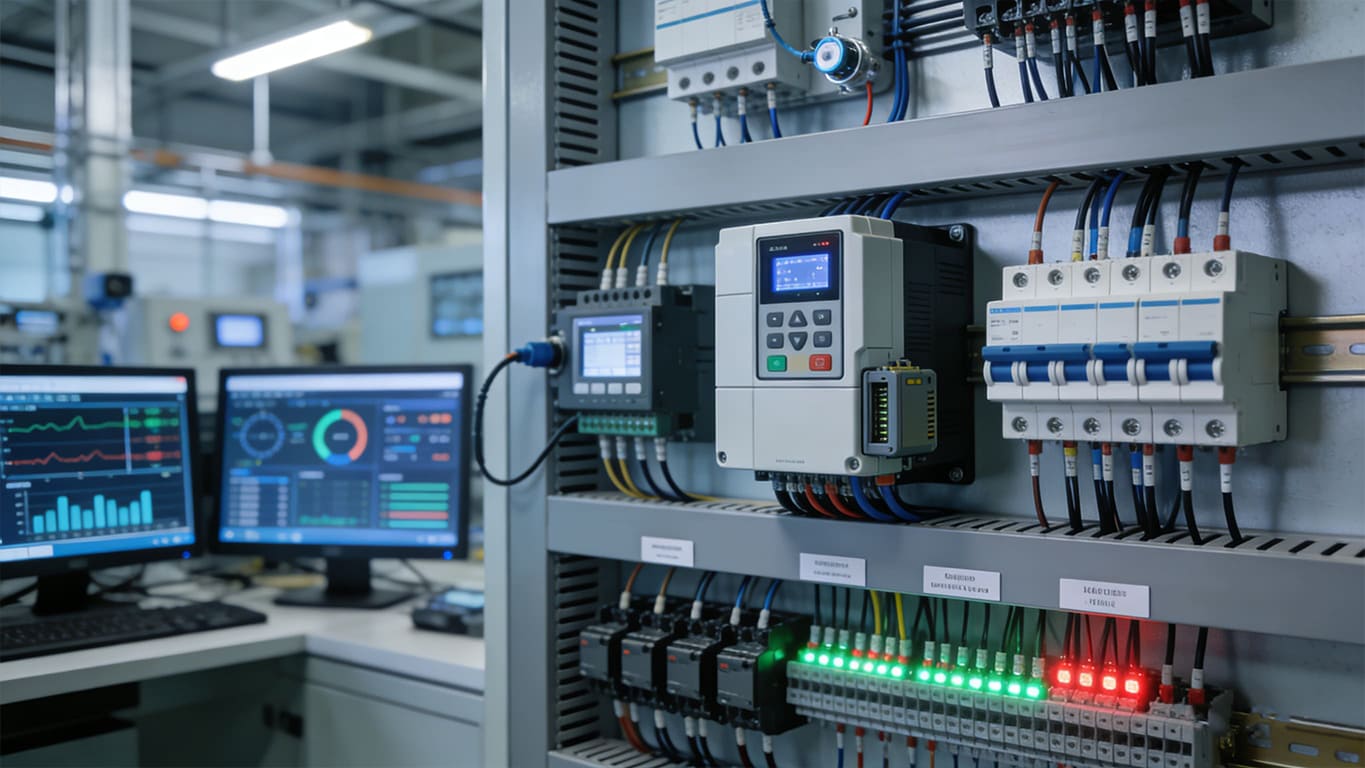
Smart MCCBs with integrated communication enable remote monitoring of breaker health, precise energy metering (±0.5% accuracy), and predictive maintenance through lifespan indicators that reduce system downtime. Advanced features like Zone Selectivity Interlocking (ZSI) ensure faults are isolated instantaneously at the exact fault location, combining the selectivity advantage of fuses with the convenience of resettable protection.
Remote Monitoring and Diagnostics
Smart MCCBs communicate via onboard protocols, enabling facility managers to monitor circuit status, energy consumption, and fault history from any location. You receive instant notifications when breakers trip, allowing faster response even when maintenance personnel are off-site. This remote visibility eliminates the uncertainty about whether a circuit tripped due to actual faults or nuisance conditions.
Traditional fused disconnectors lack this connectivity. While you can add external monitoring for current flow, you cannot monitor fuse health or predict when fuse degradation might cause unexpected operation. The blown fuse itself provides fault indication, but you must physically inspect the device to identify which fuse operated.
Predictive Maintenance and Lifespan Management
Advanced digital MCCBs incorporate lifespan indicators that track cumulative fault current interruption and operational cycles. The device calculates remaining useful life based on actual stress experienced, enabling predictive replacement before failure occurs. This data-driven maintenance approach reduces unexpected downtime and optimizes replacement scheduling.
Fuse monitoring remains limited to external sensors that detect when fuses have blown. Predicting fuse health requires tracking load conditions and comparing to fuse time-current curves, which demands separate monitoring equipment and analysis. The simplicity that makes fuses reliable in operation becomes a limitation in predictive maintenance strategies.
Integration with Building and Energy Management Systems
Smart breakers integrate seamlessly with building management systems (BMS), home automation platforms, and industrial IoT networks. You can coordinate circuit protection with energy management strategies, automatically shedding non-critical loads during peak demand periods or integrating with solar systems and battery storage to optimize energy flow. This integration extends beyond protection to comprehensive energy management.
The shift to smart monitored systems will likely blur the traditional lines between fused and breaker-based protection. We will select devices based on integration capabilities, serviceability in connected systems, and how protection fits into broader facility management strategies. The question becomes less about fuse versus breaker and more about which platform supports your facility's digital transformation goals while delivering the protection characteristics your specific application requires.
Conclusion
Fuse switch disconnectors and MCCBs serve different philosophies—choose based on whether your plant prioritizes ultra-fast selective fault clearing or resettable convenience with adjustable protection. The emergence of smart monitored systems shifts the decision toward integration capabilities and predictive maintenance, making the protection device selection part of your broader facility digitalization strategy.