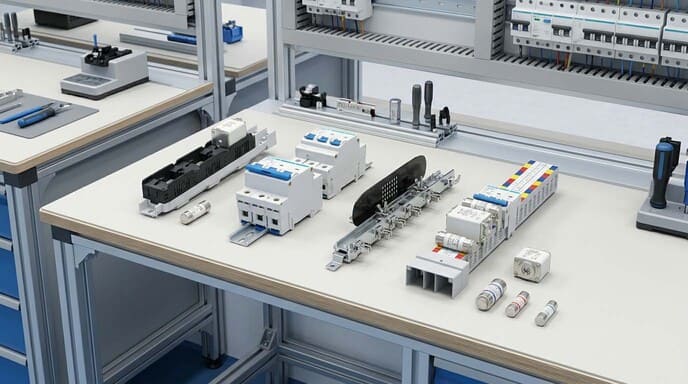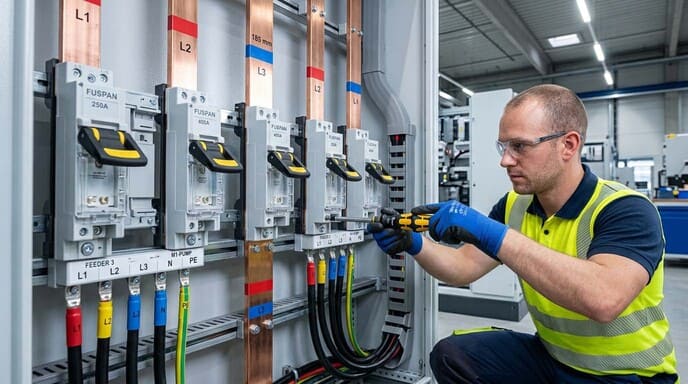
How to Select the Right Fuse Switch Disconnector1 for Your Distribution Board?
A wrong protection choice does not just trip a circuit. It can burn a busbar, damage a motor starter, or shut down a whole line. I have learned that the “right” choice is the device that controls the failure you cannot afford.
Select a fuse switch disconnector when you need very high fault-handling confidence, strong current-limiting, and clear isolation; select an MCCB when you need adjustable protection, easier reset, and simpler maintenance. IEC practice also matters: fuse switch disconnectors fall under IEC 60947-32, while MCCBs fall under IEC 60947-2.
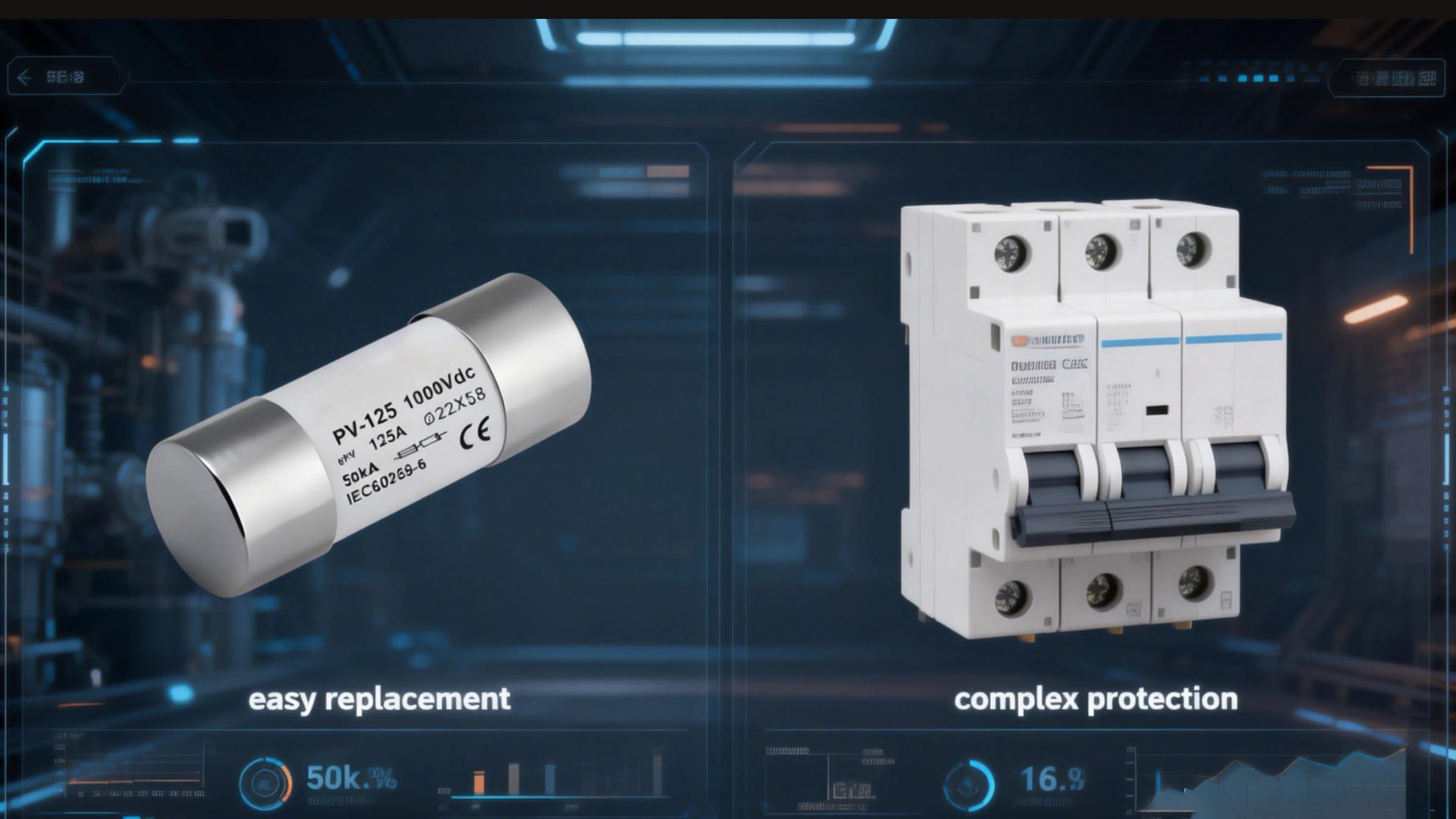
I used to treat this decision like a product comparison. Then I watched one bad fault turn into a long outage because the protection and isolation plan was decided too late. Now I start with fault levels, coordination targets, and how the plant actually maintains equipment, and I work backward into the device choice.
Fuse Switch Disconnector vs MCCB: Which Is Better for Industrial Panels?
Industrial panels punish weak assumptions. The problem is that both devices “protect,” but they fail in different ways and they recover in different ways.
A fuse switch disconnector is usually a switch for isolation and on-load operation that uses fuses to clear faults, and it is commonly built around IEC 60947-3 device requirements.
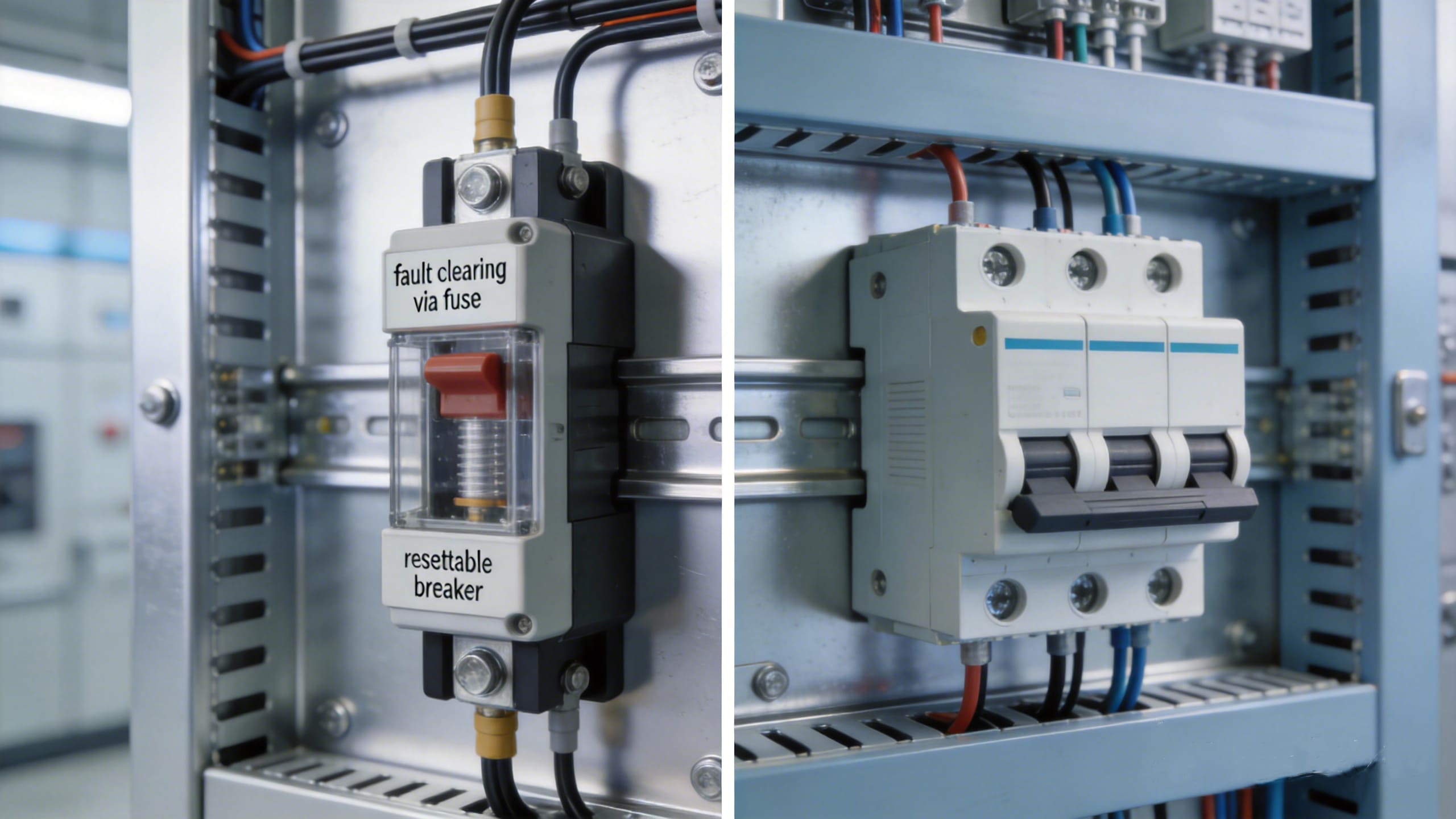
In my projects, “better” depends on what the panel must survive. When the prospective short-circuit level is high and the goal is predictable clearing with low let-through energy, fused solutions often give me more comfort because current-limiting fuses can reduce peak current and I²t3.When the plant needs adjustment, remote accessories, or fast restore after nuisance trips, MCCBs tend to win because the protection is built in and can be tuned by settings (especially with electronic trip units).The key is that neither device is a universal upgrade for the other, so I treat them as tools for different risk profiles, not as substitutes.
What I compare first
- Fault level and required breaking capacity (system prospective short-circuit versus device ratings).
- Coordination goal: selective coordination versus cost and space.
- Restore strategy: replace a fuse link4 versus reset and investigate an MCCB trip.
Practical decision table (what “better” usually means)
| Project priority | Fuse switch disconnector tends to fit | MCCB tends to fit |
|---|---|---|
| Highest fault margin and strong current limiting | Fuses can be current-limiting and reduce I²t and peak current in faults. | Some breakers can be current-limiting, but the I²t performance may be less favorable than high-speed fuses. |
| Maintenance simplicity for operators | Requires spares and safe fuse replacement discipline. | Resettable after trip and no parts replacement for a normal trip event. |
| Protection flexibility | Protection depends on fuse type/curve selection, not adjustable settings. | Designed for overload/short-circuit protection with defined parameters and testing under IEC 60947-2. |
Which type of circuit breaker is typically used in industrial applications?
In industrial low-voltage systems, the typical “workhorse” breaker is the MCCB. The reason is simple: industrial feeders and motor circuits often need higher current ranges and higher breaking capacities than small final circuits.
An MCCB is a molded case circuit breaker designed to protect against overloads and short circuits, and IEC 60947-2 defines performance and test requirements for low-voltage circuit breakers.
In practice, I see MCCBs used for incomers, large feeders, and motor control centers because the settings and accessories fit industrial operation habits. IEC 60947-2 also defines critical ratings like breaking capacities (such as Icu and Ics), which is exactly what engineers check when fault levels are high.Even when a fused solution is chosen, it is often because the fault study and coordination study push the design toward the predictability and current limiting behavior that fuses can provide.
My “typical industrial” mental map
- MCCBs for feeders and distribution where adjustment and operational restore matter.
- Fuse switch disconnectors where isolation plus very strong fault performance is the top goal.
What is the difference between fuse switch and MCCB?
People often mix up “switching,” “isolation,” and “protection.” The difference is not only the device form, but also where the fault is interrupted and how you return to service.
A fuse switch disconnector combines a switch-disconnector function with fuse protection, so the fuse clears the fault while the handle mechanism provides isolation and operation, which aligns with IEC 60947-3 scope for fuse-combination units.
An MCCB interrupts the fault using its internal trip and contact system, and it is evaluated under IEC 60947-2 requirements for low-voltage circuit breakers.For energy during faults, current-limiting fuses are specifically valued because they can limit peak current and I²t, which helps reduce damage downstream and stress on busbars and devices.This is why I treat a fused disconnector as a “fault energy control” tool plus isolation, while I treat an MCCB as a “protection + operations” tool that is easier to reset and tune.
Differences that change outcomes
| Topic | Fuse switch disconnector | MCCB |
|---|---|---|
| Fault interruption | Fuse element clears fault fast inside the fuse body. | Breaker trips and opens contacts to interrupt current. |
| Fault energy | Current-limiting fuses reduce peak and I²t. | Performance depends on breaker design; generally less I²t limiting than high-speed fuses. |
| After a fault | Replace fuse link and verify cause. | Reset after trip once cause is corrected. |
When should you use a fused disconnect?
Some environments are unforgiving. High available fault current, tight coordination needs, and the demand for a very clear isolation point all push me toward a fused disconnect approach.
A fused disconnect is often used when a design needs both isolation and fuse-based overcurrent protection in one assembly, which matches the common description of fuse disconnectors used for isolation plus fault protection.
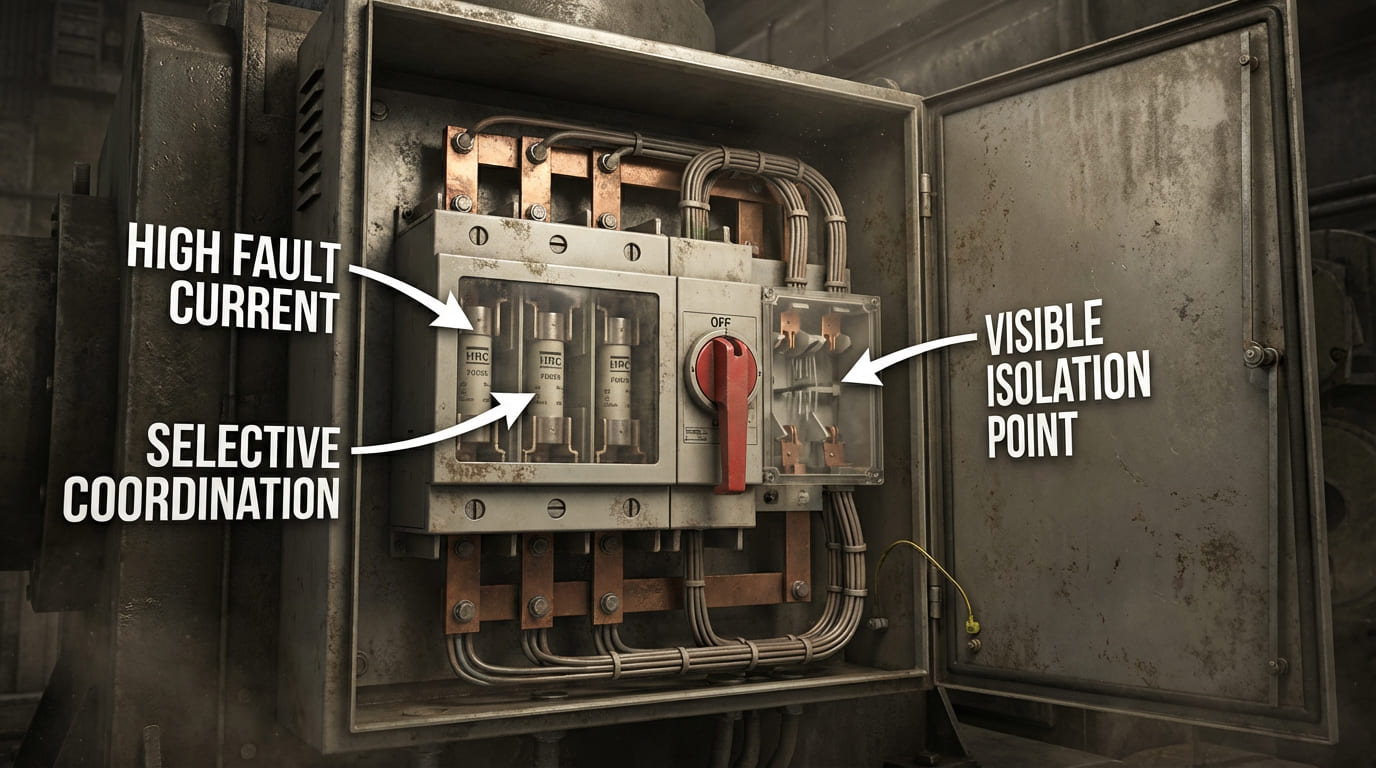
I reach for a fused disconnect when the short-circuit level is high and I want very strong breaking performance with predictable clearing, because fuses can interrupt high fault currents quickly and limit let-through I²t.I also use it when the panel design benefits from a clear mechanical isolation function, since isolation and switching functions are addressed in IEC 60947-3 device families.In my experience, the best time to decide is early, right after the fault study and coordination concept are clear, because swapping later can force busbar changes, enclosure changes, and coordination rework.
Situations where I favor fused disconnects
- High fault levels where current limiting matters for equipment survival.
- Coordination targets where fuse behavior supports selectivity planning.
- Panels where simple, visible isolation is a daily safety practice.
Which one is better, a fuse or a circuit breaker?
The more honest question is what kind of damage is acceptable during a fault, and what kind of maintenance behavior is realistic. Fuses and breakers each “pay” in different places: fuses pay in replacement logistics, breakers pay in higher complexity and sometimes higher fault energy.
High-speed and current-limiting fuses are widely discussed for their low clearing I²t compared with circuit breakers, which matters when limiting thermal and mechanical stress is the priority.
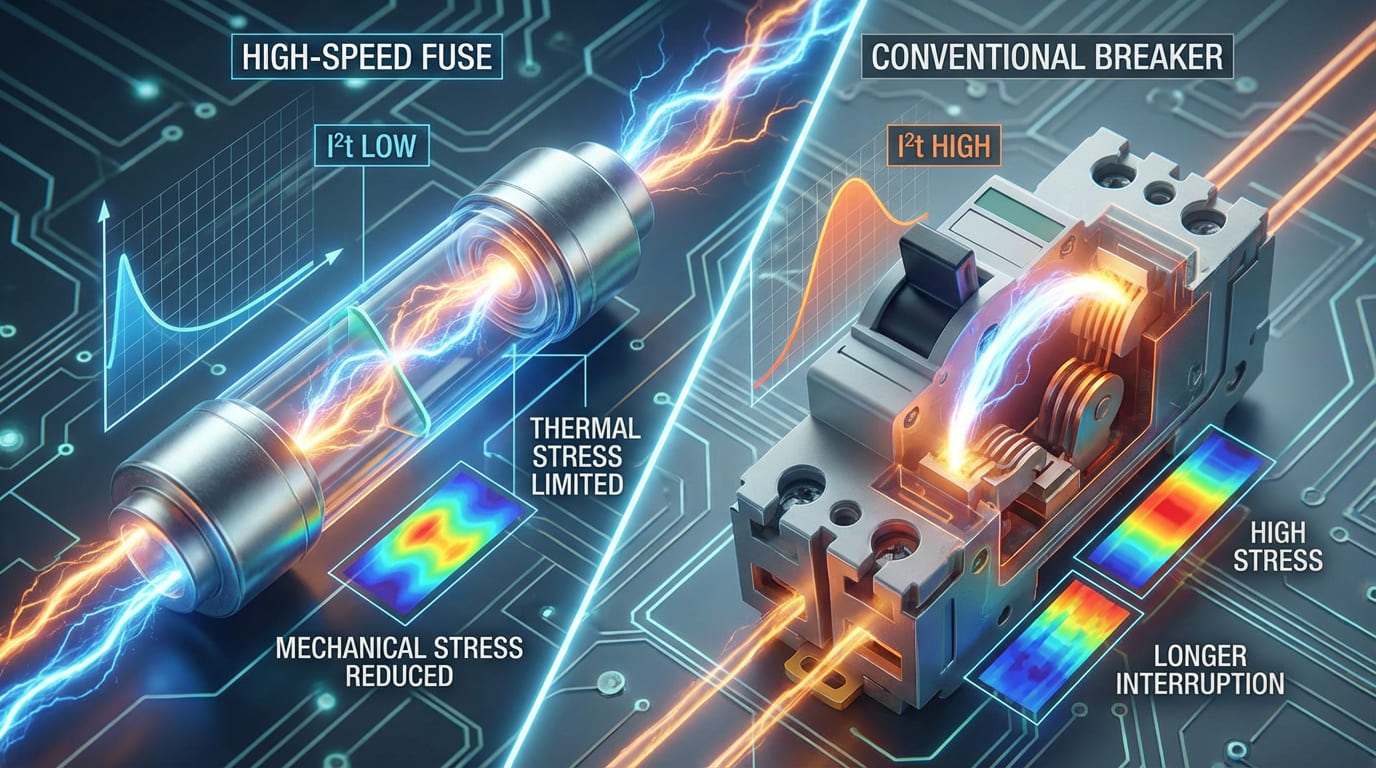
In my own decision flow, I lean toward fuses when the equipment downstream is sensitive or expensive, because lower I²t and peak current can be the difference between a cleared fault and a damaged drive or melted busbar support.I lean toward breakers when the plant needs fast restore and adjustable settings, because MCCBs are designed and tested as protective devices with defined ratings and can be applied across a wide current range in industrial systems.The projects that run smoothly are the ones where the team agrees early on the failure mode they want: minimum damage, minimum downtime, or minimum maintenance burden, and then chooses devices that match that reality.
Conclusion
I select fuse switch disconnectors for maximum fault certainty and energy control, and I select MCCBs for adjustability and easy restore, and I decide early using fault and maintenance realities.
-
Explore this resource to understand the functionality and benefits of Fuse Switch Disconnectors in electrical systems. ↩
-
Understand the standards set by IEC 60947-3 for Fuse Switch Disconnectors and their importance. ↩
-
Understand the significance of I²t in evaluating the performance of protective devices. ↩
-
Discover the role of fuse links in electrical protection and their operational characteristics. ↩