The fuse market feels crowded and confusing. Many customers ask me for a “top 10 list” because they fear choosing the wrong brand and facing safety, downtime, and approval problems later.
The top 10 fuse brands in China usually include a mix of domestic specialists and global brands with factories or partners in China. The best choice depends on your voltage level, certification needs1, delivery speed, and project budget.
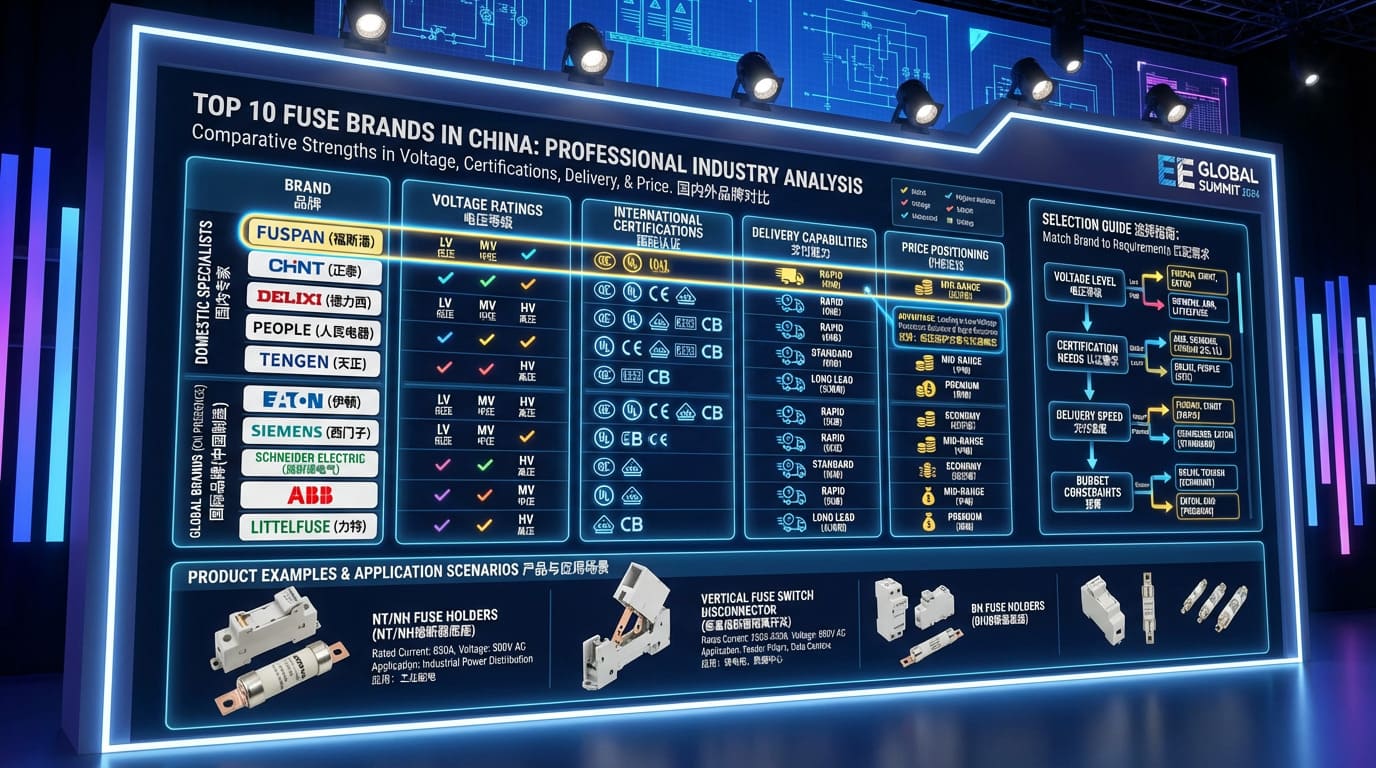
When I talk with buyers, I see they do not just compare names. They compare ecosystems. They look at certification, after-sales support, modularity, and long-term supply. So I want to walk through Chinese and global fuse brands in a simple, practical way, based on what I see in real projects.
Top 10 Fuse Brands Globally?
Many engineers still look at global brands as the “safe” option. They worry that if they choose the wrong supplier, their whole design will fail certification or lose trust with end users.
The top global fuse brands2 are companies like Bussmann (Eaton), Mersen, SIBA, Littelfuse, Schneider, Siemens, ABB, Legrand and a few strong regional players. These brands lead in certification depth, reliability data, and support for global OEM platforms.

When I support export projects, I often see the same pattern. A designer will benchmark their fuse and protection architecture against one of these global names. They use them as a “reference” even if they later switch to another supplier. Below is a simple way I group the global fuse leaders in my own work:
Main global fuse players and strengths
| Brand | Main Strengths | Typical Use Cases |
|---|---|---|
| Bussmann | Wide portfolio, strong LV and EV fuses | Industrial panels, EV, renewables |
| Mersen | Strong in high-power and PV protection | Solar farms, rail, large industrial |
| SIBA | High reliability, strong in Europe | Utility, heavy industry, OEM machines |
| Littelfuse | Broad range, strong in electronics and automotive | PCBs, automotive, industrial electronics |
| Schneider | Integrated with switchgear and panels | Building distribution, OEM panels |
| Siemens | Utility and industrial systems integration | Switchboards, distribution, process plants |
| ABB | MV/LV systems, global service network | Power distribution, critical infrastructure |
| Legrand | Building and commercial power | Commercial buildings, small industry |
I notice that customers choose these brands not only for fuses but for the “ecosystem”: breakers, busbars, digital monitoring, and global service support.
Advantages and Disadvantages of Chinese and Global Fuse Manufacturers?
Many buyers tell me they feel stuck between “safe but expensive” global brands and “cost-effective but risky” Chinese options. They worry about hidden costs like delays, rework, or failed approvals.
Global fuse makers lead in certifications, brand trust, and historical performance data. Chinese fuse makers lead in price, customization speed, and flexibility. The right choice comes from matching your risk level, project stage, and market needs.
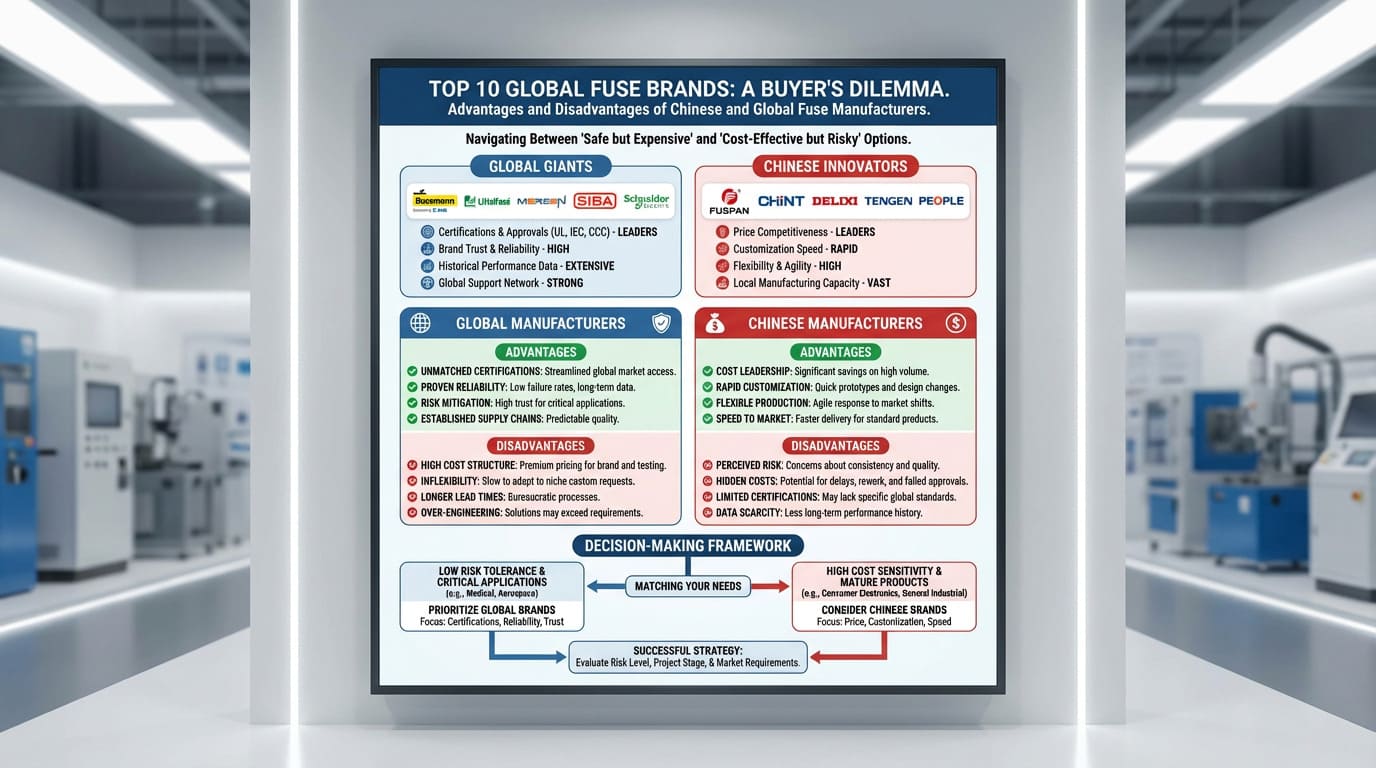
In my daily work, I often help customers compare these trade-offs in a blunt way. We go line by line through what really matters, instead of just comparing catalog prices. Below is how I usually structure this discussion.
Key comparison: Chinese vs global fuse brands
| Factor | Chinese Brands | Global Brands |
|---|---|---|
| Price | Lower unit cost, better for volume | Higher, with strong brand premium |
| Certification coverage | IEC/GB common, some UL still in progress | Very wide: IEC, UL, CSA, automotive standards |
| Customization speed | Fast, flexible, small-batch friendly | Slower, more process-heavy |
| Ecosystem integration | Improving, often more modular now | Very strong with breakers, panels, software |
| Reliability track record | Growing, shorter public history | Long field data and proven failure statistics |
| Engineering support | Flexible, responsive for design tweaks | Strong, but sometimes slower and more formal |
| Supply stability | Good for mass orders once stable | Very strong for global OEMs and long programs |
When I sit with customers, we do not ask “which side is better.” We ask “for this specific project, which risks matter more: cost and speed, or brand and approvals.”
What are the Competitive Advantages of Chinese-Made Fuses?
Some customers still think “Chinese fuse” means cheap but weak. At the same time, they watch new energy projects grow fast in China and wonder how local suppliers support them.
Chinese-made fuses win on cost, customization speed, fast response to new standards, and flexible production for emerging markets. They are strong when your design changes often and budgets are tight.
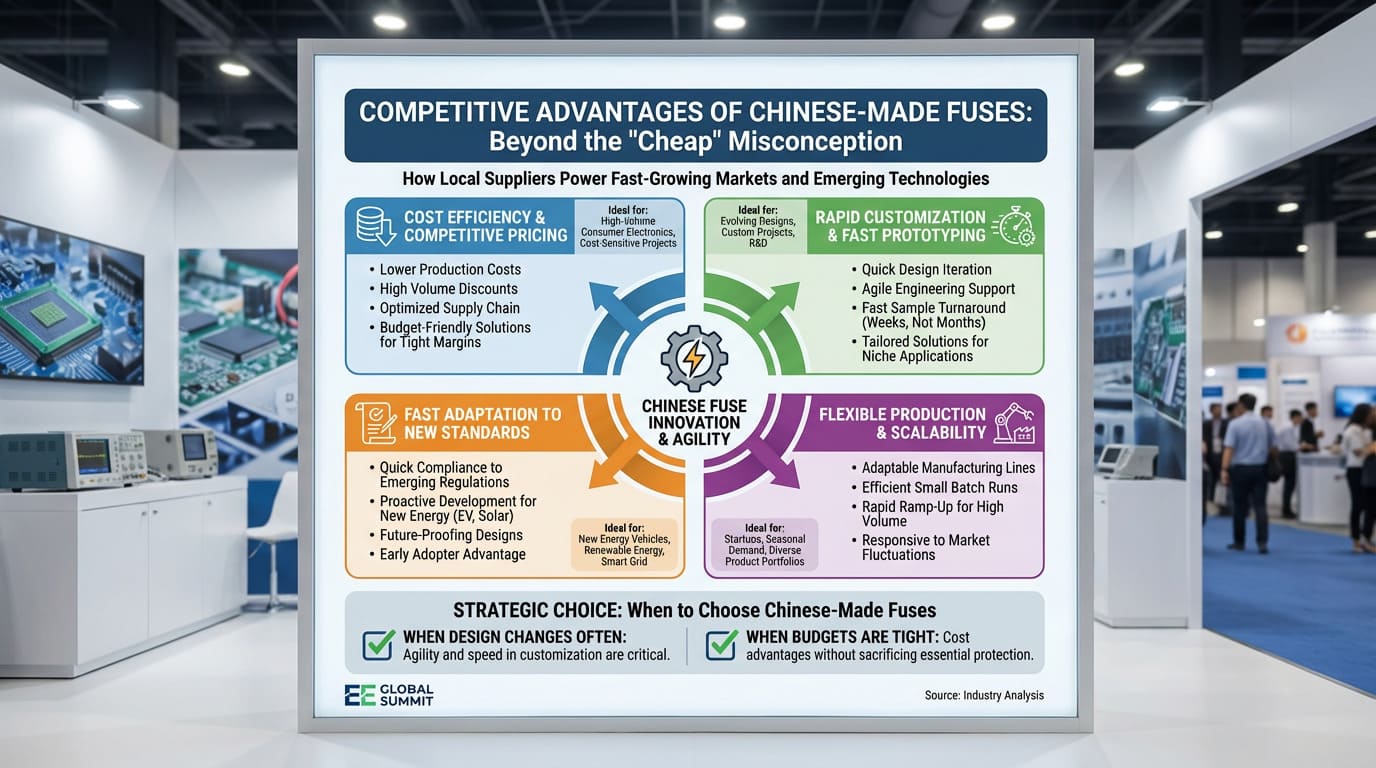
In my experience at Fuspan, the real shift came when we stopped trying to copy catalog items and started building modular platforms. I often work with customers who bring half-defined DC busbar layouts or unclear EV or ESS requirements. Below is how I see the main benefits.
Main competitive edges of Chinese fuse makers
| Advantage | What it means in real projects |
|---|---|
| Fast customization | New fuse ratings or holders for special layouts in weeks, not months |
| Cost-effective tooling | Lower mold and tooling costs for OEM-specific parts |
| Flexible MOQ | Support for pilot runs and step-by-step scale up |
| Rapid standard follow-up | Quick response to new PV, ESS, and EV code requirements |
| Integration with mechanics | Fuse + busbar + enclosure matched in one design cycle |
| Shorter lead times | Good for projects with tight delivery and rolling orders |
I remember one energy storage customer who changed their DC busbar design three times in six months. They first used a global brand but faced long lead times and fixed models. Once they switched to a Chinese fuse platform, we could adjust mounting, terminals, and labels within each revision. This speed became their real advantage in the market.
What are the Disadvantages of Fuse Manufacturing in China?
Even when customers like the price and flexibility, they still hesitate. They worry about hidden quality risks, weak documentation, and how end users will react to a less-known brand.
The main disadvantages of fuse manufacturing in China are weaker global brand recognition, shorter public reliability history, uneven quality levels between factories, and limited early involvement in top-tier safety-critical designs.
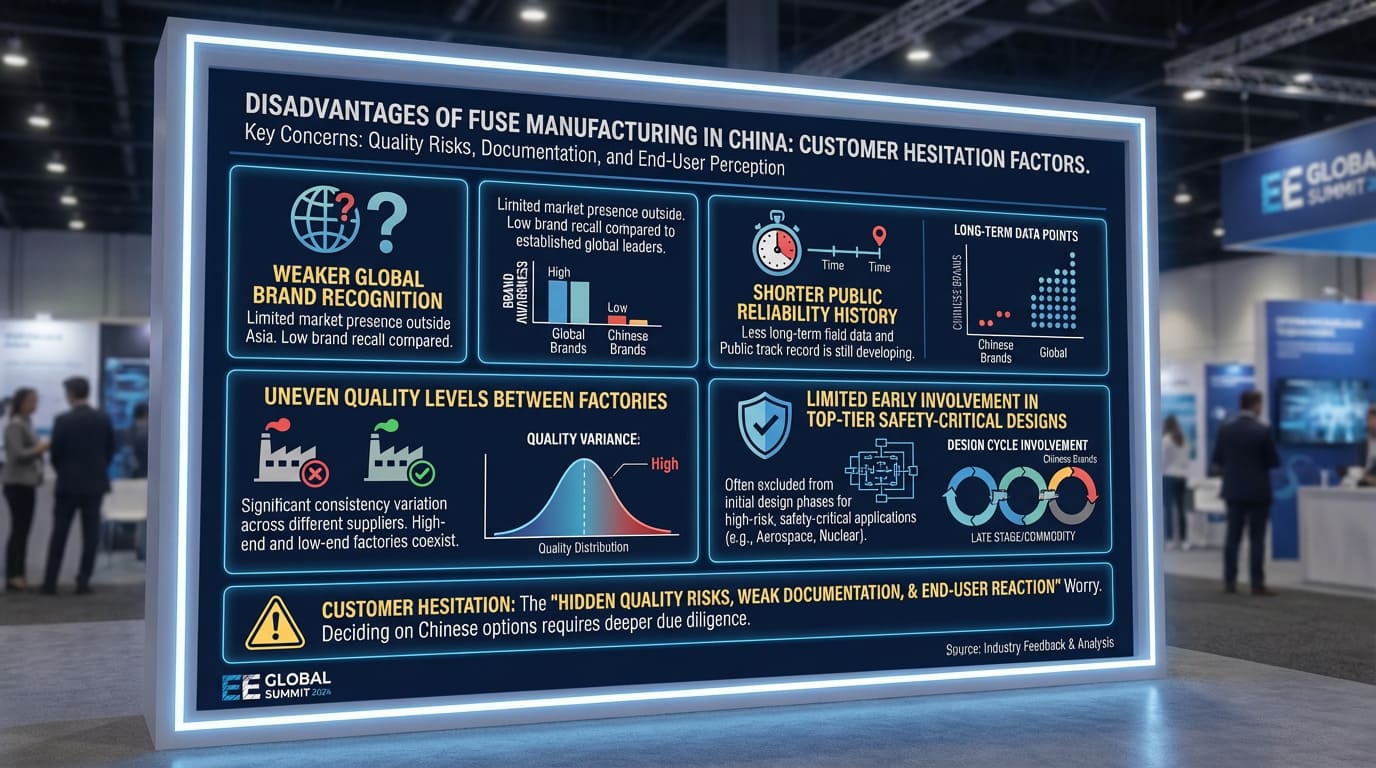
I see these issues very clearly from inside the industry. Good Chinese factories invest in testing, traceability, and certifications, but many buyers still remember bad experiences with inconsistent suppliers. I always tell customers to look beyond the “Made in China” label and check the real systems behind it.
Typical weaknesses and how I see them
| Weakness | Risk for the buyer | How I usually address it |
|---|---|---|
| Lower brand trust | End users may doubt safety and reliability | Share test reports, references, third-party audits |
| Shorter track record | Less published long-term failure data | Offer sample testing, pilot runs, burn-in plans |
| Uneven supplier quality | Risk of unstable batches | Show QA process, ISO 9001, 100% testing practices |
| Late involvement in design | Fuses chosen too late, not optimized | Join early in design reviews and component layout |
| Documentation gaps | Slower approvals and panel certification | Provide drawings, 3D models, and English datasheets |
When I join early in projects, I see our disadvantage shrink fast. If we enter only at the end, as a “price replacement,” then every weakness becomes larger. So I now push for earlier technical talks, not just late-stage price quotes.
Conclusion
For most projects, the smart move is not to chase names, but to match each fuse position with the right mix of global benchmarks and Chinese flexibility, based on risk, budget, and long-term plans.
Global brands still lead in trust and certification breadth. Chinese brands lead in speed, flexibility, and cost. The best choice comes from your project’s risk level, change frequency, and long-term strategy.