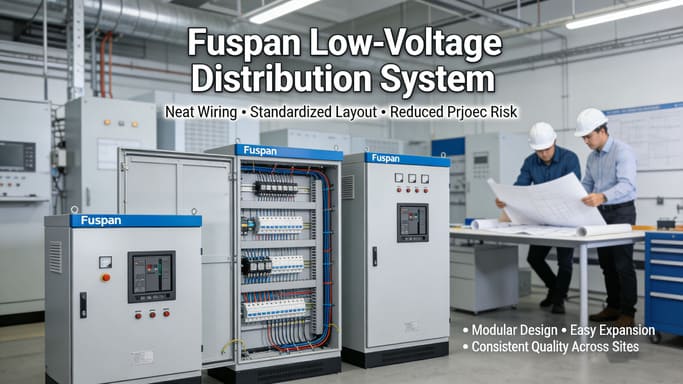
I see a three phase distribution board1 as the “control room” of a power system2. It splits incoming three phase power into safe, manageable outgoing circuits, with proper protection and clear organization.
A three phase distribution board is an enclosure that receives three phase power and divides it into multiple circuits through breakers and protection devices. It controls, protects, and organizes loads so users can scale power safely and maintain systems efficiently.
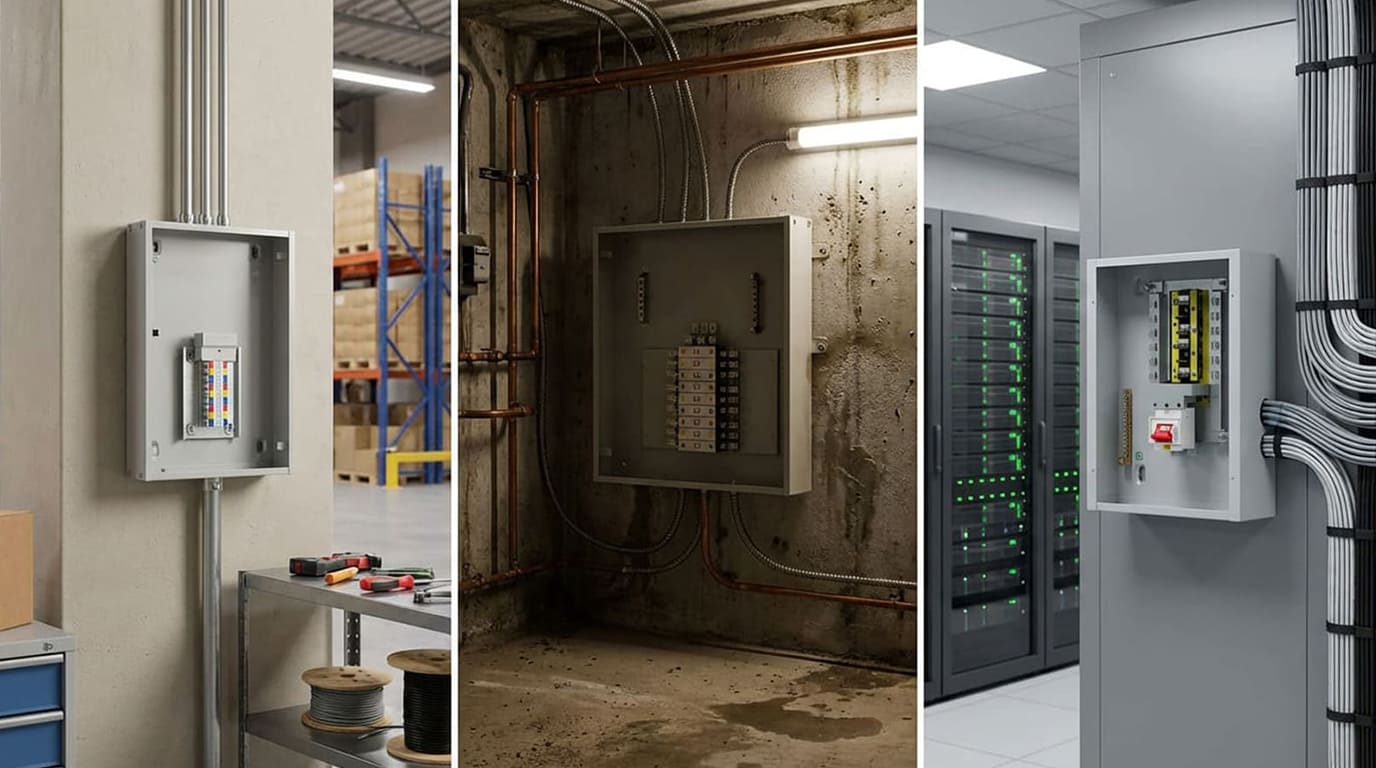
When I first started working with three phase systems, I assumed the board was just a metal box with breakers. Over time, I learned that a good board makes expansion simple, troubleshooting quick, and work inside the panel safer. A weak board does the opposite. It slows projects, hides faults, and increases risk. So I now look at every board as an investment in how easy or hard future work will be.
Why Do You Need a Three Phase Distribution Board?
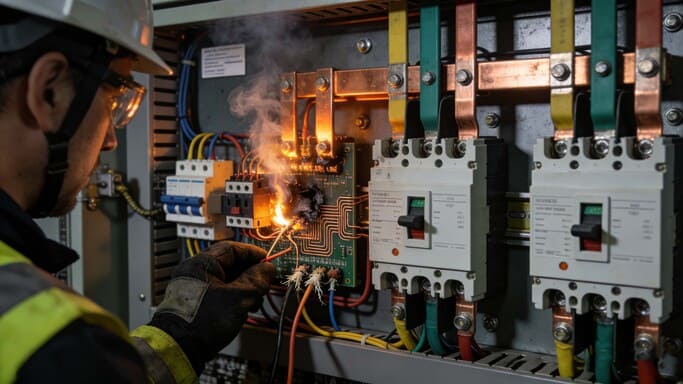
Many teams I work with try to run growing loads from improvised panels or extended single phase boards. The result is often overloaded cables, confused labeling, and messy upgrades. This does not fail on day one. It fails slowly and silently, until one event brings everything down at the worst time.
You need a three phase distribution board when your facility uses three phase supply and multiple loads with different power levels. The board lets you balance phases, protect each circuit correctly, and keep space for safe expansion, which reduces downtime and improves long term reliability.

When I sit down with customers, I usually ask three questions. First, how fast will your loads grow over the next three to five years. Second, who will maintain the board: in‑house staff or contractors. Third, how important is uptime during upgrades. If they expect growth, have mixed skill levels in the field, and cannot accept long outages, then a proper three phase distribution board is not optional. It is the only way to keep structure as complexity rises. A good board gives clear separation of circuits, enough spare ways, and logical busbar layouts. It also supports metering and monitoring, so the energy and maintenance teams do not argue about what is really happening inside the system.
Typical reasons you need a three phase board
| Reason | What I see in the field |
|---|---|
| Growing three phase machinery | Production lines, pumps, HVAC, EV chargers, compressors |
| Need for safe expansion | Frequent new loads, layout changes, tenant turnover |
| Power quality and balance | Uneven loads, nuisance tripping, warm cables, high neutral currents |
| Compliance and safety | Need to meet local standards and pass inspections without rework |
| Centralized control | Want one point for isolation, lockout, and circuit identification3 |
Key Components of Three Phase Distribution Boards?
I often open panels on site and see the same problem. All the right devices are present, but they are arranged with no clear logic. The layout may work today, but it makes every change a risk. In my view, the physical structure of the board matters as much as the devices themselves.
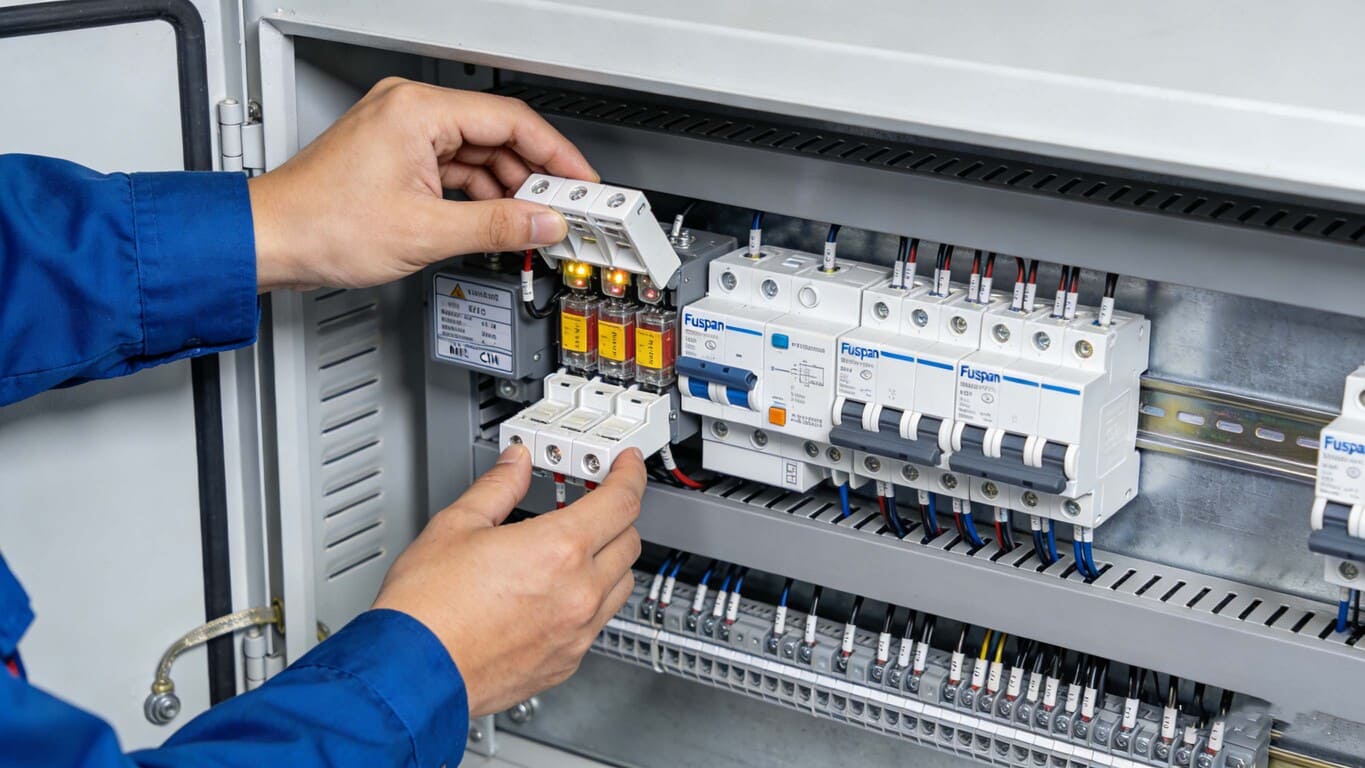
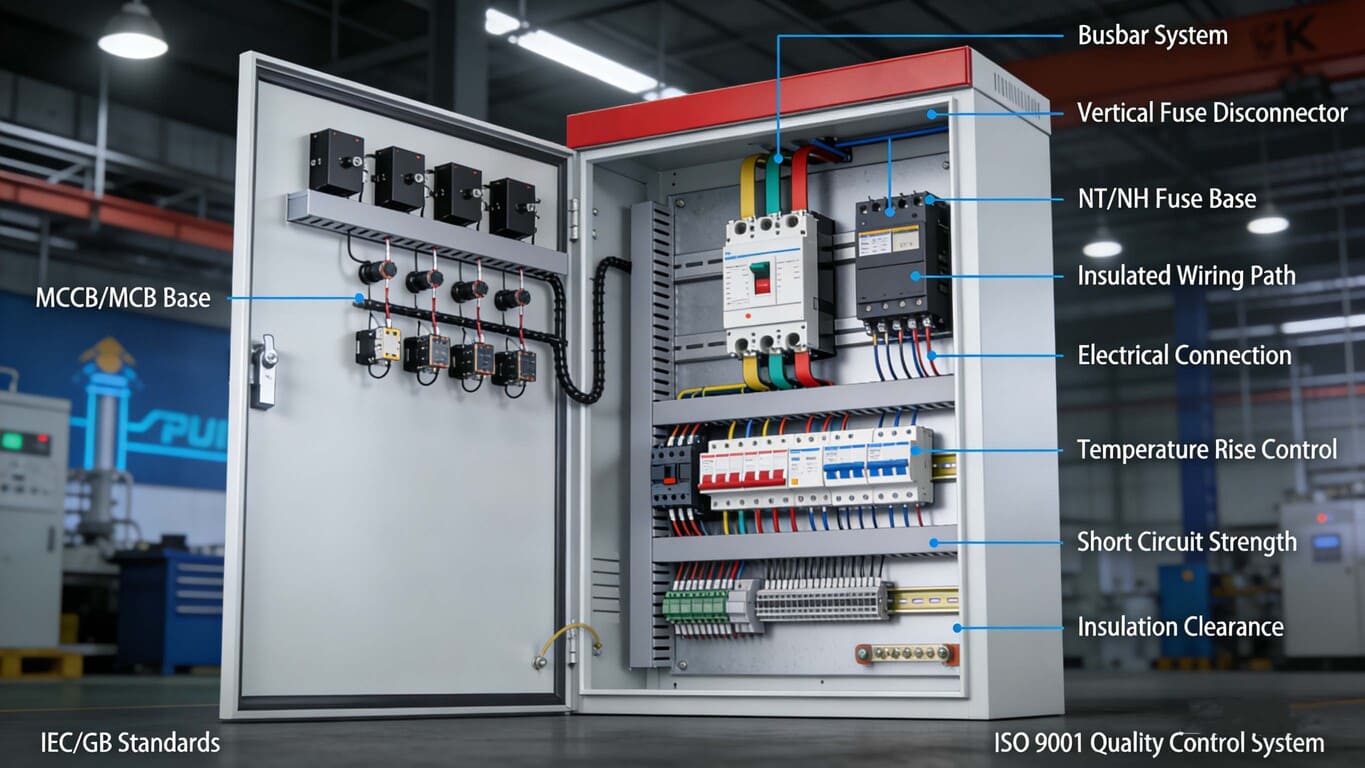
The main components of a three phase distribution board are the enclosure, incoming device, busbar system4, outgoing breakers, neutral and earth bars, and optional protection and monitoring modules. When these parts follow a modular, standardized layout, they make upgrades, maintenance, and fault finding much safer and faster.

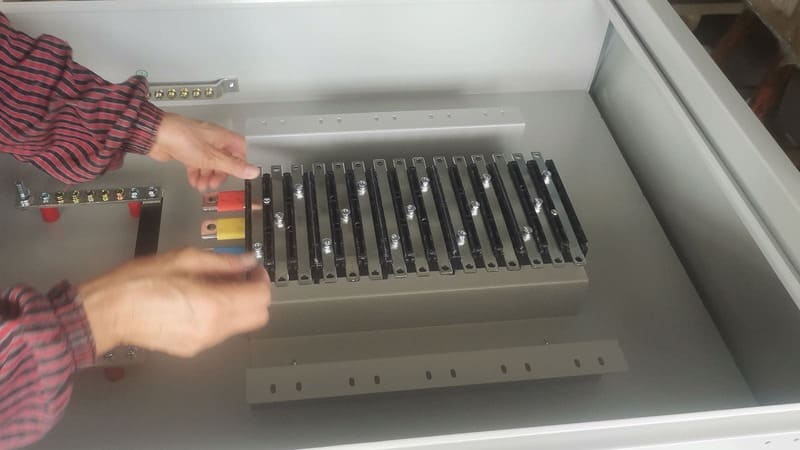
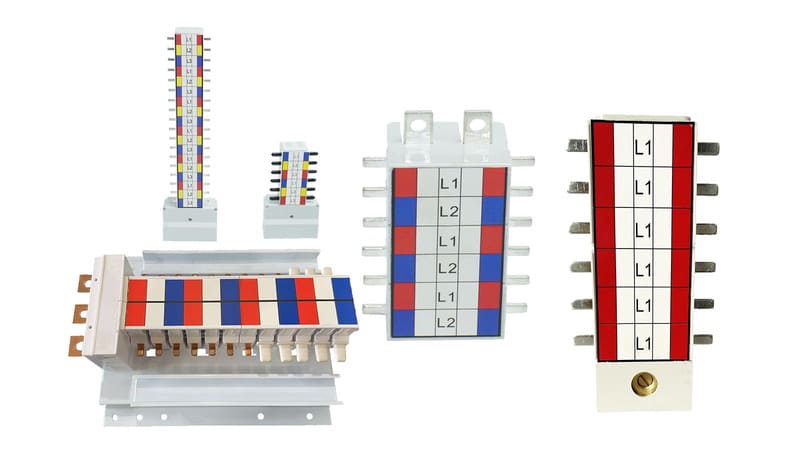
When I design or review a board, I start with the incoming device. This can be an MCCB5, main switch, or isolator. I check its breaking capacity, its coordination with upstream protection, and if it allows energy metering or monitoring. Next, I look at the busbar system. A well‑designed busbar has clear phase separation, tested short‑circuit ratings, and flexible tap‑off options. At Fuspan, we focus heavily on this because a strong busbar system supports different breaker brands and frame sizes without forcing a redesign of the whole panel.
Then I look at the outgoing devices. These are usually MCBs, MCCBs, or sometimes fuse switch disconnectors. I like boards where outgoing ways are clearly labeled, grouped by function, and leave room for future circuits. Neutral and earth bars must be sized and arranged for real field work, not only drawings. There must be clear space for terminations, especially in DC or mixed systems. Finally, I look for added devices like SPDs, RCDs, and metering modules, and how cleanly they integrate.
Main components at a glance
| Component | Role in the board | What I look for |
|---|---|---|
| Enclosure | Mechanical and environmental protection | IP rating, corrosion resistance, space for cable routing |
| Main switch / MCCB | Incoming isolation and protection | Breaking capacity, adjustability, clear handle operation |
| Busbar system | Distributes power to outgoing devices | Tested kA rating, modular design, brand compatibility |
| Outgoing breakers | Protect and control each circuit | Clear labeling, spare ways, selective coordination options |
| Neutral and earth bars | Safe return path and fault current path | Adequate size, multiple terminals, logical placement |
| RCD / RCCB / RCBO | Protection against earth leakage | Correct sensitivity, selective types where needed |
| SPD | Protection against surge and lightning impulses | Proper connection to phases and earth, clear status indication |
| Measuring devices | Metering and monitoring | Easy viewing, reliable wiring access |
Three Phase vs Single Phase: What’s the Difference?
I meet many managers who are comfortable with single phase but feel unsure about three phase. They often see three phase as complex and risky, so they delay the switch. This delay usually costs more than the upgrade itself in the long run.
Single phase distributes power on one live conductor plus neutral, while three phase uses three live conductors with phase shift between them. Three phase allows higher power, better efficiency, and more stable motors, but it needs suitable protection and balancing through a proper three phase distribution board.

When I explain the difference, I start with loads. Small offices, homes, and light shops that use mostly lighting, sockets, and small appliances usually run on single phase. Once we add large motors, elevators, big HVAC, EV fast chargers, or industrial machines, three phase becomes the better option. It delivers more power without huge currents in a single conductor.
In practice, this means the distribution board looks different. A single phase board mainly has single pole or double pole breakers. A three phase board has three pole or four pole devices and needs careful phase balancing. I often show customers their load profiles. If one phase is overloaded while the others are light, we plan new circuits or move loads across phases. This is almost impossible to manage in improvised panels.
Key differences in simple form
| Aspect | Single Phase | Three Phase |
|---|---|---|
| Conductors | 1 live + 1 neutral | 3 lives (+ neutral if four‑wire system) |
| Typical use | Homes, small shops, small offices | Industry, large buildings, EV charging, data centers |
| Power capacity | Lower, suitable for small loads | Higher, supports heavy and mixed loads |
| Motor performance | Less smooth, more torque ripple | Smooth torque, better efficiency |
| Panel complexity | Simpler layout, fewer balancing concerns | Needs phase balancing and selective coordination |
| Upgrade path | Limited scaling without big changes | Easier to grow when board is modular and well‑planned |
Choosing the Right Three Phase Distribution Board?
When customers ask, “Which board do I need,” they often expect a quick catalogue answer. In my experience, the right choice depends more on how they plan to grow and maintain the system than on today’s kA rating.
To choose the right three phase distribution board, I look at fault levels, number of circuits, environment, and future expansion. I also check compatibility with different breaker brands, availability of modular busbar systems, and the space for metering and protection devices. I want the board to support changes without cutting and rebuilding everything.

I usually break the selection into a few steps. First, I define the system parameters: voltage, short‑circuit level, and main incoming rating. This sets the minimum performance level of the enclosure, busbar, and main device. Then I list existing loads and realistic new loads for the next years. I count how many outgoing ways we need now and how many we should reserve. I never design a board with zero spare ways; that always comes back as a problem.
Next, I look at installation conditions. Indoor or outdoor. Clean or dusty. Coastal or inland. At Fuspan, we provide indoor and outdoor boxes with suitable IP and corrosion resistance, because I have seen nice internal designs fail early in harsh climates. I also check if the customer needs transparent doors, locking, or special access control.
Finally, I consider modularity. If they want the freedom to use different breaker brands or change from MCB to MCCB in some positions, I choose a busbar system and pan assemblies that support this. This is where a modular system saves a lot of time. It allows upgrades without fabricating new copper bars or drilling inside a live facility.
Simple selection checklist
| Item | Question I ask | Why it matters |
|---|---|---|
| System data | What is voltage and max fault level at the board? | Defines kA rating and insulation |
| Load profile | How many circuits now, and how many in 3–5 years? | Ensures enough outgoing ways and spare capacity |
| Environment | Indoor, outdoor, dusty, humid, coastal? | Drives IP rating and material choice |
| Maintenance approach | Who will work inside and how often? | Affects need for clear layout and segregation |
| Brand compatibility | Do you want flexibility in breaker brands? | Influences busbar and pan assembly choice |
| Monitoring needs | Do energy and maintenance teams need metering data? | Impacts space for meters and communication modules |
Three Phase Circuit Protection Devices: MCBs, RCDs, SPDs?
When I review failed systems, I often find that the main devices were chosen only by current rating. The installer “made it work” with whatever was in stock. The result is nuisance tripping, poor discrimination, or weak surge protection.
Three phase distribution boards typically use MCBs or MCCBs for overcurrent protection, RCDs or RCBOs for earth leakage, and SPDs for surge protection. I try to coordinate these devices so that the right one trips at the right time, and so that sensitive equipment stays safe even during storms or switching surges.

In many projects, I start by grouping circuits by type. Motor loads, socket circuits, lighting, IT equipment, and EV chargers all behave differently. Motors may need type C or D MCBs and sometimes MCCBs. General power circuits often use type B MCBs. For life safety and fire risk, I add RCDs or RCBOs with proper sensitivity, but I avoid overusing them on circuits that would cause large nuisance trips.
Surge protection needs clear thought. I check if the site is in a high lightning area or has long cable runs. For many industrial and new energy sites, I use type 2 or combined type 1+2 SPDs at the main board, with proper connection to all three phases and a solid earth bar. I also think about selective coordination. I do not want a small branch MCB trip to black out the main incomer. So I choose breaking capacities, trip curves, and time delays carefully, using manufacturer data and my own experience.
Main device types and their role
| Device type | Main function | Typical use in three phase boards |
|---|---|---|
| MCB | Overload and short‑circuit protection | Final circuits, small loads, lighting, general power |
| MCCB | High‑current and adjustable protection | Main incomers, sub‑mains, large motors, feeders |
| RCD / RCCB | Earth leakage protection | Groups of circuits, wet areas, personnel protection |
| RCBO | MCB + RCD in one device | Individual circuits needing both overload and leakage |
| SPD | Limits surge and lightning impulses | Main panel and sensitive equipment sub‑panels |
Installation Best Practices for Three Phase Distribution Boards?
I often see good boards installed in bad ways. Cables cross awkwardly, earth and neutral bars are overloaded, and labeling is an afterthought. The board itself gets the blame, but the real issue is how it was installed and documented.
For three phase distribution boards, I follow simple rules. I plan cable entry and space, keep clear phase separation, tighten and re‑check all terminations, label every circuit, and record as‑built data. I also test all functions and protections before handover, including RCD and SPD performance6.

On site, I start with safety. I make sure the incoming supply is isolated and clearly locked out. Then I check the enclosure mounting. It must be level, firmly fixed, and placed where operators can reach the devices without standing on unsafe support. I plan the direction of cable entry before cutting any openings. Top, bottom, or side entry changes how tidy the internal wiring will be.
Inside the board, I route cables in simple, straight paths. I keep phases grouped and avoid sharp bends. I use proper lugs and torque settings, not guesswork. I have seen many hot spots caused by loose terminations that passed visual checks but failed under load. At Fuspan, we design our busbar and pan assemblies so that terminations are accessible and clear, which helps installers work correctly even under time pressure.
Labeling is another area I never ignore. Each breaker must have a clear and durable label that matches the final documentation. After wiring, I perform insulation resistance tests7, continuity tests, and functional tests. I check RCD trip times and SPD connection. Only then do I close the board and hand it over with updated drawings and circuit lists. This makes later troubleshooting much faster.
Practical on‑site checklist
| Step | What I do |
|---|---|
| Safety first | Isolate, lock out, verify absence of voltage |
| Mounting | Fix enclosure firmly, allow door swing and access |
| Cable routing | Plan entry points, avoid congestion, keep phase grouping |
| Terminations | Use correct lugs, torque to spec, re‑check key connections |
| Labeling | Label incomer, circuits, bars, and protective devices |
| Testing | Insulation, continuity, RCD tests, functional operation |
| Documentation | Update drawings, circuit schedules, and settings records |
Conclusion
I see a three phase distribution board not as a box of breakers, but as the backbone of safe growth. A well‑designed, modular board makes scaling power simple, visible, and controlled.
-
Explore this link to understand the essential role of three phase distribution boards in power systems. ↩
-
Learn about power systems to grasp the importance of distribution boards in managing electricity. ↩
-
Explore circuit identification methods to enhance safety and maintenance in electrical installations. ↩
-
Explore busbar systems to understand how they distribute power efficiently in electrical panels. ↩
-
Understanding MCCBs is essential for selecting the right protection for your electrical systems. ↩
-
Understand the significance of RCD and SPD performance tests in protecting electrical systems from faults. ↩
-
Find out why insulation resistance tests are crucial for ensuring the safety and reliability of electrical systems. ↩